


How to Negotiate with Debt Collectors and Reduce Debt Balance: Expert 2025 Guide
Navigating the world of debt collectors is an increasingly common experience for millions of Americans. In the second quarter of 2025, total U.S. credit card debt soared past $1.21 trillion, a historic record that reflects intensifying financial strains across the nation. With average card balances exceeding $7,300 per cardholder and delinquency rates hovering near 7%, the pressure to manage personal debt has never been more urgent.
For many, a single late payment can open the floodgates to collection calls, legal notices, and persistent reminders, leading not just to financial anxiety but also to a sense of vulnerability that’s hard to shake. In these moments, the ability to negotiate effectively with collection agencies becomes essential, not only to protect your finances, but also your peace of mind.
Amidst this rising tide of consumer debt, the approach to settling outstanding balances has evolved considerably over the years. Households are now contending with increased living costs, stagnant wages, and shrinking savings, driving more families into the sights of collection agencies than ever before. Yet, contrary to popular belief, the dialogue between collector and consumer isn’t a one-way street defined by threats or ultimatums.
Federal and state laws, most notably the Fair Debt Collection Practices Act, give consumers powerful rights to dispute debts, request validation, and negotiate settlements that can genuinely reduce debt balance by substantial margins. Knowing these rights and smart negotiation tactics enables individuals to transform fraught collection encounters into opportunities for financial recovery.
Personal stories from across the U.S. highlight the effectiveness of assertive, informed negotiation. Case studies reveal successful settlements where families have reduced their debts by up to 50%, restored their credit standing, and regained financial stability after periods of hardship. For instance, Sarah from Ohio settled $22,000 in credit card debt for less than half its value, while James from Texas saw tens of thousands in medical debt forgiven following candid negotiations supported by documentation. These examples underscore that collection agencies are often open to negotiation, especially when confronted with facts, clear hardship, and a willingness to cooperate.
This article draws upon industry expertise, current consumer protection laws, and the latest market statistics to provide readers with a comprehensive toolkit for dealing with debt collectors. Within these pages, you’ll find step-by-step strategies for verifying debts, leveraging legal rights, crafting persuasive settlement offers, and establishing payment plans that truly reduce debt balance. The goal is not only to help you resolve past-due bills, but also to reclaim courage and control over your financial future, regardless of how daunting your current circumstances may seem.
Understanding Legal Rights When Dealing with Debt Collectors
The foundation of successful debt negotiation begins with understanding your legal rights and protections. The Fair Debt Collection Practices Act (FDCPA) serves as the primary federal law governing debt collectors, establishing strict guidelines for how third-party collectors can communicate with consumers. Under the FDCPA, debt collectors cannot use abusive, unfair, or deceptive practices when attempting to collect debts.
Key consumer protections under the FDCPA include restrictions on contact times (collectors cannot call before 8 AM or after 9 PM), limits on workplace contact, and prohibitions against harassment or threats. The Consumer Financial Protection Bureau’s Debt Collection Rule, implemented in 2021, further clarifies these protections and limits debt collectors to no more than seven calls in a seven-day period.
Within five days of first contact, debt collectors must send a written validation notice containing the debt amount, creditor name, and information about your right to dispute the debt within 30 days. This validation period provides a critical opportunity to verify the legitimacy of the debt and potentially reduce debt balance through negotiation.
Recent enforcement actions demonstrate the government’s commitment to consumer protection. In 2024, the Federal Trade Commission sent over $540,000 in refunds to consumers harmed by abusive debt collectors who made false threats of lawsuits and arrests. Attorney General Keith Ellison secured over $1 million in refunds from fraudulent debt settlement companies in Minnesota. These cases highlight both the prevalence of problematic collection practices and the legal remedies available to consumers.
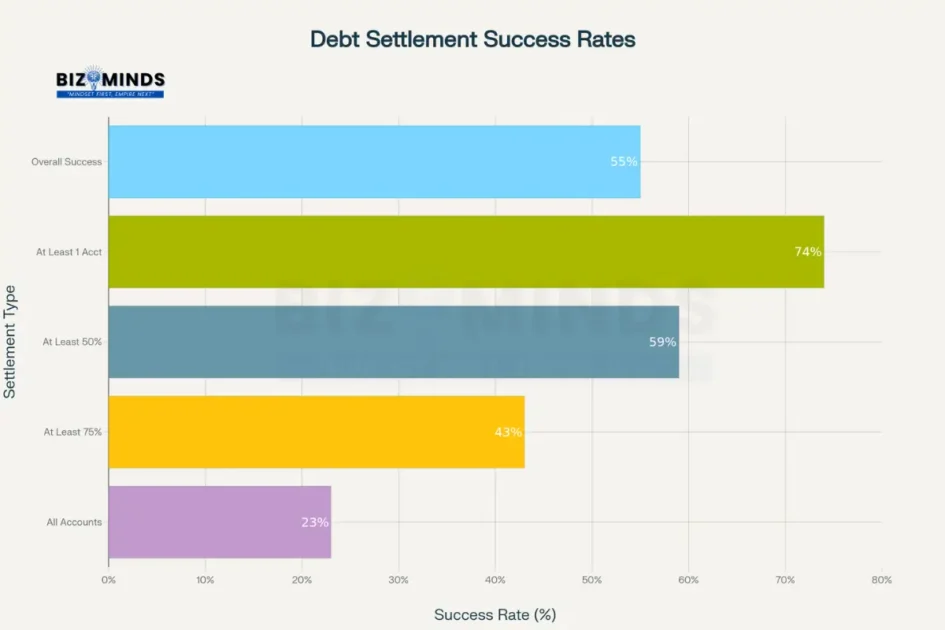
Debt Collectors Settlement Success Rates and consumer outcomes based on American Fair Credit Council data
The Economics of Debt Collection and Settlement
Understanding the business model behind debt collection provides valuable leverage in negotiations. Debt collectors typically purchase charged-off debt for pennies on the dollar, often paying between 4-15% of the original debt amount depending on the debt’s age and type. This means a $10,000 credit card debt might be purchased by a collection agency for $400-$1,500, creating significant room for negotiation.
Recovery rates vary dramatically based on debt age and type. Fresh debt at the due date has a 98% recovery probability, dropping to 74% after three months, 58% after six months, and just 27% after twelve months. This declining success rate motivates debt collectors to negotiate settlements rather than risk complete loss as debts age.
Industry data reveals average recovery rates by debt type: credit card debt (24.8%), healthcare debt (24.5%), banking and finance debt (23.7%), and hospital debt (15.3%). These statistics demonstrate that even professional collection agencies struggle with low success rates, particularly for older debts, providing consumers with negotiation leverage.
The debt settlement market, valued at $6.1 billion in 2024, is projected to reach $11.2 billion by 2034, growing at a 6.2% CAGR. This growth reflects increasing consumer debt burdens and the effectiveness of settlement strategies in helping people reduce debt balance and achieve financial recovery.
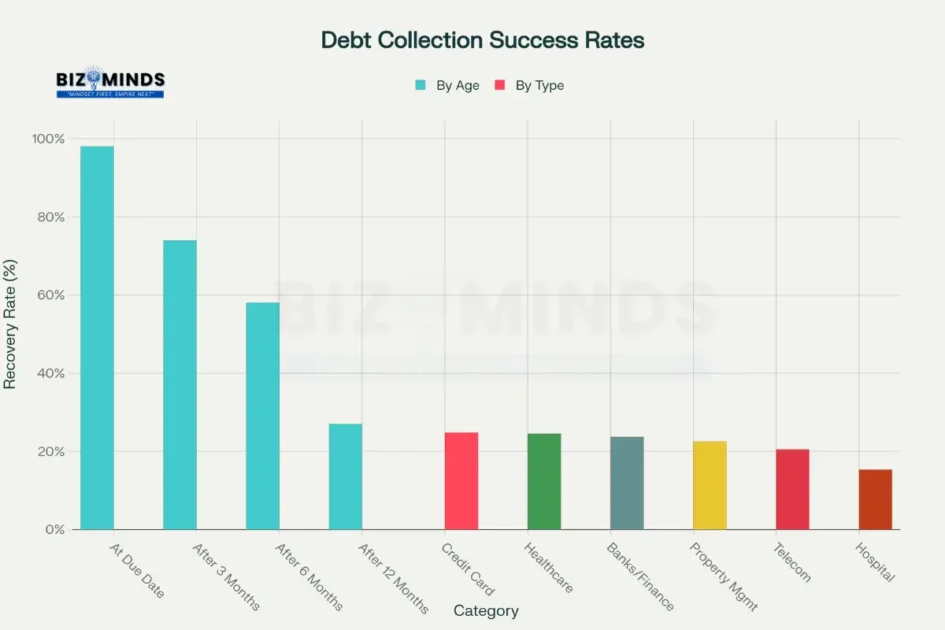
Debt collection recovery rates by debt age and type – showing the importance of early action
Strategic Preparation for Debt Negotiation
Successful debt negotiation requires thorough preparation and strategic planning. Begin by conducting a comprehensive financial assessment to understand your total debt obligations, monthly income, and essential expenses. Document all debts including creditor names, account numbers, original amounts, current balances, and payment histories.
Research your state’s statute of limitations for different types of debt, as this knowledge provides significant negotiation leverage. The statute ranges from three years in states like California and New York to ten years in Kentucky and Louisiana for credit card debt. If the statute has expired, the debt becomes “time-barred,” meaning debt collectors cannot legally sue you for repayment, though they may still attempt collection through other means.
Gather documentation supporting any financial hardship, including medical bills, unemployment notices, divorce decrees, or other circumstances that contributed to your financial difficulties. This documentation strengthens your negotiation position and demonstrates legitimate hardship to debt collectors.
Establish realistic settlement goals based on your financial capacity. Industry experts recommend starting negotiations at 30-50% of the total debt amount, though successful settlements often range between 40-70% of the original balance. Consider your ability to make lump-sum payments versus structured payment plans, as debt collectors often prefer lump-sum settlements.
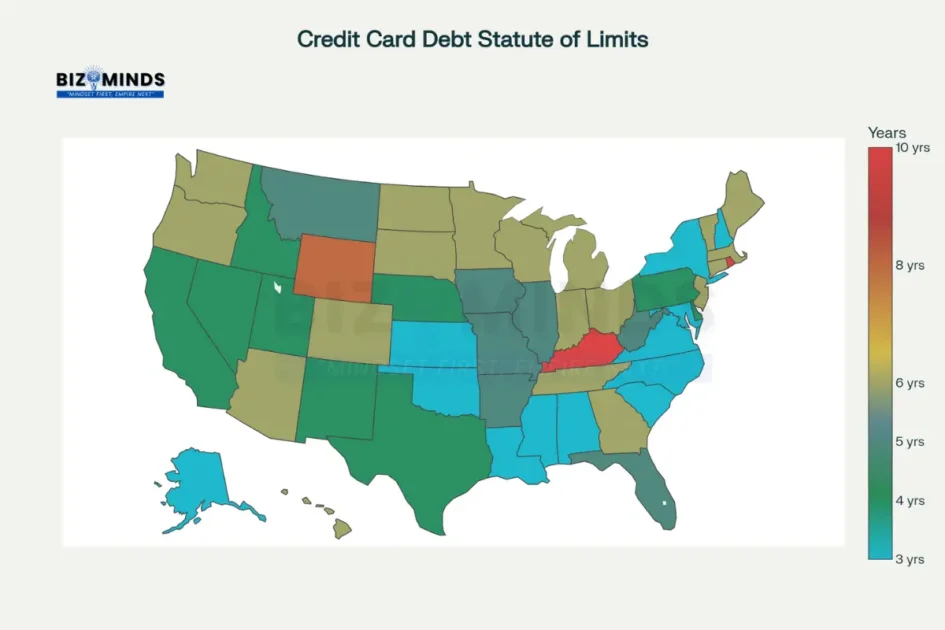
State Statute of Limitations Protecting Consumers from Debt Collectors
Communication Strategies with Debt Collectors
Effective communication forms the cornerstone of successful debt negotiation. When debt collectors first contact you, remain calm and professional while asserting your rights under the FDCPA. Request written validation of the debt before acknowledging any obligation to pay, as this validates the debt’s legitimacy and provides time to assess your options.
Document all communications with debt collectors, including dates, times, names of representatives, and conversation summaries. Keep copies of all letters, emails, and other correspondence. This documentation protects you legally and provides evidence if disputes arise.
Use written communication whenever possible to create a paper trail and avoid misunderstandings. When speaking by phone, follow up with letters confirming any agreements or discussions. Avoid admitting fault or agreeing to payment arrangements during initial conversations, as these statements can be used against you later.
Present your financial hardship professionally and factually. Explain your circumstances without excessive emotion while emphasizing your genuine desire to resolve the debt. Debt collectors are more likely to negotiate favorably with consumers who demonstrate good faith efforts to address their obligations.
Sample communication framework:
- Acknowledge receipt of collection notices
- Request debt validation within 30 days
- Explain financial hardship circumstances
- Propose realistic settlement offers
- Request written confirmation of any agreements
Negotiation Tactics to Reduce Debt Balance
Successful negotiation to reduce debt balance requires understanding debt collectors’ motivations and constraints. Since many collectors purchased debt at significant discounts, they often accept settlements well below the original balance rather than risk total loss.
Lump-Sum Settlement Strategy:
Offering immediate payment of 30-50% of the debt amount often yields favorable results. Debt collectors prefer lump-sum payments as they immediately close accounts and eliminate future collection costs. This strategy works particularly well for older debts where collection prospects are diminishing.
Hardship Settlement Programs:
Many original creditors and debt collectors offer formal hardship programs for consumers experiencing temporary financial difficulties. These programs may include payment deferrals, interest rate reductions, or principal balance reductions.
Payment Plan Negotiations:
When lump-sum payment isn’t feasible, negotiate structured payment plans with favorable terms. Propose monthly payments you can realistically maintain while requesting interest and fee waivers. Successful payment plans often reduce debt balance through principal reductions or elimination of additional charges.
Time-Based Leverage:
As debts approach statute of limitations expiration, your negotiation position strengthens significantly. Debt collectors face the prospect of complete loss if they cannot collect before the debt becomes time-barred, motivating them to accept lower settlement amounts.
Medical Debt Considerations:
The Consumer Financial Protection Bureau has implemented new rules prohibiting medical debt from appearing on most credit reports effective January 2025, removing an estimated $49 billion in medical bills from 15 million Americans’ credit reports. This reduces debt collectors’ leverage when collecting medical debts.
Real Case Studies: How Consumers Reduced Debt Balance with Debt Collectors
Case Study 1: Credit Card Debt Settlement
Sarah, a 34-year-old teacher from Ohio, accumulated $22,000 in credit card debt following a medical emergency. After missing payments for four months, her account was sold to a collection agency. Using validation letters and hardship documentation, she negotiated a settlement of $8,800 (40% of the original debt) paid over six months. The collector agreed to report the account as “settled” rather than “charged off,” minimizing credit score impact.
Case Study 2: Medical Debt Resolution
James, a construction worker from Texas, faced $35,000 in hospital bills after an accident. Working with the hospital’s financial services department, he documented his income limitations and ongoing disability. The hospital agreed to forgive $28,000 of the debt through their charity care program, leaving only $7,000 to be paid through a no-interest payment plan.
Case Study 3: Multiple Account Settlement
Maria, a single mother from California, worked with a legitimate debt settlement company to address $45,000 across seven credit cards. Over 30 months, she settled six accounts for a total of $18,000 (40% of original balances). One account was successfully disputed and removed entirely due to insufficient documentation from the debt collectors.
Case Study 4: Time-Barred Debt Defense
Robert from New York successfully defended against a lawsuit for a six-year-old credit card debt. Since New York’s statute of limitations for credit card debt is three years, he raised the time-barred defense, resulting in case dismissal. The debt collectors could not legally pursue the debt through court action.
Advanced Settlement Strategies of Debt Collectors
Principal Reduction Negotiations:
Focus negotiations on reducing the principal balance rather than just interest and fees. Debt collectors often accept principal reductions of 40-60% for accounts they purchased at steep discounts. Present this as a win-win solution that allows them to profit while helping you reduce debt balance to manageable levels.
Partial Payment Programs:
Some debt collectors accept partial payments over time while agreeing not to pursue collection of the remaining balance. These programs can reduce debt balance by 50-70% while allowing manageable monthly payments. Ensure any agreement specifies that the remaining balance will be forgiven upon completion.
Credit Report Negotiations:
Negotiate how the settlement will appear on your credit report. “Pay for delete” agreements, where the collector removes the account entirely upon payment, provide the most benefit. Alternatively, request that accounts be reported as “paid as agreed” rather than “settled” to minimize credit score impact.
Legal Leverage Tactics:
If debt collectors violate FDCPA provisions, document these violations carefully. FDCPA violations can result in damages up to $1,000 plus attorney fees, providing leverage in settlement negotiations. Common violations include calling outside permitted hours, contacting your workplace after being told not to, or making false statements about the debt.
Working with Professional Assistance
Credit Counseling Services:
Non-profit credit counseling agencies provide free consultations and can help negotiate debt management plans with debt collectors. These agencies have established relationships with many creditors and may achieve better terms than individual negotiations.
Debt Settlement Companies:
Legitimate debt settlement companies can negotiate on your behalf, though they typically charge 20-25% of enrolled debt as fees. The American Fair Credit Council reports that settlement companies successfully negotiate settlements for 55% of enrolled accounts. However, be cautious of companies charging upfront fees, which violate federal regulations.
Consumer Protection Attorneys:
Attorneys specializing in debt collection defense can identify FDCPA violations and negotiate from positions of legal strength. They can also defend against collection lawsuits and potentially recover damages for illegal collection practices.
Legal Aid Organizations:
Many communities offer free legal assistance for low-income consumers facing debt collection issues. These organizations can provide representation in collection lawsuits and help negotiate settlements.
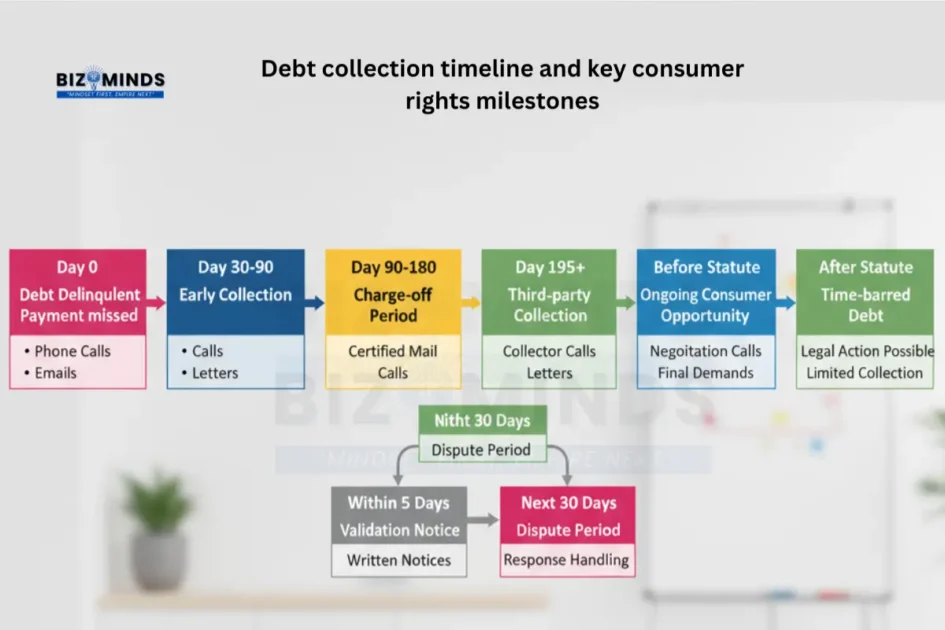
Debt collection timeline and key consumer rights milestones
State-Specific Considerations and Protections
Different states provide varying levels of consumer protection beyond federal FDCPA requirements. California’s Rosenthal Fair Debt Collection Practices Act extends FDCPA protections to original creditors and includes additional restrictions on debt collectors. New rules effective July 2025 will extend these protections to certain commercial debts under $500,000.
New York City implemented comprehensive debt collection regulations effective 2025, requiring additional licensing and imposing stricter communication limits on debt collectors operating within city limits. These local protections provide additional leverage in negotiations with debt collectors.
State garnishment laws vary significantly, affecting debt collectors’ ability to collect through wage garnishment. Some states like Texas and Pennsylvania have higher exemption amounts, leaving more income protected from garnishment. Understanding your state’s garnishment limits helps assess the consequences of not reaching settlement agreements.
State statute of limitations varies from three to ten years for credit card debt, creating different urgency levels for debt resolution. Consumers in states with shorter limitation periods have stronger negotiation positions as debts approach time-barred status.
Credit Report Impact and Recovery
Debt settlement and negotiation activities significantly impact credit reports and scores. Settled accounts typically remain on credit reports for seven years from the original delinquency date. However, the impact on credit scores decreases over time, particularly as positive payment history accumulates on other accounts.
The Federal Reserve Bank of New York found that debt relief programs can improve psychological functioning and changes in cognitive performance. Participants who had more debt accounts paid off experienced greater improvements in cognitive performance, demonstrating the broader benefits of successful debt resolution.
Recent regulatory changes favor consumers in credit reporting. The Consumer Financial Protection Bureau’s 2025 medical debt rule removes most medical collections from credit reports, reducing the leverage debt collectors have when collecting medical debts. This change affects approximately 15 million Americans and removes an estimated $49 billion in medical debt from credit reports.
Strategic approaches to credit recovery include:
- Focusing on accounts that can be removed entirely (“pay for delete”)
- Negotiating favorable reporting language for settled accounts
- Maintaining payments on non-delinquent accounts
- Building positive credit history through secured credit cards or credit builder loans
Long-term Financial Recovery Strategies
Successful debt negotiation provides immediate relief, but long-term financial stability requires comprehensive planning. After settling debts, focus on building emergency funds to prevent future financial crises. Financial experts recommend saving 3-6 months of essential expenses to handle unexpected costs without relying on credit.
Create realistic budgets that prioritize essential expenses while allowing modest amounts for discretionary spending. Overly restrictive budgets often fail, leading to renewed debt accumulation. Include small amounts for entertainment and personal expenses to maintain psychological well-being during recovery.
Consider the tax implications of debt settlement, as forgiven debt amounts over $600 may be reportable as income. The IRS may issue Form 1099-C for significant debt forgiveness, requiring inclusion in taxable income. However, insolvency exceptions may apply if your debts exceeded your assets at the time of settlement.
Establish positive credit relationships gradually through secured credit cards or credit builder loans. These tools help rebuild credit history while limiting exposure to significant new debt. Focus on maintaining perfect payment history on new accounts to demonstrate improved financial management.
Conclusion
The strategies outlined throughout this guide demonstrate that informed, deliberate action can transform difficult collection encounters into opportunities for resolution. By asserting your rights under the FDCPA and staying organized with documentation, you maintain control and confidence when dealing with Debt Collectors. Understanding the business model behind purchased debt and the incentives that drive collection agencies allows you to target negotiation efforts where they have the greatest impact.
Once you’ve established your legal standing and prepared a clear financial overview, the art of negotiation focuses on concrete offers that benefit both parties. Proposing lump-sum payments or structured plans backed by proof of hardship can persuade collectors to accept terms that meaningfully Reduce Debt Balance. Remember that timing matters: as debts age and approach statute limitations, your leverage increases, making lower settlement figures more attainable.
Real-world examples—from credit card liabilities to medical bills—illustrate how consumers nationwide have resolved burdensome debts while preserving their credit profiles. Engaging professional credit counselors or, when necessary, attorneys can further strengthen your position and expedite favorable outcomes. These collaborative approaches underscore that structured support often leads to faster, more comprehensive relief from Debt Collectors.
Looking ahead, proactive financial management remains essential. After settling accounts, focus on rebuilding savings and credit through disciplined budgeting, emergency funds, and positive payment history. By integrating these habits, you not only Reduce Debt Balance in the moment but also fortify your finances against future strains. Long-term resilience emerges from the same principles—rights awareness, strategic planning, and consistent follow-through—that drive successful negotiation today.
Frequently Asked Questions / People Also Ask
Can debt collectors negotiate and reduce debt balance even if I haven’t missed payments yet?
While debt collectors typically become involved after accounts become delinquent, original creditors may negotiate payment terms if you contact them proactively about financial hardship. Many creditors offer hardship programs including temporary payment reductions, interest rate modifications, or principal balance reductions to prevent accounts from going into default. Contacting creditors before missing payments often results in more favorable terms than waiting until accounts are sent to debt collectors.
How much can I realistically expect to reduce debt balance through negotiation?
Settlement amounts typically range from 30-70% of the original debt balance, with an average of 40-50% reduction possible. Factors affecting settlement amounts include debt age (older debts settle for less), your financial circumstances, the collector’s purchase price for the debt, and your ability to make lump-sum payments. Debt collectors who purchased debt for 10-15% of face value often accept settlements of 30-50% to ensure profitability.
What happens if debt collectors violate the FDCPA during negotiations?
FDCPA violations provide significant leverage in debt negotiations and may result in monetary damages. Consumers can sue debt collectors for up to $1,000 in statutory damages plus actual damages and attorney fees. Common violations include calling outside permitted hours, contacting your workplace after being told not to, using abusive language, or making false statements about debt amounts or consequences. Document all violations carefully, as they can be used to negotiate better settlement terms or eliminate debts entirely.
Should I work with a debt settlement company or negotiate directly with debt collectors?
Both approaches have advantages. Direct negotiation gives you complete control over the process and avoids settlement company fees (typically 20-25% of enrolled debt). However, legitimate settlement companies have experience and established relationships with debt collectors that may achieve better results. If choosing professional help, avoid companies charging upfront fees and verify their track record with the American Fair Credit Council. Consider starting with direct negotiation and seeking professional help if initial attempts are unsuccessful.
How does the statute of limitations affect my ability to negotiate debt reduction?
The statute of limitations significantly strengthens your negotiation position as debts approach time-barred status. While debt collectors can still attempt collection after the statute expires, they cannot successfully sue you for repayment. This reality motivates collectors to accept lower settlement amounts rather than risk complete loss. However, making payments or acknowledging debt obligations can restart the statute of limitations clock in many states, so proceed carefully with time-barred debts.
Will debt settlement negotiations hurt my credit score more than just letting accounts remain delinquent?
Debt settlement typically results in “settled” notations on credit reports, which are less damaging than ongoing delinquencies that continue accumulating late payments each month. While settled accounts remain on credit reports for seven years, their negative impact decreases over time. Additionally, successful settlement stops the accumulation of additional late payments and collection accounts, potentially improving your credit profile faster than leaving accounts unresolved.
Citations
- https://www.goodwinlaw.com/en/insights/publications/2025/03/insights-finance-cfs-yir-debt-collection-and-debt-settlement
- https://www.investopedia.com/terms/f/fair-debt-collection-practices-act-fdcpa.asp
- https://www.prodigaltech.com/ltblogs/12-successful-debt-collection-techniques-and-strategies
- https://www.mayerbrown.com/en/insights/publications/2025/06/reminder-californias-new-commercial-debt-collection-protections-take-effect-july-1-2025
- https://en.wikipedia.org/wiki/Fair_Debt_Collection_Practices_Act
- https://www.legalpay.in/post/tips-for-negotiating-debt-settlements-a-comprehensive-guide
- https://www.consumerfinance.gov/ask-cfpb/what-laws-limit-what-debt-collectors-can-say-or-do-en-329/
- https://ocj.org/Debt-Collection-Consumer-Rights
- https://www.equifax.com/personal/education/debt-management/articles/-/learn/debt-negotiation-with-lenders/
- https://rules.cityofnewyork.us/rule/debt-collectors-and-collection-agencies/
- https://www.federalreserve.gov/boarddocs/supmanual/cch/fairdebt.pdf
- https://www.highradius.com/resources/Blog/10-powerful-tips-to-successfully-negotiate-with-debt-collectors/
- https://www.ftc.gov/legal-library/browse/rules/fair-debt-collection-practices-act-text
- https://www.legalpay.in/post/how-to-use-consumer-protection-laws-for-debt-defense
- https://www.linkedin.com/pulse/psychology-debt-collection-strategies-effective-communication
- https://www.consumerfinance.gov/consumer-tools/debt-collection/
- https://www.legalpay.in/post/debt-collection-laws-you-need-to-know
- https://www.investopedia.com/articles/pf/09/debt-settlement.asp
- https://www.consumerfinancialserviceslawmonitor.com/2025/03/2024-in-review-major-debt-collection-trends-and-2025-outlook/
- https://guides.sll.texas.gov/debt-collection/know-your-rights
- https://www.cbsnews.com/news/what-is-the-success-rate-of-debt-settlement/
- https://www.collectionagency-spain.com/blog/debt-collection-success-rates
- https://www.chaserhq.com/blog/what-happens-if-you-lose-a-debt-collection-lawsuit
- https://www.experian.com/blogs/ask-experian/research/consumer-debt-study/
- https://www.ftc.gov/sites/default/files/documents/public_comments/debt-settlement-industry-public-workshop-536796-00014/536796-00014.pdf
- https://attorney-newyork.com/debt-relief/can-you-settle-a-debt-after-being-served/
- https://www.gminsights.com/industry-analysis/debt-settlement-market
- https://pmc.ncbi.nlm.nih.gov/articles/PMC6462060/
- https://www.cbsnews.com/news/what-happens-when-you-lose-a-credit-card-debt-collection-lawsuit/
- https://educationdata.org/student-loan-debt-statistics
- https://www.cnbc.com/select/what-are-debt-relief-companies/
- https://selfhelp.courts.ca.gov/debt-lawsuits/judgment
- https://www.newyorkfed.org/microeconomics/hhdc
- https://www.investopedia.com/terms/c/consumer-debt.asp
- https://www.reddit.com/r/CRedit/comments/1jkommt/i_want_to_share_my_experience_in_debt_collection/
- https://www.consumerfinance.gov/ask-cfpb/what-is-a-debt-relief-program-and-how-do-i-know-if-i-should-use-one-en-1457/
- https://www.wmtxlaw.com/what-happens-if-a-debt-collector-takes-you-to-court/
- https://www.precedenceresearch.com/debt-settlement-market
- https://www.westernsouthern.com/personal-finance/debt-reduction-strategies
- https://blog.peakflo.co/en/account-receivable/debt-validation-letter
- https://www.incharge.org/understanding-debt/credit-card/what-is-statute-of-limitations-all-50-states/
- https://www.experian.com/blogs/ask-experian/how-to-write-hardship-letter-to-creditors/
- https://www.emagia.com/resources/glossary/dispute-letter-template-for-collection/
- https://www.consumerfinance.gov/ask-cfpb/can-debt-collectors-collect-a-debt-thats-several-years-old-en-1423/
- https://www.peoples-law.org/financial-hardship-sample-letter-creditor
- https://foundcom.org/wp-content/uploads/2015/01/2.-Request-for-Validation-Letter.pdf
- https://www.legalpay.in/post/how-does-the-indian-limitation-act-apply-to-debt-collection
- https://www.106rqw.ang.af.mil/Portals/7/images/Family%20Readiness/Sample%20Hardship%20letter.pdf?ver=2017-02-19-005313-317
- https://files.consumerfinance.gov/f/documents/201307_cfpb_debt-collection-letter-2_more-information.doc
- https://www.prodigaltech.com/ltblogs/understanding-debt-statute-limitations
- https://nomoredebts.org/debt-help/dealing-with-creditors/debt-forgiveness-writeoff-letter
- https://library.nclc.org/companion-material/sample-verification-letter
- https://www.kazlg.com/understanding-the-statutes-of-limitations-on-debt-collection/
- https://www.stepchange.org/debt-info/dealing-with-debt-problems/sample-letters.aspx
- https://www.consumerfinance.gov/compliance/compliance-resources/other-applicable-requirements/debt-collection/forms-and-samples/
- https://credit.com/blog/statutes-of-limitations
- https://files.consumerfinance.gov/f/201505_cfpb-sample-letter-to-debt-collector.doc
- http://usacreditlawyer.com/debt-collection/rights/Sample-Debt-Validation-Letter.pdf
- https://consumer.ftc.gov/debt-collection-faqs
- https://www.ag.state.mn.us/Office/Communications/2024/10/21_FinancialSolutionsGroup.asp
- https://enterslice.com/learning/debt-recovery-case-studies/
- https://www.consumerfinance.gov/ask-cfpb/what-is-harassment-by-a-debt-collector-en-336/
- https://www.chaserhq.com/blog/negotiating-with-debtors-best-practices-for-amicable-solutions
- https://www.ftc.gov/news-events/news/press-releases/2024/12/ftc-sends-more-540000-refunds-consumers-harmed-phantom-abusive-debt-collection-scheme
- https://www.activatedscale.com/blog/debt-settlement-negotiation-strategies
- https://www.consumeraffairs.com/finance/debt-settlement-statistics.html
- https://www.consumerfinance.gov
- https://www.consumerfinance.gov/data-research/consumer-complaints/
- https://www.creditinfocenter.com/successful-debt-negotiation-and-debt-settlement-success-stories/
- https://help.marketcall.com/en/article/debt-settlement-case-study-2024-ls05jl/
- https://www.consumerfinance.gov/data-research/consumer-complaints/search/
- https://sigmaconnected.com/blog/the-role-of-negotiation-in-successful-early-arrears-collections/
- https://www.ftc.gov/legal-library/browse/cases-proceedings/banned-debt-collectors
- https://www.consumerfinance.gov/data-research/consumer-complaints/search/?date_received_max=2024-08-05&date_received_min=2011-12-01&page=1&product=Debt+collection%E2%80%A2Rental+debt&searchField=all&searchText=rental+debt&size=25&sort=created_date_desc&tab=List
- https://www.lendingtree.com/credit-cards/study/credit-card-debt-statistics/
- https://www.cnbc.com/2025/08/05/ny-fed-credit-card-debt-second-quarter-2025.html
- https://www.stlouisfed.org/on-the-economy/2025/may/broad-continuing-rise-delinquent-us-credit-card-debt-revisited
- https://www.equifax.com/newsroom/all-news/-/story/february-2025-u-s-national-consumer-credit-trends-report/
- https://www.newyorkfed.org/newsevents/news/research/2025/20250805
- https://www.federalreserve.gov/releases/g19/current/
- https://www.forbes.com/advisor/credit-cards/average-credit-card-debt/
- https://usafacts.org/answers/how-much-debt-does-the-average-american-owe/country/united-states/
- https://tradingeconomics.com/united-states/debt-balance-credit-cards