

Comparing Debt Consolidation Loans: Pros, Cons, and Lender Reviews
American household debt has reached staggering new heights, with total obligations climbing to $18.39 trillion in Q2 2025, representing a $185 billion quarterly increase. This unprecedented debt burden translates to an average household debt load of $152,653, driven primarily by mounting credit card balances that have surged to $1.209 trillion nationwide. The financial pressure intensifies as credit card APRs have climbed to historic levels, averaging 22-24% in mid-2025, creating an urgent need for strategic debt management solutions among millions of American families.
The surge in consumer borrowing reflects deeper economic challenges facing households across the nation. Recent Federal Reserve data shows consumer credit increased by $16 billion in July 2025 alone, marking the strongest growth in three months. Credit card debt specifically jumped $10.5 billion during this period, highlighting the reliance on high-interest revolving credit to bridge financial gaps. Geographic analysis reveals stark disparities, with New Jersey residents carrying the highest average credit card debt at $9,382, while Mississippi residents average $5,221. This regional variation underscores how local economic conditions and cost-of-living differences impact debt accumulation patterns.
Against this backdrop of mounting financial obligations, debt consolidation loans have emerged as a critical financial tool for millions seeking relief from multiple high-interest debts. The debt consolidation market itself reflects this growing demand, expanding from $50 billion in 2025 with projections to reach $95 billion by 2033, representing a robust 8% compound annual growth rate. Recent market analysis reveals that 47% of debt consolidation borrowers seek loans between $10,000 and $20,000, while 32% require amounts exceeding $20,000 to address their consolidated debt obligations. This dramatic market expansion is fueled by over 25 million consumers worldwide currently enrolled in formal debt consolidation programs.
However, the promise of consolidation comes with significant challenges and sobering statistics that demand careful consideration. Forbes Advisor’s comprehensive survey of 1,000 debt consolidation users reveals concerning patterns, including 45% of borrowers missing at least one payment during their consolidation journey. Perhaps most troubling, only 4% of survey respondents believed they would remain debt-free after completing their consolidation loan payments, highlighting the critical importance of addressing underlying financial behaviors alongside debt restructuring. As credit card delinquencies remain elevated at approximately 4.4% of all debt, understanding the nuanced advantages and pitfalls of debt consolidation loans becomes essential for making informed financial decisions that lead to lasting debt freedom rather than temporary relief..
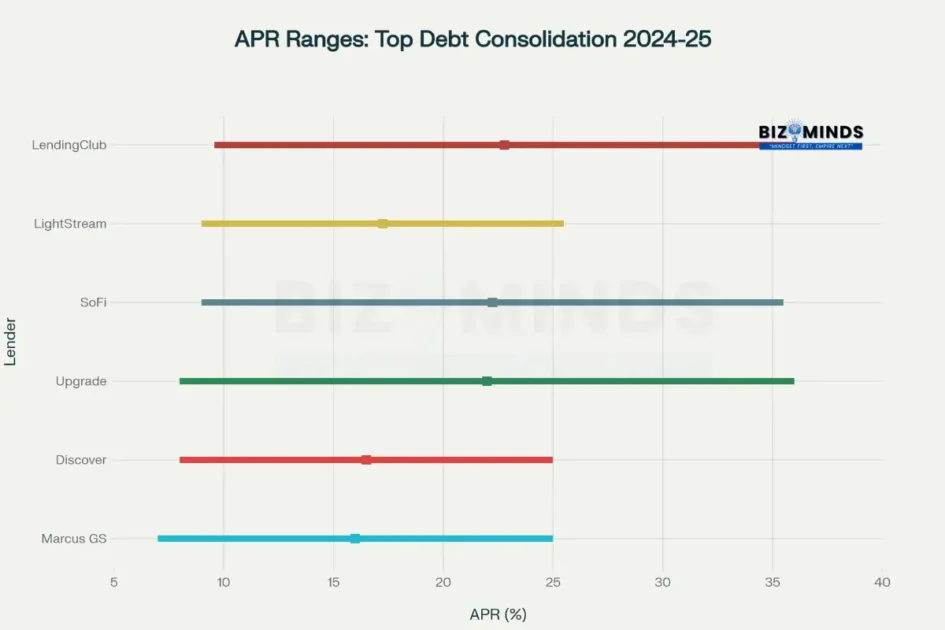
Comparison of APR ranges for top debt consolidation lenders showing competitive rates for qualified borrowers
Understanding the Debt Consolidation Loan
Market Dynamics and Current Trends
Debt consolidation loans represent a subset of the broader personal loan market, specifically designed to combine multiple high-interest debts into a single, manageable payment. The Federal Reserve’s data shows that nonmortgage debt in America jumped to $4.89 trillion in Q4 2023, representing a 5.4% increase from the previous year. This surge has created fertile ground for the debt consolidation industry, with over 25 million consumers worldwide currently enrolled in formal consolidation programs.
The typical debt consolidation borrower profile has evolved significantly. According to Forbes Advisor’s comprehensive survey of 1,000 debt consolidation users, the majority consolidate debt to simplify payments (over 50%), reduce interest rates (54%), and decrease their overall debt burden (42%). Medical bills account for 50% of consolidated debt, reflecting the broader healthcare affordability crisis affecting American families.
The Economics Behind Debt Consolidation Loans
Debt consolidation loans operate on a fundamental principle: replacing multiple high-interest debts with a single loan featuring more favorable terms. The average credit card interest rate has climbed substantially, making consolidation increasingly attractive for qualified borrowers. Personal loan rates for debt consolidation typically range from 6.99% to 36%, depending on creditworthiness and lender.
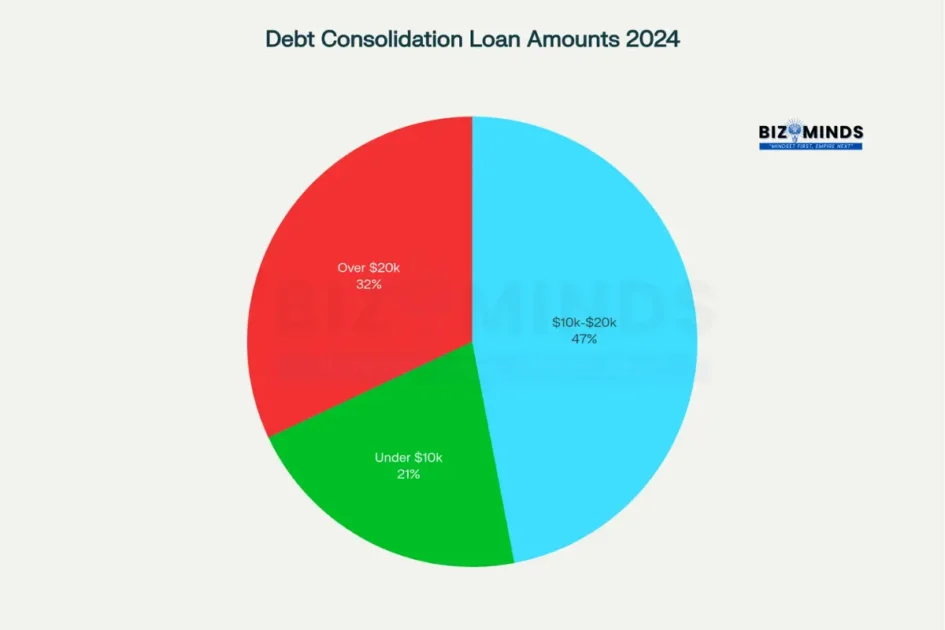
Distribution of debt consolidation loan amounts showing that nearly half of borrowers seek loans between $10,000-$20,000
The mathematical appeal becomes evident when examining typical scenarios. A borrower carrying $20,000 in credit card debt at 24% APR faces monthly minimum payments of approximately $600, with the majority going toward interest. A successful debt consolidation loan at 12% APR could reduce the monthly payment to $445 over 60 months, saving thousands in total interest costs.
Debt Consolidation Pros and Cons Comparison
| Advantages | Disadvantages |
| Simplified monthly payments – Single payment vs multiple bills | Qualification requirements – Need good credit for best rates |
| Potentially lower interest rates – Save on total interest costs | Upfront fees possible – Origination fees 1-9% of loan amount |
| Fixed repayment schedule – Know exactly when debt will be paid off | Risk of accumulating new debt – May worsen situation if spending continues |
| Improved credit utilization – May boost credit score over time | Longer repayment terms – Could increase total interest paid |
| Reduced financial stress – Easier budgeting and planning | Loss of payment flexibility – One large payment vs. smaller varied payments |
| Stop collection calls – Consolidate past-due accounts | Hard credit inquiry impact – Temporary drop in credit score |
| No collateral required – Unsecured personal loan option | May lose creditor benefits – Lose access to hardship programs |
Comprehensive Analysis of Debt Consolidation Loan Advantages
Streamlined Financial Management
Debt consolidation loans excel at simplifying complex payment schedules. The psychological and practical benefits of managing one payment instead of multiple obligations cannot be overstated. Research indicates that borrowers with consolidated debt experience reduced financial stress and improved budgeting accuracy.
The consolidation process eliminates the cognitive burden of tracking multiple due dates, varying interest rates, and fluctuating minimum payments. This simplification often leads to better payment compliance, as evidenced by improved on-time payment rates among successful consolidation borrowers.
Interest Rate Optimization Potential
For borrowers with good credit, debt consolidation loans can deliver substantial interest savings. Marcus by Goldman Sachs, for instance, offers rates as low as 6.99% for qualified applicants, representing significant savings compared to credit card rates averaging 20-25%. LightStream reports that 62% of their debt consolidation customers saw FICO score increases of more than 20 points within four months.
The fixed-rate nature of personal loans provides predictability absent from variable-rate credit cards. This stability allows for accurate long-term financial planning and protection against future rate increases.
Credit Score Rehabilitation Opportunities
Strategic use of debt consolidation loans can positively impact credit scores through multiple mechanisms. The immediate reduction in credit card balances lowers credit utilization ratios, which account for 30% of FICO score calculations. Additionally, consolidating past-due accounts can halt negative reporting and provide a fresh start for payment history improvement.
Case studies demonstrate meaningful credit improvements. One Bankrate analysis showed a borrower’s score jumping from 717 to 801 within one month of consolidation, an 84-point improvement. However, these results require disciplined execution of the consolidation strategy.
Critical Examination of Debt Consolidation Loan Disadvantages
Qualification Barriers and Credit Requirements
Debt consolidation loans with attractive terms remain accessible primarily to borrowers with good to excellent credit. Lenders like LightStream require credit scores of 680 or higher, while premium rates are reserved for scores exceeding 740. This creates a paradox where those most needing debt relief may least qualify for beneficial consolidation terms.
Borrowers with damaged credit face limited options, often restricted to subprime lenders charging rates that negate consolidation benefits. The average APR for fair credit borrowers can exceed 25%, potentially higher than existing debt obligations.
Fee Structures and Hidden Costs
Origination fees represent a significant consideration for debt consolidation loans. Upgrade charges 1.85% to 9.99% in origination fees, while other lenders impose similar upfront costs. A $25,000 consolidation loan with a 5% origination fee effectively reduces available funds to $23,750, requiring careful calculation of net benefits.
Some lenders, including Discover and LightStream, offer no-fee structures, making direct cost comparisons essential during the evaluation process. The presence or absence of fees can dramatically alter the effective APR and overall loan economics.
Risk of Debt Recurrence
Perhaps the most significant danger of debt consolidation loans lies in behavioral patterns that led to the original debt accumulation. Without addressing underlying spending habits, consolidation can provide false relief that enables further debt accumulation. Studies indicate that borrowers who fail to modify their financial behavior often find themselves in worse positions within 18-24 months.
Only 4% of survey respondents believed they would remain debt-free after paying off their consolidation loan, highlighting the challenge of permanent debt resolution through consolidation alone. This statistic underscores the importance of coupling consolidation with comprehensive financial planning and behavioral modification.
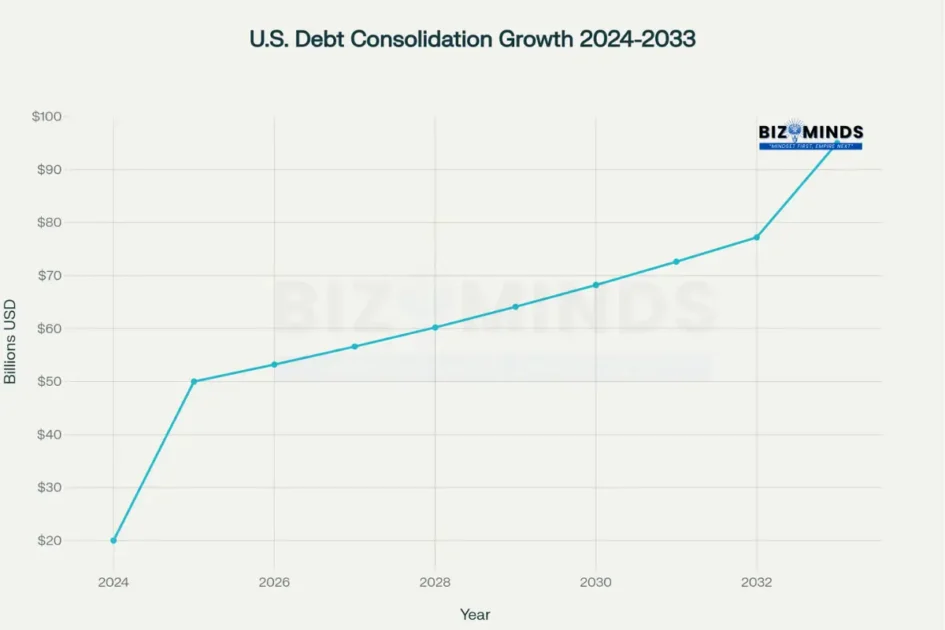
Projected growth of the U.S. debt consolidation market showing significant expansion through 2033
Leading Debt Consolidation Lenders: Comprehensive Reviews
SoFi: Premium Option for High-Balance Consolidation
SoFi has established itself as a leading player in the debt consolidation loans market, particularly for borrowers seeking substantial loan amounts. With loan limits reaching $100,000 and competitive APRs starting at 8.99%, SoFi caters to borrowers consolidating significant debt loads.
Strengths:
- High loan limits accommodating substantial consolidations
- No mandatory fees for qualified borrowers
- Same-day funding upon approval
- Rate discounts for autopay (0.25%) and direct deposit (0.25%)
- Strong customer satisfaction ratings in J.D. Power surveys
Limitations:
- High minimum loan amount ($5,000) excludes smaller consolidations
- Requires excellent credit for optimal terms
- No physical branch network for in-person service
- Limited geographic availability in some states
SoFi’s target demographic includes high-income professionals with substantial debt burdens. The average borrower income exceeds $100,000, reflecting the lender’s focus on prime credit customers.
LightStream: Rate Leader for Excellent Credit
LightStream by Truist has earned recognition for offering some of the most competitive rates in the debt consolidation loans market. Their rate-beat program guarantees to match competitor rates minus 0.10%, providing additional negotiating power for qualified borrowers.
Strengths:
- Industry-leading APRs starting at 8.99%
- No fees or penalties
- Same-day funding available
- Rate-beat guarantee
- Flexible repayment terms (24-84 months)
Limitations:
- No prequalification process
- $5,000 minimum loan requirement
- Strict credit requirements (680+ FICO)
- Online-only application process
- Cannot consolidate student loans or existing LightStream loans
LightStream’s approach rewards borrowers with pristine credit, making it ideal for those seeking maximum savings on consolidation. The lender reports that approximately 26% of applicants qualify for their lowest advertised rates.
Discover: Balanced Approach with Strong Customer Service
Discover Personal Loans has earned top rankings for debt consolidation loans through competitive rates and exceptional customer service. J.D. Power ranked Discover second in their 2025 consumer lending satisfaction survey.
Strengths:
- Competitive APR range (7.99%-24.99%)
- No origination fees
- Extended repayment terms up to 84 months
- Same-day approval and next-day funding
- Strong customer support ratings
Limitations:
- Cannot consolidate existing Discover or Capital One balances
- Minimum income requirement ($25,000 annually)
- No joint application options
- Limited to unsecured loans only
Discover’s balanced approach makes it accessible to a broader range of borrowers while maintaining competitive terms and service quality.
Marcus by Goldman Sachs: Invitation-Only Premium Service
Marcus by Goldman Sachs has restructured its debt consolidation loans program to focus exclusively on invited applicants, creating an exclusive tier of borrowers with exceptional credit profiles.
Strengths:
- Highly competitive rates (6.99%-24.99%)
- No fees or penalties
- Autopay discount available
- On-time payment rewards program
- A+ Better Business Bureau rating
Limitations:
- Invitation-only application process
- Very high credit requirements (730+ FICO typically)
- Limited loan amounts ($3,500-$40,000)
- Uncertain program future due to Goldman Sachs restructuring
- Limited customer service accessibility
Marcus appeals to borrowers with excellent credit seeking premium rates and terms, though accessibility remains restricted.
Upgrade: Accessible Option for Fair Credit
Upgrade distinguishes itself in the debt consolidation loans market by serving borrowers with fair credit while offering unique features like direct creditor payments.
Strengths:
- Lower credit requirements (580+ FICO)
- Direct payment to creditors option
- Competitive rates despite fair credit focus
- Joint borrower applications accepted
- Flexible loan amounts ($1,000-$50,000)
Limitations:
- Origination fees (1.85%-9.99%)
- Higher maximum APRs (up to 35.99%)
- Limited repayment term options
- Not available in all states
Upgrade serves borrowers often excluded by premium lenders, making consolidation accessible to a broader demographic.
Real-World Case Studies and Success Stories
Case Study 1: Successful Medical Debt Consolidation
Sarah, a 34-year-old teacher from Ohio, faced $28,000 in medical debt from her daughter’s emergency surgery. With credit card balances carrying 22% APR and collection accounts damaging her credit, Sarah qualified for a Discover personal loan at 14.99% APR.
Results:
- Monthly payments reduced from $847 to $531
- Projected savings of $12,400 in total interest
- Credit score improvement from 642 to 698 within six months
- Eliminated collection calls and stress
Sarah’s success stemmed from maintaining strict spending discipline and using the payment reduction to build an emergency fund, preventing future debt accumulation.
Case Study 2: High-Income Professional Consolidation
Michael, a software engineer earning $145,000 annually, accumulated $45,000 in credit card debt through lifestyle inflation and poor spending habits. Despite his high income, minimum payments exceeded $1,200 monthly.
Using SoFi’s debt consolidation loan at 11.49% APR over 60 months, Michael achieved:
- Reduced monthly payments to $998
- Total interest savings exceeding $18,000
- Simplified budgeting and financial planning
- Credit score increase from 721 to 784
Michael’s case illustrates how high-income borrowers can benefit significantly from consolidation while addressing underlying behavioral issues.
Case Study 3: Fair Credit Consolidation Challenges
Jennifer, a retail manager with a 598 credit score, sought to consolidate $15,000 in various debts. Limited options resulted in an Upgrade loan at 27.99% APR, only marginally better than her existing obligations.
Outcomes:
- Modest payment reduction of $89 monthly
- Simplified payment structure
- Gradual credit improvement through consistent payments
- Limited overall financial benefit due to rate constraints
Jennifer’s experience demonstrates the importance of credit improvement before pursuing consolidation for maximum benefit.
Strategic Decision-Making Framework
When Debt Consolidation Loans Make Financial Sense
Debt consolidation loans prove most beneficial under specific circumstances:
Credit Score Above 650: Borrowers with good credit access meaningful rate reductions and favorable terms. The consolidation benefit increases proportionally with credit quality.
Multiple High-Interest Debts: Consolidation works best when replacing credit card debt, personal loans, or other obligations carrying rates above 15%.
Stable Income and Employment: Fixed monthly payments require predictable income streams. Variable income borrowers may struggle with inflexible payment schedules.
Commitment to Behavior Change: Success requires addressing spending patterns that created the original debt burden.
Red Flags and Warning Signs
Certain situations warrant extreme caution or avoidance of debt consolidation loans:
Recent Credit Damage: Borrowers with recent bankruptcies, foreclosures, or significant delinquencies may face predatory lending terms that worsen their situations.
Unstable Employment: Variable income increases default risk and may result in additional financial distress.
Lack of Budget Discipline: Without spending control mechanisms, consolidation may enable additional debt accumulation.
Underwater Home Equity: Borrowers considering secured consolidation loans against homes with negative equity face foreclosure risks.
Market Outlook and Future Trends
Industry Growth Projections
The debt consolidation loans market shows robust growth prospects, driven by increasing consumer debt levels and rising interest rates. Market analysts project expansion from $20 billion in 2024 to $95 billion by 2033, representing a compound annual growth rate exceeding 8%.
Key growth drivers include:
- Persistent household debt accumulation
- Digital platform adoption simplifying application processes
- Regulatory frameworks supporting responsible lending
- Increased financial literacy promoting debt management awareness
Technological Innovations
Fintech advancement continues reshaping the debt consolidation loans landscape. AI-powered underwriting enables faster approval processes and more nuanced risk assessment. Over 40% of new fintech entrants now offer app-based consolidation features with real-time tracking and automated repayments.
Digital platforms have democratized access while improving transparency. Nearly 48% of applicants under 35 prefer fully digital consolidation platforms, driving traditional lenders to enhance their online capabilities.
Regulatory Environment
Consumer protection regulations continue evolving to address predatory practices in the debt consolidation space. The Consumer Financial Protection Bureau has increased scrutiny of debt settlement companies while promoting transparent lending practices.
Future regulatory changes may impact fee structures, disclosure requirements, and marketing practices, potentially benefiting consumers through improved transparency and protections.
Implementation Best Practices
Pre-Application Preparation
Successful debt consolidation loans require thorough preparation:
Credit Report Review: Obtain free credit reports from all three bureaus, disputing any inaccuracies before application.
Debt Inventory: Catalog all outstanding obligations, including balances, interest rates, and minimum payments.
Budget Analysis: Evaluate monthly income and expenses to determine sustainable payment capacity.
Lender Research: Compare multiple lenders, focusing on APR ranges, fees, and borrower requirements.
Application Strategy
Pre-qualification: Utilize soft credit pulls to estimate terms without impacting credit scores.
Multiple Applications: Submit applications to 2-3 lenders within a 14-45 day window to minimize credit impact.
Documentation Preparation: Gather income verification, employment history, and bank statements before applying.
Post-Approval Actions
Immediate Debt Payoff: Use loan proceeds exclusively for debt elimination, avoiding temptation to retain cash.
Account Closure: Consider closing paid-off credit cards to prevent re-accumulation, while maintaining oldest accounts for credit history.
Automated Payments: Establish autopay to ensure consistent payments and qualify for rate discounts.
Emergency Fund Building: Allocate payment savings toward emergency reserves to prevent future debt cycles.
Conclusion
Debt consolidation loans represent a powerful financial instrument that can transform overwhelming debt burdens into manageable single payments, but their effectiveness hinges entirely on strategic implementation and disciplined execution. The current market landscape presents both unprecedented opportunities and significant risks, with debt consolidation loans becoming increasingly accessible through competitive APR rates starting as low as 6.99% from premium lenders like Marcus by Goldman Sachs.
However, the sobering reality that 45% of borrowers miss payments and only 4% believe they will achieve lasting debt freedom underscores the critical importance of addressing underlying financial behaviors alongside debt restructuring. Debt consolidation loans work best for borrowers with good credit scores above 650, stable employment, and genuine commitment to spending discipline, offering potential savings of thousands in interest costs while simplifying complex payment schedules into single monthly obligations.
The comprehensive analysis reveals that successful debt consolidation loans require meticulous preparation, including thorough credit report reviews, detailed debt inventories, and realistic budget assessments before application. Leading lenders such as SoFi, LightStream, and Discover offer distinct advantages for different borrower profiles, with debt consolidation loans featuring competitive rates, flexible terms, and valuable borrower benefits like autopay discounts and direct creditor payments.
However, borrowers must carefully evaluate origination fees, which can range from 1.85% to 9.99% with certain lenders, and consider no-fee alternatives that may provide superior overall value. The market expansion from $50 billion in 2025 to a projected $95 billion by 2033 reflects growing consumer demand, but this growth also emphasizes the importance of selecting reputable lenders with transparent terms and proven customer satisfaction records.
For borrowers who cannot qualify for traditional debt consolidation loans due to credit limitations or income constraints, alternative debt management strategies offer viable pathways to financial recovery. Nonprofit debt management plans provide consolidated payments without credit requirements, typically achieving average interest rates of 6.41% while offering ongoing counseling and education. Balance transfer credit cards can serve qualified borrowers with promotional 0% APR periods, though success requires disciplined payoff within the promotional timeframe.
Debt consolidation loans remain the preferred option for many due to their fixed payment structures and immediate debt resolution, but exploring all available alternatives ensures borrowers select the most appropriate solution for their specific circumstances and financial capacity.
Ultimately, debt consolidation loans can serve as an effective bridge from financial stress to stability when implemented as part of a holistic debt management strategy. The decision to pursue consolidation should be based on careful analysis of individual financial circumstances, thorough comparison of available options, and honest assessment of personal commitment to behavioral change. With average household debt reaching $152,653 and credit card rates climbing to historic highs, debt consolidation loans will likely play an increasingly important role in American debt management strategies.
However, lasting financial health requires more than consolidation alone – it demands the discipline to address spending patterns, build emergency reserves, and maintain the financial habits necessary to remain debt-free long after the final debt consolidation loans payment is made, ensuring that borrowers achieve meaningful debt reduction, improved credit scores, and the foundation for long-term financial security.
Frequently Asked Questions
How does debt consolidation affect my credit score?
Debt consolidation loans can positively or negatively impact credit scores depending on execution. Initially, hard credit inquiries may cause temporary 5-10 point decreases. However, reducing credit card balances improves utilization ratios, often resulting in significant score increases within 3-6 months. Consistent on-time payments further enhance credit profiles over time.
Can I consolidate debt with bad credit?
Yes, but options become limited and expensive. Lenders like Avant and OneMain Financial serve borrowers with credit scores below 600, though rates often exceed 25% APR. Borrowers with poor credit should consider credit repair before consolidation or explore nonprofit credit counseling alternatives.
What’s the difference between debt consolidation and debt settlement?
Debt consolidation loans involve taking a new loan to pay existing debts in full, maintaining positive creditor relationships. Debt settlement involves negotiating reduced payoffs with creditors, typically requiring payment defaults and resulting in significant credit damage. Consolidation preserves credit while settlement severely damages it.
How much debt should I have before considering consolidation?
Most lenders require minimum loan amounts between $2,000-$5,000. Consolidation becomes most beneficial with debts exceeding $10,000, where interest savings and simplified payments justify application efforts. Smaller debts may be better addressed through targeted payoff strategies or credit counseling.
Can I include all types of debt in consolidation?
Debt consolidation loans typically cover unsecured debts including credit cards, personal loans, medical bills, and collection accounts. Secured debts like mortgages and auto loans cannot be consolidated through personal loans. Some lenders restrict certain debt types, such as tax obligations or business debts.
What happens if I miss payments on my consolidation loan?
Missing payments on debt consolidation loans triggers late fees, potential rate increases, and negative credit reporting. Repeated delinquencies may result in default, collection actions, and substantial credit damage. Unlike credit cards with varying minimum payments, consolidation loans require fixed monthly payments regardless of financial circumstances.