


Accurate Small Business Budgeting begins with a clear understanding of every dollar that flows in and out of your operation. For many entrepreneurs, the difference between thriving growth and financial strain hinges on the ability to systematically track income sources, from product sales and service fees to subscription revenues and categorize expenses with precision. Implementing a robust tracking system empowers leaders to forecast cash needs, identify spending patterns, and make informed decisions that drive profitability and sustainability.
Small enterprises often face volatile market conditions, seasonal demand shifts, and tight margins, making proactive Small Business Budgeting essential for weathering economic uncertainties. By adopting technology-enabled solutions, such as automated receipt capture, real-time dashboard reporting, and integrated accounting platforms, operators can reduce manual errors, reclaim hours spent on administrative tasks, and maintain a pulse on cash flow health.
Beyond the numbers, disciplined Small Business Budgeting fosters confidence among stakeholders: lenders, investors, and team members gain visibility into financial performance, reinforcing trust and opening doors to growth opportunities. Whether you are launching a new venture or scaling an established brand, mastering income and expense tracking lays the groundwork for strategic expansion, stronger margins, and long-term success
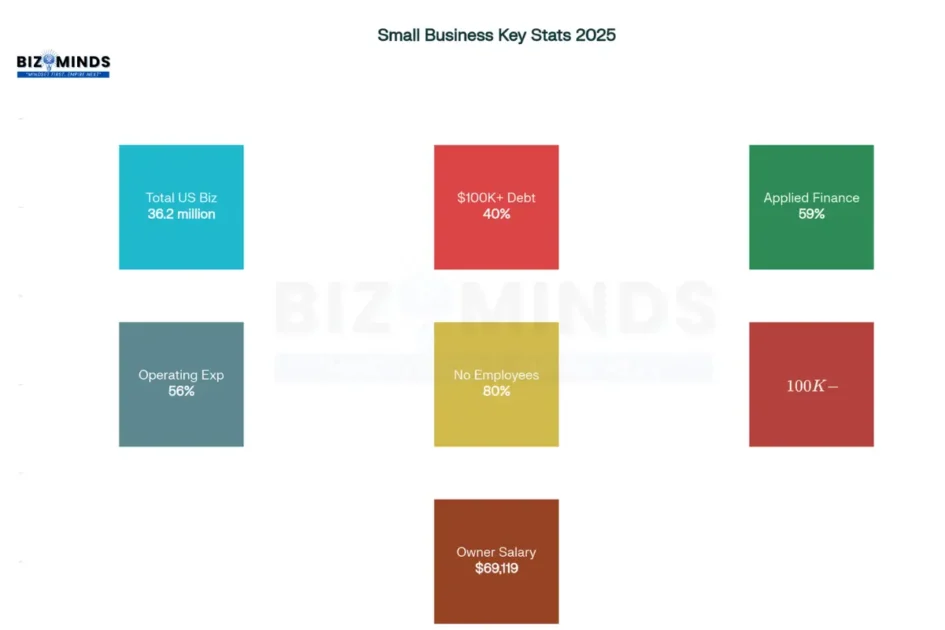
Key Small Business Budgeting Statistics 2025 – Essential data points for understanding the current state of small business finances in the United States
The Financial Reality Facing Small Businesses Budgeting Today
The current economic outlook presents unprecedented challenges for small business owners. Nearly 40% of small businesses carry over $100,000 in debt, while 59% have applied for financing in the past year, with 56% seeking funds solely to cover operating expenses. These statistics highlight the crucial importance of implementing robust financial tracking systems that provide real-time visibility into cash flow patterns and spending trends.
Understanding the Stakes
Small Business Budgeting success directly correlates with survival rates. Research indicates that 20% of businesses fail within their first year, 30% within two years, and 50% by year five. The primary culprit? Financial mismanagement, particularly inadequate expense tracking and poor cash flow oversight. Companies that implement structured Small Business Budgeting practices demonstrate significantly higher survival rates and growth trajectories.
The National Small Business Association reports that 27% of small businesses experience cash flow issues primarily due to inadequate budgeting practices. This statistic underscores the critical need for systematic approaches to income and expense tracking that go beyond basic bookkeeping to encompass strategic financial management.
Foundational Elements of Effective Income Tracking
Revenue Stream Classification and Management
Successful Small Business Budgeting begins with comprehensive income categorization. Modern small businesses typically operate multiple revenue streams, each requiring distinct tracking methodologies. Primary income sources include product sales, service fees, subscription revenues, and secondary income from investments or rental properties.
Establishing clear revenue recognition principles ensures accurate financial reporting and supports strategic decision-making. The accrual method, widely regarded as the optimal approach for Small Business Budgeting, recognizes revenue when earned rather than when cash changes hands. This methodology provides a more accurate picture of business performance and facilitates better forecasting.
Technology-Enabled Income Monitoring
Contemporary Small Business Budgeting leverages automated systems that integrate directly with banking platforms and payment processors. Point-of-sale systems now capture transaction data in real-time, automatically categorizing income streams and generating detailed reports for analysis. These systems reduce manual data entry errors while providing immediate insights into revenue patterns.
Advanced businesses utilize dashboard technology that consolidates income data from multiple sources, presenting comprehensive views of financial performance. These platforms typically integrate with accounting software like QuickBooks, Xero, and Zoho Books, creating seamless workflows that enhance Small Business Budgeting accuracy.
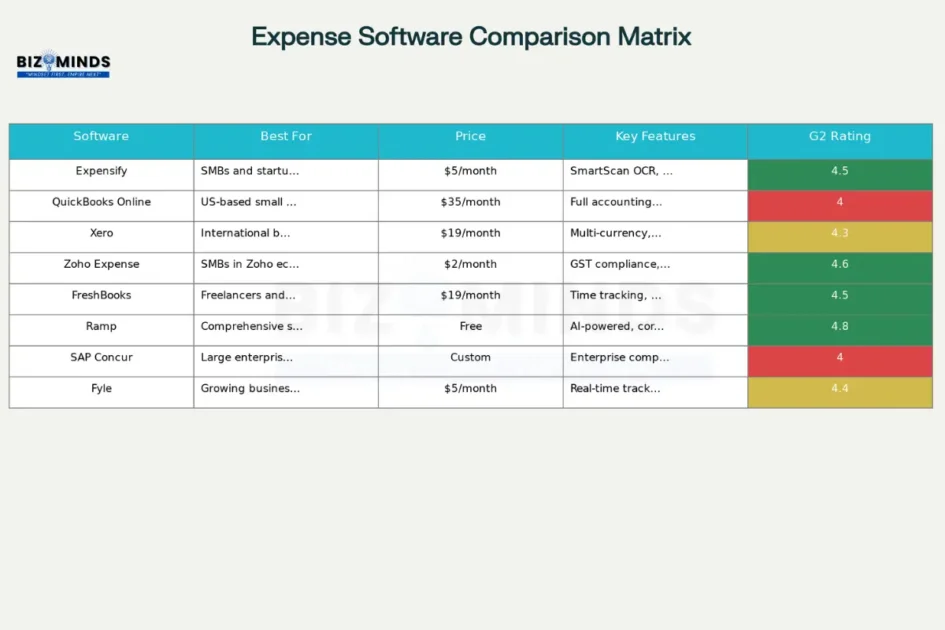
2025 Expense Tracking Software Comparison – Comprehensive analysis of top expense management solutions for small businesses
Strategic Expense Tracking Methodologies
Expense Classification Systems for Small Businesses Budgeting
Effective Small Business Budgeting requires systematic expense categorization that aligns with business operations and tax requirements. The fundamental distinction between fixed and variable costs provides the foundation for strategic planning and cash flow management. Fixed costs include rent, insurance premiums, loan payments, and core salaries, while variable costs encompass inventory, marketing expenses, and commission-based compensation.
Industry best practices recommend implementing detailed expense categories that support both operational management and tax compliance. The Internal Revenue Service provides comprehensive guidelines for business expense deductibility, making proper categorization essential for optimizing tax positions while maintaining accurate financial records.
Advanced Expense Monitoring Techniques
Modern Small Business Budgeting incorporates real-time expense tracking through integrated corporate cards and automated receipt processing. Leading platforms utilize optical character recognition (OCR) technology to extract key information from receipts, automatically categorizing expenses and linking them to appropriate budget categories.
Research indicates that businesses implementing automated expense tracking save an average of 520 hours annually while reducing processing errors by up to 75%. These efficiency gains translate directly to cost savings, with companies typically recovering their software investment within 2.5 months of implementation.
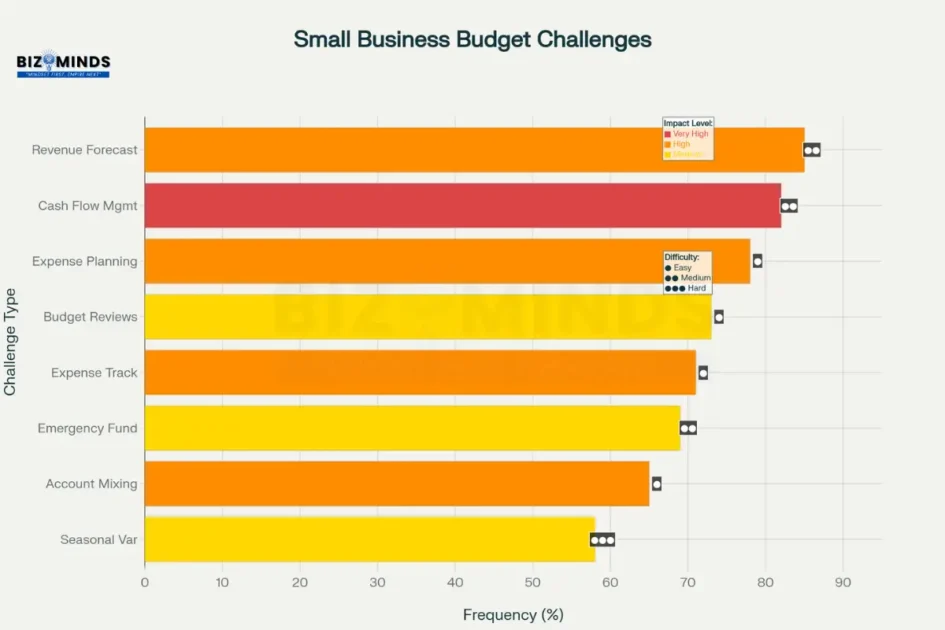
Common Small Business Budgeting Challenges and Solutions 2025 – Critical issues affecting small business financial management with practical solutions
Common Pitfalls and Strategic Solutions
Addressing Systematic Challenges
Small Business Budgeting faces numerous obstacles that can undermine financial stability. The most prevalent challenges include overestimating revenue (affecting 85% of small businesses), underestimating expenses (78% of businesses), and poor cash flow management (82% of businesses). These issues often compound, creating cascading effects that threaten business viability.
Revenue overestimation typically stems from optimistic projections unsupported by historical data or market analysis. Effective Small Business Budgeting addresses this challenge through conservative forecasting methodologies that incorporate multiple scenarios and build in appropriate contingencies. Businesses should base revenue projections on historical performance, adjusted for known market conditions and seasonal variations.
Implementation of Corrective Measures
Expense underestimation represents another critical threat to Small Business Budgeting success. Best practices recommend building 10-15% expense buffers into budgets to account for unexpected costs and market fluctuations. This approach provides necessary flexibility while maintaining operational efficiency.
Successful businesses implement weekly cash flow monitoring systems that provide early warning of potential shortfalls. These systems track accounts receivable, accounts payable, and cash positions in real-time, enabling proactive management of working capital requirements.
Software Solutions and Technology Integration
Platform Comparison and Selection Criteria
The expense management software offers numerous solutions tailored to different business needs and budgets. Market leaders include Expensify, favored by startups for its automation capabilities, QuickBooks Online, preferred by US-based businesses requiring comprehensive accounting integration, and Xero, popular among international businesses for its multi-currency support.
Budget-conscious businesses often select Zoho Expense, which offers robust functionality starting at $2 monthly, while enterprises requiring advanced compliance features typically choose SAP Concur despite its higher cost structure. The selection process should evaluate integration capabilities, scalability, user interface design, and total cost of ownership.
Return on Investment Analysis
Implementing expense management software delivers substantial returns through time savings, error reduction, and improved financial visibility. Industry analysis demonstrates that businesses typically achieve 385% first-year returns on software investments, with payback periods averaging 2.5 months.
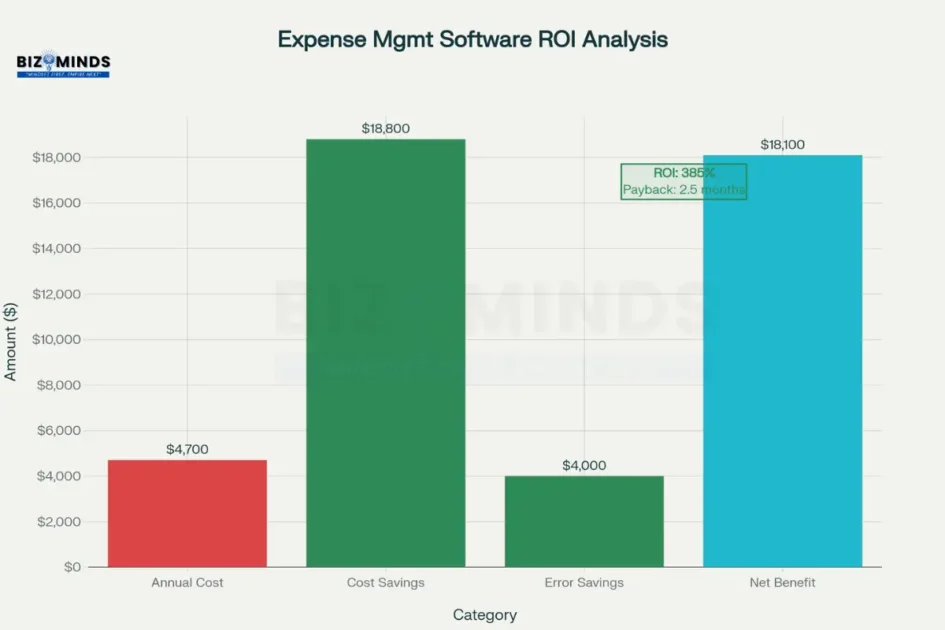
Expense Management Software ROI Analysis 2025 – Comprehensive return on investment analysis demonstrating the financial benefits of automated expense tracking
The financial benefits extend beyond direct cost savings to include improved compliance, enhanced audit preparation, and better cash flow management. Companies report annual time savings exceeding 500 hours, valued at approximately $18,800 based on average administrative labor costs.
Advanced Reporting and Analysis Techniques
Financial Statement Preparation
Comprehensive Small Business Budgeting requires regular preparation of essential financial statements including profit and loss statements, balance sheets, and cash flow statements. These documents provide stakeholders with critical insights into business performance while supporting strategic planning initiatives.
Monthly financial reporting enables businesses to identify trends, assess performance against budgets, and make informed operational adjustments. Companies that maintain consistent reporting schedules demonstrate better financial control and improved access to capital markets when expansion opportunities arise.
Variance Analysis and Corrective Action
Systematic variance analysis compares actual performance against budgeted figures, identifying areas requiring management attention. Effective Small Business Budgeting incorporates monthly variance reviews that examine both revenue and expense categories, determining root causes of significant deviations.
Best practices recommend establishing variance thresholds that trigger investigation protocols. Generally, variances exceeding 10% of budgeted amounts warrant detailed analysis and potential corrective action. This systematic approach ensures that Small Business Budgeting remains a proactive management tool rather than a reactive reporting mechanism.
Industry-Specific Considerations and Best Practices
Sector-Specific Challenges
Different industries face unique Small Business Budgeting challenges that require specialized approaches. Retail businesses must manage seasonal inventory fluctuations and varying customer demand patterns, while service-based companies focus on billable hours and project profitability tracking.
Manufacturing businesses require sophisticated cost accounting systems that track material costs, labor expenses, and overhead allocation. Professional services firms emphasize time tracking and client billing systems that support accurate project profitability analysis.
Customization Strategies
Successful Small Business Budgeting adapts general principles to specific industry requirements. Restaurants implement point-of-sale systems that track food costs and labor percentages in real-time, while construction companies utilize job costing systems that monitor project profitability and resource allocation.
Technology businesses often employ subscription-based budgeting models that track monthly recurring revenue, customer acquisition costs, and lifetime value metrics. These specialized approaches ensure that Small Business Budgeting remains relevant and actionable within specific operational contexts.
Compliance and Regulatory Considerations
Tax Optimization through Proper Tracking
Effective Small Business Budgeting supports tax optimization through systematic documentation of deductible expenses and proper revenue timing. The Internal Revenue Service requires businesses to maintain detailed records supporting all deductions, making accurate expense tracking essential for minimizing tax liability.
Generally Accepted Accounting Principles (GAAP) provide standardized frameworks for financial reporting that enhance credibility with lenders, investors, and other stakeholders. Small businesses benefit from implementing GAAP-compliant practices even when not legally required, as this demonstrates financial sophistication and management competence.
Audit Preparation and Documentation
Comprehensive expense tracking systems facilitate audit preparation by maintaining organized, accessible financial records. Digital systems automatically create audit trails that document transaction histories and approval workflows, reducing the time and cost associated with external audits.
Businesses implementing systematic Small Business Budgeting practices report significantly reduced audit fees and improved relationships with accounting professionals. The investment in proper systems pays dividends through reduced professional service costs and enhanced financial credibility.
Implementation Roadmap and Best Practices
Phased Implementation Strategy
Successful Small Business Budgeting implementation follows structured phases that minimize operational disruption while building comprehensive capabilities. Phase one focuses on establishing basic income and expense tracking through automated bank feeds and receipt processing systems.
Phase two introduces budget creation and variance analysis capabilities, enabling systematic comparison of actual performance against projections. Phase three incorporates advanced reporting and forecasting tools that support strategic planning and growth initiatives.
Team Training and Change Management
Effective implementation requires comprehensive training programs that ensure team members understand new systems and procedures. Best practices recommend designating budget champions within each department who receive advanced training and support ongoing adoption efforts.
Change management strategies should address potential resistance to new procedures while highlighting benefits for individual team members. Successful Small Business Budgeting requires organization-wide commitment to accurate data entry and consistent process adherence.
Future Trends and Technological Advancement
Small Business Budgeting stands on the precipice of a technological revolution that promises to transform how entrepreneurs manage their financial operations. With artificial intelligence market valuation in finance projected to reach $26.6 billion by 2025, representing nearly quadruple growth from $6.9 billion in 2020, small businesses are positioned to benefit from sophisticated tools previously available only to large enterprises. This democratization of advanced financial technology creates unprecedented opportunities for improved accuracy, efficiency, and strategic decision-making in budget management.
Artificial Intelligence and Automation
The integration of artificial intelligence into Small Business Budgeting represents a paradigm shift from reactive financial management to predictive, intelligent systems that anticipate needs and optimize performance automatically. Modern AI-powered platforms utilize machine learning algorithms to analyze historical spending patterns, identify cost-saving opportunities, and flag unusual transactions that may indicate fraud or errors.
Advanced Machine Learning Capabilities
Contemporary AI systems demonstrate remarkable sophistication in financial data processing. Machine learning OCR technology now achieves 95-99% accuracy rates in receipt and invoice scanning, reducing manual data entry by up to 90%. These systems continuously learn from user behavior and transaction patterns, becoming increasingly accurate over time while adapting to unique business characteristics.
Predictive analytics capabilities enable businesses to forecast cash flow requirements with 85-92% accuracy, incorporating external variables such as market conditions, seasonal trends, and economic indicators. Companies implementing AI-driven forecasting report up to 75% time savings in budget preparation while achieving more accurate projections that support strategic planning initiatives.
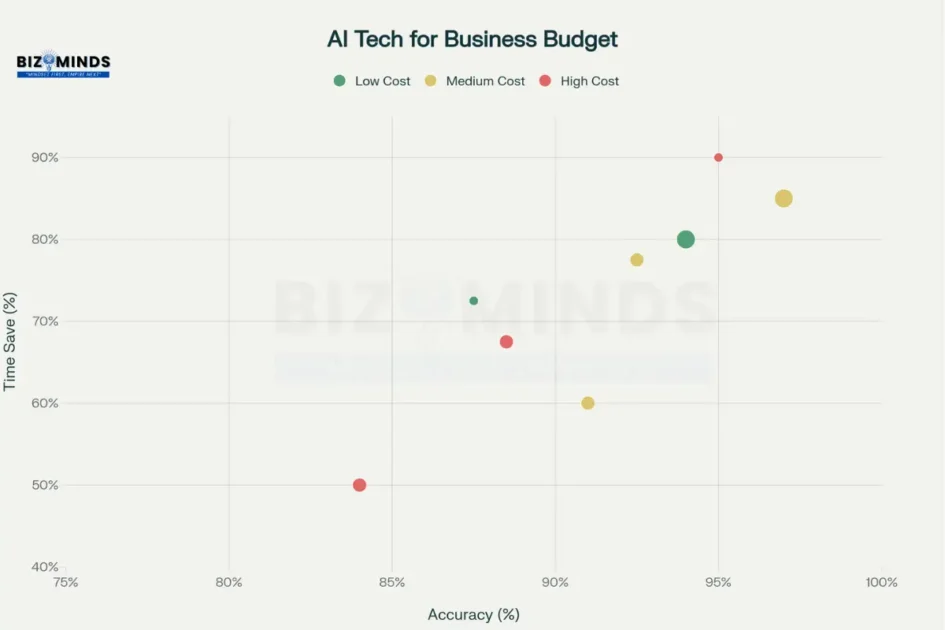
AI Technologies in Small Business Budgeting 2025 – Comprehensive analysis of artificial intelligence solutions transforming financial management
Key AI Technologies Transforming Small Business Budgeting:
Natural Language Processing:
Enables conversational interfaces for expense reporting and budget inquiries, achieving 90-95% accuracy in understanding user intent while saving 70-85% of traditional interaction time
Computer Vision:
Advanced document analysis capabilities with 93-97% accuracy rates, particularly effective for complex invoice processing and financial document categorization
Anomaly Detection:
Intelligent fraud prevention systems that identify suspicious patterns with 88-94% accuracy, reducing financial risks while saving 50-70% of manual review time
Automated Categorization:
Smart expense classification achieving 92-96% accuracy with minimal setup requirements, offering 75-85% time savings over manual processes
Predictive Analytics and Scenario Planning
Advanced AI platforms now offer sophisticated scenario planning capabilities that allow Small Business Budgeting to incorporate multiple “what-if” analyses automatically. These systems can simulate various business conditions, from revenue fluctuations to market disruptions, providing entrepreneurs with comprehensive risk assessments and contingency planning tools.
Research demonstrates that businesses utilizing AI-powered scenario planning reduce financial planning time by up to 80% while improving forecast accuracy by an average of 15-20%. These systems continuously monitor key performance indicators and external market conditions, automatically updating forecasts and alerting business owners to potential challenges or opportunities.
Integration and Ecosystem Development
The future of Small Business Budgeting increasingly emphasizes seamless integration across comprehensive business ecosystems that connect financial management with operational systems, customer relationships, and strategic planning tools. This holistic approach eliminates data silos while providing unified visibility into business performance and financial health.
Comprehensive Platform Integration
Modern budgeting solutions prioritize connectivity with existing business infrastructure through robust API frameworks and pre-built integrations. Leading platforms now support connections to over 7,000 business applications, enabling automatic data synchronization across accounting systems, customer relationship management platforms, inventory management tools, and human resource systems.
Cloud-based integration platforms have revolutionized Small Business Budgeting by enabling real-time data flows between disparate systems. Zapier, processing workflows for over 2.2 million businesses worldwide, demonstrates the scale of integration adoption among small enterprises. These platforms create automated workflows that eliminate manual data entry while ensuring consistency across all business systems.
Real-Time Collaboration Technologies
The evolution toward cloud-based Small Business Budgeting platforms enables unprecedented collaboration between business owners, accountants, and financial advisors. Modern systems support simultaneous access by multiple users, with real-time updates and approval workflows that streamline financial processes.
Advanced collaboration features include:
Multi-user Access Control:
Granular permission systems that ensure appropriate access to sensitive financial data while maintaining security compliance
Automated Approval Workflows:
Intelligent routing systems that expedite expense approvals and budget modifications based on predefined criteria and organizational hierarchies
Real-time Notification Systems:
Instant alerts for budget variances, unusual transactions, and approval requirements that keep all stakeholders informed of critical developments
Mobile-First Design:
Comprehensive functionality available across devices, enabling financial management from anywhere with internet connectivity
API-Driven Financial Ecosystems
The future of Small Business Budgeting relies heavily on Application Programming Interface (API) connectivity that enables seamless data exchange between financial platforms and operational systems. Modern accounting APIs support real-time synchronization of transaction data, automated invoice generation, and integrated tax compliance reporting.
| Integration Category | Key Benefits | Implementation Timeline | ROI Impact |
| Banking & Payments | Real-time transaction syncing, automated reconciliation | 1-2 weeks | 200-300% |
| E-commerce Platforms | Automatic sales data import, inventory synchronization | 2-3 weeks | 150-250% |
| CRM Systems | Customer data integration, sales-to-invoice automation | 3-4 weeks | 175-275% |
| Payroll Services | Automated wage calculations, tax compliance | 2-4 weeks | 225-325% |
| Inventory Management | Real-time stock levels, cost of goods sold tracking | 4-6 weeks | 150-200% |
Enhanced Security and Compliance Framework
Future Small Business Budgeting platforms incorporate enterprise-grade security measures including bank-level encryption, multi-factor authentication, and automated compliance monitoring. These systems maintain detailed audit trails while ensuring adherence to evolving regulatory requirements and data protection standards.
Cloud-based platforms invest millions annually in security infrastructure, providing small businesses with protection levels previously available only to large enterprises. Automatic software updates ensure that security patches and compliance requirements are implemented immediately, reducing vulnerability windows and maintaining regulatory compliance without manual intervention.
Artificial Intelligence-Powered Insights and Recommendations
Advanced Small Business Budgeting platforms now incorporate AI-driven advisory capabilities that provide personalized recommendations for cost optimization, cash flow improvement, and strategic financial planning. These systems analyze business performance patterns and industry benchmarks to deliver actionable insights that support growth objectives.
Machine learning algorithms continuously refine their recommendations based on business performance outcomes, creating increasingly sophisticated advisory capabilities that rival human financial consulting services. Small businesses report average cost reductions of 8-12% within six months of implementing AI-powered budgeting recommendations.
The convergence of artificial intelligence, cloud integration, and collaborative technologies positions Small Business Budgeting at the forefront of business innovation, enabling entrepreneurs to achieve levels of financial sophistication and operational efficiency that drive sustainable competitive advantages in increasingly dynamic markets.
Conclusion
Effective Small Business Budgeting through systematic income and expense tracking represents the cornerstone of entrepreneurial success in today’s competitive marketplace. The comprehensive strategies, technological solutions, and proven methodologies outlined throughout this guide demonstrate that successful financial management extends far beyond simple bookkeeping to encompass strategic oversight that drives sustainable growth. With 36.2 million small businesses operating across the United States, those that master budgeting principles consistently outperform competitors while building resilient financial foundations capable of weathering economic uncertainties and capitalizing on growth opportunities.
The integration of artificial intelligence and automated systems into budgeting processes has revolutionized how entrepreneurs manage their financial operations. Modern Small Business Budgeting platforms deliver unprecedented accuracy rates of 95-99% in transaction processing while reducing administrative time by up to 90%, enabling business owners to focus on strategic initiatives rather than manual data entry. Companies implementing comprehensive software solutions achieve average returns on investment exceeding 385% within the first year, with payback periods averaging just 2.5 months. These technological advances democratize sophisticated financial management capabilities, making enterprise-level tools accessible to businesses of all sizes.
The evidence overwhelmingly supports the critical importance of disciplined budgeting practices in determining long-term business viability. Organizations that implement systematic Small Business Budgeting methodologies report significantly improved cash flow management, reduced financial risks, and enhanced decision-making capabilities that support strategic planning initiatives. The ability to track income sources accurately while categorizing expenses systematically provides the foundation for financial success that extends beyond mere compliance to encompass proactive strategy development.
Looking toward the future, financial management will increasingly incorporate predictive analytics, machine learning algorithms, and integrated ecosystem platforms that provide real-time insights into business performance. The evolution of cloud-based Small Business Budgeting solutions enables unprecedented collaboration between business owners, accountants, and financial advisors while maintaining enterprise-grade security standards. As market conditions continue evolving, businesses that invest in comprehensive budgeting infrastructure will be best positioned to adapt quickly to changing circumstances while maintaining operational efficiency.
The investment in mastering income and expense tracking through systematic approaches pays immediate dividends through improved financial control, enhanced stakeholder confidence, and expanded access to capital markets. Whether launching a new venture or scaling an established enterprise, the principles and practices of effective Small Business Budgeting provide the financial discipline necessary for sustainable success. The businesses that prioritize budgeting excellence today will emerge as tomorrow’s market leaders, equipped with the financial sophistication and operational resilience required to thrive in an increasingly complex business environment.
Frequently Asked Questions
What percentage of revenue should small businesses allocate for expense tracking software?
Industry benchmarks suggest allocating 0.5-1% of annual revenue for comprehensive financial management software. This investment typically yields returns exceeding 300% through improved efficiency, reduced errors, and better financial control. Businesses with revenues under $500,000 can often implement effective systems for $2,000-$5,000 annually.
How often should small businesses review and update their budgets?
Best practices recommend monthly budget reviews for businesses with stable operations and weekly reviews for companies experiencing rapid growth or significant market volatility. Quarterly comprehensive reviews should assess budget accuracy and adjust forecasting methodologies based on actual performance data.
Which expense categories require the most detailed tracking for tax purposes?
The IRS requires detailed documentation for meals and entertainment (50% deductible), travel expenses, home office deductions, and business vehicle usage. Professional services fees, equipment purchases, and marketing expenses also benefit from comprehensive tracking to maximize deduction opportunities while maintaining compliance.
What are the warning signs that indicate a need for improved expense tracking?
Key indicators include frequent cash flow surprises, difficulty preparing tax returns, inability to identify profitable products or services, and challenges obtaining financing. Regular budget variances exceeding 20% and difficulty locating expense receipts also signal the need for systematic improvements.
How can seasonal businesses effectively manage budgeting challenges?
Seasonal businesses should develop separate budgets for peak and off-peak periods, maintain larger cash reserves to cover low-revenue months, and implement flexible staffing models that adjust to demand patterns. Historical analysis of seasonal trends provides the foundation for accurate cash flow forecasting.
What integration capabilities should businesses prioritize when selecting budgeting software?
Essential integrations include banking platforms, payment processors, payroll systems, and tax preparation software. Businesses using e-commerce platforms should prioritize inventory management integration, while service companies benefit from time tracking and project management connectivity.
Citations
- https://www.bankrate.com/loans/small-business/small-business-statistics/
- https://www.forbes.com/advisor/business/small-business-statistics/
- https://www.ukg.com/blog/small-business-budget-prep-ultimate-year-end-checklist
- https://milestone.inc/blog/what-are-accounting-best-practices-for-small-businesses
- https://www.adp.com/spark/articles/2025/08/5-essential-strategies-for-managing-your-small-business-cash-flow.aspx
- https://www.shopify.com/in/blog/small-business-expense-tracking
- https://www.salesforce.com/blog/create-a-budget-for-your-small-business/
- https://ramp.com/blog/expense-tracker-for-business
- https://www.fylehq.com/blog/expense-management-software-roi
- https://www.meegle.com/en_us/topics/budgeting/budgeting-for-small-businesses
- https://www.rippling.com/blog/xero-vs-quickbooks
- https://www.biz2credit.com/revenue-based-financing/small-business-financial-reporting
- https://www.invensis.net/blog/small-businesses-financial-reporting-importance
- https://www.uschamber.com/co/run/finance/budgeting-for-small-business
- https://clarifycapital.com/blog/small-business-money-management-2025
- https://www.shoeboxed.com/blog/business-expense-tracker-template
- https://www.alaan.com/blog/best-expense-tracking-software-small-business
- https://quickbooks.intuit.com/r/small-business-data/financial-literacy-statistics/
- https://www.fylehq.com/blog/expense-tracking
- https://www.sellerscommerce.com/blog/small-business-statistics/
- https://brightsg.com/en-ie/blog/7-budgeting-cash-flow-strategies-smes-2025/
- https://stripe.com/resources/more/how-to-effectively-track-small-business-expenses
- https://www.sba.gov/business-guide/manage-your-business/manage-your-finances
- https://www.netsuite.com/portal/resource/articles/financial-management/small-business-financial-tips.shtml
- https://www.stampli.com/blog/accounting/track-small-business-expenses/
- https://www.fedsmallbusiness.org/categories/revenue-size
- https://www.volopay.com/blog/business-budget-planning/
- https://www.cnbc.com/select/best-expense-trackers-for-small-business-owners/
- https://tipalti.com/resources/learn/cash-flow-management/
- https://www.aicpa-cima.com/resources/article/financial-reporting-framework-for-small-and-medium-size-entities
- https://remote.com/blog/global-hr/small-business-expense-tracking
- https://tallysolutions.com/smart-moves/accounting-and-finance/cash-flow-management-strategies-business-growth/
- https://www.accountingweekly.com/audit-accounting/understanding-workers-compensation-your-rights-and-responsibilities-kgjef-6e4dj-rbndj-nd73y
- https://www.ukg.com/hr-basics/how-track-company-expenses-your-small-mid-sized-business
- https://www.getdefacto.com/article/small-business-cash-flow-management
- https://www.truist.com/resources/commercial-corporate-institutional/manage-cash-flow/articles/10-steps-for-better-cash-management
- https://www.uschamber.com/co/run/finance/smb-accounting-standards
- https://www.rippling.com/blog/how-to-track-business-expenses
- https://preferredcfo.com/insights/small-business-cash-flow-management-strategies
- https://www.ifrs.org/supporting-implementation/2025-ifrs-for-smes-supporting-materials/
- https://business.gov.au/finance/cash-flow/guide-to-managing-cash-flow
- https://www.linkedin.com/pulse/common-expense-tracking-mistakes-how-avoid-34dde
- https://betteraccounting.com/mastering-expense-tracking-a-small-business-owners-guide-to-financial-clarity/
- https://planergy.com/blog/small-business-financial-challenges/
- https://trackolap.com/blog/common-expense-management-mistakes-businesses-must-avoid
- https://www.baytechconsulting.com/blog/cfos-guide-to-calculating-the-roi-of-custom-software-development-2025
- https://vittafinconsultancyllc.com/4-real-life-case-studies-in-small-business-financial-strategy.html
- https://disprz.ai/blog/steps-to-assess-ld-expenses-roi
- https://preferredcfo.com/insights/budgeting-essentials
- https://ramp.com/blog/avoid-these-6-accounting-mistakes
- https://www.moontechnolabs.com/blog/expense-management-system/
- https://businesscasestudies.co.uk/case-studies/finance-case-studies/budgeting/
- https://quickdiceerp.com/blog/7-accounting-mistakes-that-small-business-owners-make
- https://www.fylehq.com
- https://www.tandfonline.com/doi/full/10.1080/09638180.2024.2362681
- https://deliberatedirections.com/common-financial-mistakes-small-businesses-should-avoid-at-any-cost/
- https://www.devopsschool.com/blog/top-10-expense-management-tools-in-2025-features-pros-cons-comparison/
- https://reachreporting.com/blog/memory-updated-financial-reporting-for-different-business-sizes
- https://confiancebizsol.com/xero-vs-quickbooks-comparison-guide/
- https://wallester.com/blog/business-insights/top-15-expense-management-software-2025
- https://www.pipedrive.com/en/blog/financial-reporting
- https://www.xero.com/versus/quickbooks-alternative/
- https://www.emburse.com/resources/top-8-expense-management-mobile-apps-for-2025
- https://www.forbes.com/advisor/business/software/xero-vs-quickbooks/
- https://asanify.com/blog/human-resources/best-expense-management-software-2025/
- https://www.ibntech.com/blog/small-business-accounting-reports/
- https://www.youtube.com/watch?v=0Uh4iBr6OLo
- https://www.citrincooperman.com/In-Focus-Resource-Center/6-Best-Practices-for-Financial-Reporting-and-Analysis
- https://www.hubspot.com/comparisons/xero-vs-quickbooks
- https://www.rydoo.com/cfo-corner/best-expense-management-software/
- https://giddh.com/blog/small-business-accounting-software-best-practices
- https://quickbooks.intuit.com/compare/xero-vs-quickbooks/
- https://moneyview.in/insights/best-personal-finance-management-apps-in-india