


How to Choose Between Debt Consolidation and Consolidation Loans to save $2400+: Your Complete 2025 Guide
Managing multiple debts has become increasingly challenging for American consumers, with total household debt reaching $17.57 trillion in 2024. When facing high-interest credit cards, personal loans, and various monthly obligations, many borrowers find themselves weighing the benefits of consolidation loans against traditional debt consolidation strategies. The choice between these financial tools can significantly impact your path to financial freedom, potentially saving thousands in interest payments while simplifying your monthly obligations.
Research indicates that consumers who successfully consolidate high-interest debt through consolidation loans can reduce their monthly payments by 40% and save an average of $2,400 in total interest costs over the life of their loans. However, selecting the wrong approach can trap borrowers in extended repayment cycles or leave them vulnerable to accumulating additional debt. This comprehensive analysis examines both strategies, their qualifying requirements, costs, and long-term implications to help you make an informed decision that aligns with your financial circumstances and goals.
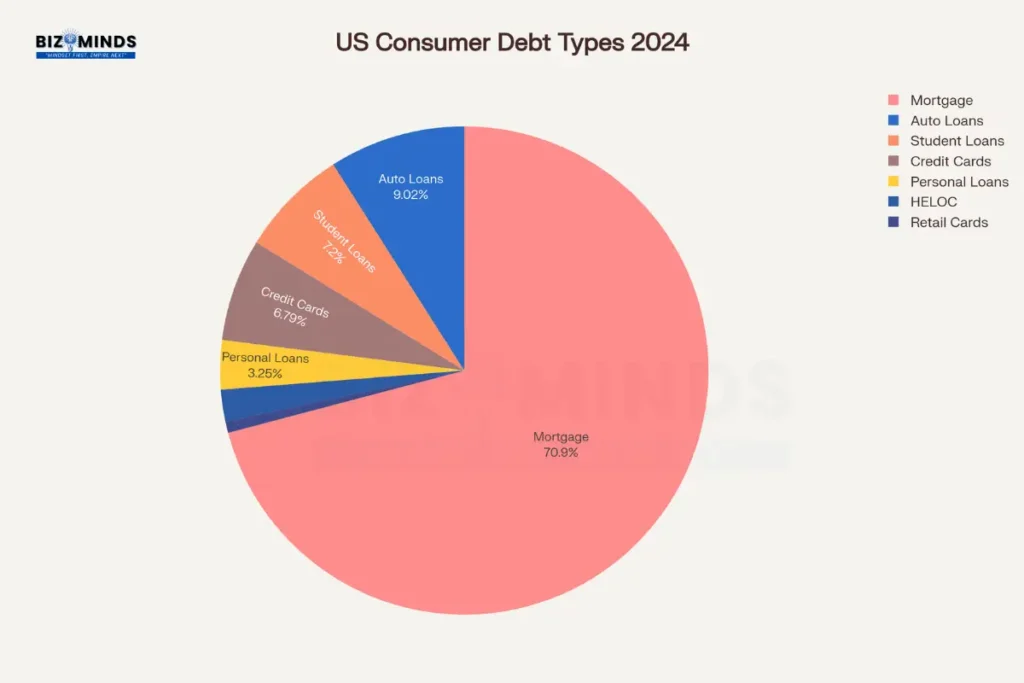
US Consumer Debt Consolidation Market Overview: $17.57 Trillion Breakdown
Understanding Debt Consolidation Fundamentals
Debt consolidation represents a financial strategy that combines multiple existing debts into a single, more manageable obligation. This approach typically aims to secure lower interest rates, reduce monthly payments, or simplify financial management by replacing numerous creditor relationships with one primary lender. The average American household carries $6,271 in credit card debt, often alongside auto loans, student debt, and other financial obligations.
The fundamental principle behind debt consolidation involves paying off existing high-interest debts using funds from a new financial product, whether through consolidation loans, balance transfer credit cards, or home equity products. This strategy proves most effective when borrowers secure lower interest rates than their current obligations while maintaining disciplined spending habits to avoid accumulating additional debt.
Current market data reveals that debt consolidation represents the most common use for personal loans, accounting for over 39% of approved applications in 2025. The average disbursed loan amount for debt consolidation purposes reached $25,271, reflecting the substantial debt burdens many Americans face. However, success rates vary significantly based on borrower behavior, with Forbes Advisor research indicating that only 4% of respondents believed they would remain debt-free after paying off their consolidation loans.
The consolidation process requires careful evaluation of existing debt terms, interest rates, and monthly payment obligations. Borrowers must assess their current financial situation, including credit scores, income stability, and spending patterns, to determine the most appropriate consolidation strategy. This evaluation becomes crucial given that 45% of survey participants reported missing payments on their consolidation loans, highlighting the importance of realistic financial planning.
Understanding the distinction between various consolidation approaches helps borrowers make informed decisions. While all methods aim to simplify debt management, they differ significantly in terms of eligibility requirements, costs, interest rates, and long-term implications. The choice between consolidation loans and other debt management strategies depends on factors including debt amount, credit profile, and financial goals.
Consolidation Loans: Features and Benefits
Consolidation loans represent specialized personal loan products designed specifically to pay off multiple existing debts. These unsecured financial instruments typically offer fixed interest rates, predetermined repayment terms, and structured monthly payments that remain consistent throughout the loan period. Unlike general-purpose personal loans, consolidation loans focus exclusively on debt management objectives.
The primary advantage of consolidation loans lies in their potential to reduce borrowing costs through lower interest rates. Current market data indicates that borrowers with excellent credit scores (800-850) can secure consolidation loans with average APRs of 11.67%, while those with very good credit (740-799) typically qualify for rates around 13.37%. These rates represent significant savings compared to credit card interest rates, which average 22.75% and can exceed 30% for borrowers with lower credit scores.
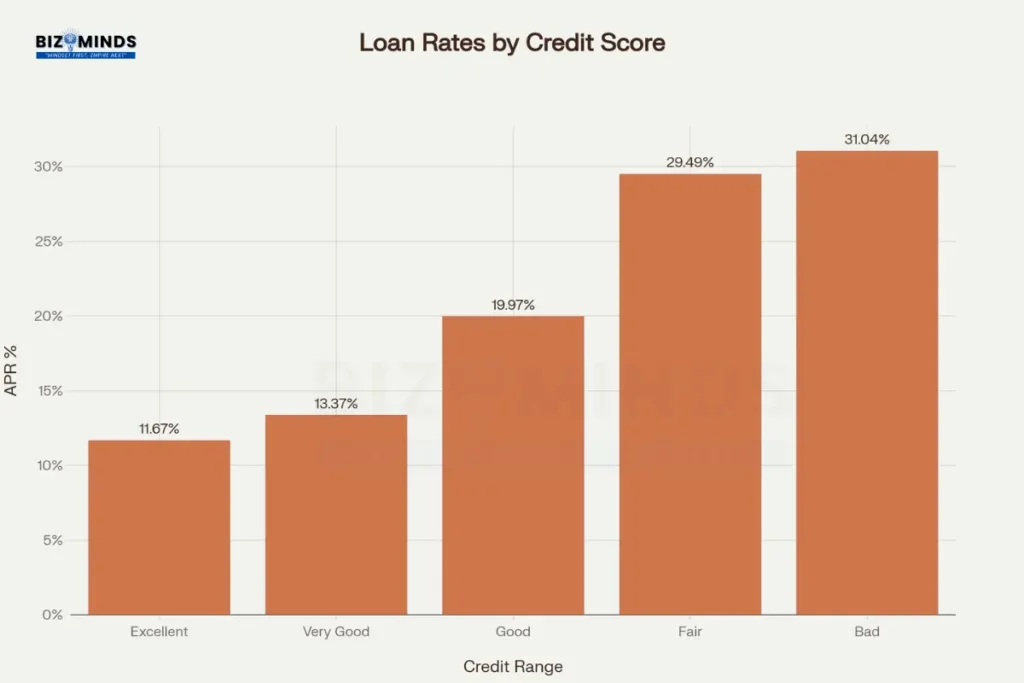
Average APR rates for debt consolidation loans by credit score range (2024-2025 data)
Loan amounts for consolidation loans typically range from $1,000 to $100,000, with most lenders offering repayment terms spanning two to seven years. The specific loan amount and terms depend on factors including borrower creditworthiness, debt-to-income ratio, and the total amount of debt being consolidated. Borrowers with stable employment history and strong credit profiles often qualify for larger loan amounts with more favorable terms.
Many consolidation loan lenders offer direct payment services, where loan proceeds are sent directly to creditors rather than to the borrower. This feature helps ensure that funds are used appropriately for debt consolidation purposes while potentially offering rate discounts for borrowers who choose this option. Some lenders provide rate reductions of 0.25% to 0.50% for borrowers who opt for direct creditor payments.
The application process for consolidation loans typically requires documentation including proof of income, employment verification, and detailed information about existing debts. Most lenders complete the approval process within 24 to 48 hours, with funds disbursement occurring shortly after approval. This quick turnaround makes consolidation loans attractive for borrowers seeking immediate debt relief.
Fixed-rate structures represent another significant advantage of consolidation loans. Unlike credit cards with variable interest rates that can increase over time, consolidation loans maintain consistent monthly payments throughout the repayment period. This predictability facilitates budgeting and financial planning while protecting borrowers from interest rate fluctuations.
Personal Loans for Debt Management
Personal loans serve as versatile financial tools that can be utilized for various purposes, including debt consolidation. While not specifically designed for consolidation purposes, personal loans offer flexibility that appeals to borrowers seeking to address multiple financial needs simultaneously. These unsecured loans typically provide fixed interest rates and structured repayment schedules similar to dedicated consolidation loans.
The distinction between personal loans used for debt consolidation and specialized consolidation loans often lies in marketing and lender positioning rather than fundamental loan characteristics. Many lenders offer identical products under both categories, with similar interest rates, terms, and qualification requirements. However, some personal loan products may offer broader usage flexibility, allowing borrowers to address both debt consolidation and other financial needs.
Interest rates for personal loans vary widely based on borrower credit profiles and market conditions. Current market data shows rates ranging from approximately 6% for borrowers with exceptional credit to over 35% for those with poor credit histories. The average personal loan interest rate for consolidation purposes typically falls between 10% and 15% for borrowers with good to excellent credit.
Personal loan amounts generally range from $1,000 to $75,000, depending on lender policies and borrower qualifications. Repayment terms typically span two to seven years, with some lenders offering extended terms for larger loan amounts. Borrowers must carefully evaluate the total cost of borrowing, including interest charges over the full repayment period, to ensure that personal loans provide genuine savings compared to existing debt obligations.
The application process for personal loans mirrors that of consolidation loans, requiring income verification, credit checks, and debt assessment. Many online lenders offer pre-qualification tools that allow borrowers to estimate potential rates and terms without impacting their credit scores. This feature enables comparison shopping across multiple lenders to identify the most favorable terms.
One advantage of personal loans over specialized consolidation products is their flexibility in fund usage. Borrowers can use personal loan proceeds to pay off debts while retaining some funds for emergency expenses or other financial needs. However, this flexibility requires strong financial discipline to avoid using excess funds inappropriately.
Types of Consolidation Options
The debt consolidation market offers several distinct approaches, each with specific advantages, requirements, and limitations. Understanding these options helps borrowers select the most appropriate strategy based on their credit profile, debt amount, and financial circumstances.
Secured vs. Unsecured Consolidation Loans
Secured consolidation loans require borrowers to pledge collateral, typically their home or vehicle, to secure the loan. These loans often offer lower interest rates due to reduced lender risk, with typical rates ranging from 9% to 12%. Borrowers can often access larger loan amounts, sometimes up to 90% of their asset value, with extended repayment terms of 15 to 20 years for property-secured loans.
However, secured consolidation loans carry significant risks. Failure to make payments can result in asset forfeiture, potentially causing borrowers to lose their homes or vehicles. The application process typically takes longer due to property appraisal and legal documentation requirements. Despite lower interest rates, extended repayment periods can result in higher total interest costs over the loan’s lifetime.
Unsecured consolidation loans, conversely, do not require collateral but typically feature higher interest rates. These loans rely on borrower creditworthiness and income stability for approval decisions. Interest rates generally range from 10% to 25%, depending on credit scores and other risk factors. Loan amounts are typically smaller than secured options, usually ranging from $5,000 to $50,000.
Balance Transfer Credit Cards
Balance transfer credit cards offer an alternative consolidation method, particularly effective for credit card debt. These products typically feature promotional 0% APR periods lasting 12 to 21 months. Borrowers can transfer existing credit card balances to the new card, potentially eliminating interest charges during the promotional period.
The primary advantage of balance transfer cards lies in potential interest savings. If borrowers can pay off transferred balances within the promotional period, they avoid interest charges entirely. However, these products typically require good to excellent credit for approval and the best promotional terms.
Balance transfer cards typically charge transfer fees of 3% to 5% of the transferred amount. After the promotional period expires, interest rates often exceed those available through consolidation loans. Additionally, these cards may have lower credit limits than needed for complete debt consolidation.
Home Equity Products
Home equity loans and Home Equity Lines of Credit (HELOCs) provide additional consolidation options for homeowners. These products typically offer lower interest rates than unsecured loans due to the home serving as collateral. Home equity loans provide lump-sum funding with fixed interest rates, while HELOCs offer revolving credit access with variable rates.
Interest rates for home equity products typically range from 6% to 10%, significantly lower than most consolidation loans. Borrowers can often access substantial loan amounts, sometimes up to 80% of their home’s value. Interest payments may be tax-deductible if funds are used for home improvements, providing additional financial benefits.
However, home equity products carry foreclosure risk if borrowers cannot meet payment obligations. The application process is more complex, requiring property appraisals and extensive documentation. Additionally, closing costs and fees can add significantly to the total borrowing cost.
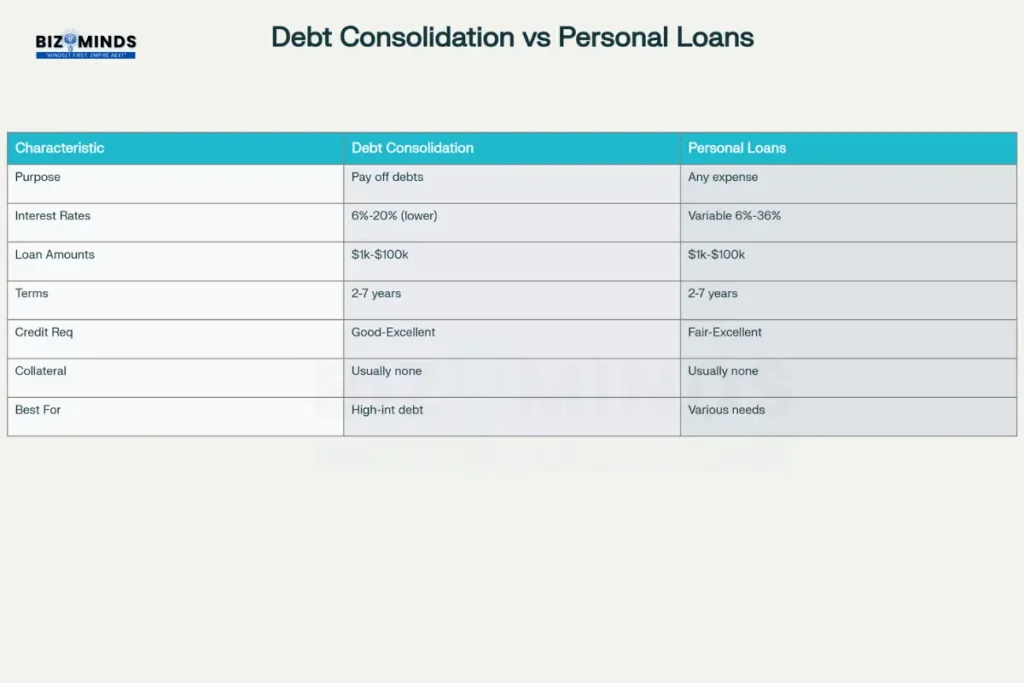
Comparison table: Debt consolidation loans vs. personal loans key features
Credit Score Requirements and Qualification Factors
Minimum Credit Score Thresholds for Consolidation Loans
Credit scores serve as the primary determinant for consolidation loan approval and interest rate determination. Lenders use credit scores to assess default risk and establish appropriate lending terms. Understanding these requirements helps borrowers evaluate their qualification prospects and identify areas for improvement before applying.
Most consolidation loan lenders prefer borrowers with credit scores of 650 or higher, with the best rates reserved for scores above 700. Borrowers with excellent credit (750+) typically qualify for the lowest available rates, often below 12%. Those with fair credit (580-669) face higher rates, averaging around 29.49%, while borrowers with poor credit (below 580) encounter rates exceeding 31%.
The minimum credit score requirements vary among lenders, with some accepting borrowers with scores as low as 550. However, these lenders typically charge substantially higher interest rates and may require additional qualification criteria. Credit unions often provide more flexible requirements for their members, sometimes accepting lower scores with compensating factors such as stable employment or existing banking relationships.
Income Verification and Employment Stability Standards
Income requirements represent another crucial qualification factor. Most lenders require minimum monthly incomes ranging from $15,000 to $25,000 for salaried employees. Self-employed borrowers typically face higher income requirements, often needing monthly earnings of $18,000 or more. Lenders evaluate income stability and consistency, preferring borrowers with extended employment history at their current positions.
Employment stability requirements typically mandate three to six months at the current position for salaried employees. Self-employed borrowers usually need one to two years of business operation history. Lenders may require employment verification through pay stubs, employer contact, or tax returns.
Debt-to-Income Ratio Calculations and Limits
Debt-to-income ratios significantly influence approval decisions. Most lenders prefer ratios below 40%, though some accept ratios up to 50% with strong credit profiles. This ratio includes the proposed consolidation loan payment, so borrowers must ensure their total monthly obligations remain within acceptable limits.
The calculation includes all monthly debt obligations divided by gross monthly income. This encompasses mortgage payments, auto loans, credit cards, student loans, and the proposed consolidation loan payment. Lenders use this metric to assess borrowers’ capacity to handle additional debt service without financial strain.
Employment stability requirements typically mandate three to six months at the current position for salaried employees. Self-employed borrowers usually need one to two years of business operation history. Lenders may require employment verification through pay stubs, employer contact, or tax returns.
Age and Residency Requirements for Loan Approval
Age restrictions typically require borrowers to be at least 21 years old, with upper age limits around 65 to 80 years depending on the loan term. Some lenders impose restrictions ensuring borrowers will not exceed certain ages at loan maturity. These requirements reflect lender concerns about income stability and repayment capacity throughout the loan term.
Residency requirements generally mandate US citizenship or permanent resident status for consolidation loans. Some lenders restrict lending to specific states due to regulatory variations. Borrowers should verify their state’s eligibility before applying, as interstate lending regulations can affect loan availability and terms.
Interest Rates and Cost Analysis
Interest rate determination for consolidation loans involves multiple factors beyond credit scores. Lenders consider loan amounts, repayment terms, borrower income, employment stability, and overall financial profile when establishing rates. Understanding these factors helps borrowers anticipate potential costs and identify ways to secure better terms.
Current market data reveals significant rate variations across credit score ranges. Borrowers with excellent credit (800-850) can secure rates as low as 11.67%, while those with very good credit (740-799) typically receive rates around 13.37%. Good credit borrowers (670-739) face rates averaging 19.97%, while fair credit borrowers (580-669) encounter rates near 29.49%.
The relationship between loan terms and total interest costs requires careful consideration. Shorter repayment periods result in higher monthly payments but lower total interest charges. For example, a $20,000 loan at 12% APR costs approximately $2,157 in total interest over 24 months but $4,421 over 48 months. Borrowers must balance monthly affordability with total cost considerations.
Origination fees represent additional costs that vary among lenders. These upfront charges typically range from 1% to 8% of the loan amount and are often deducted from loan proceeds. Some lenders, particularly credit unions and banks, do not charge origination fees, while online lenders commonly include these charges.
Prepayment penalties, once common in personal loans, are now relatively rare. Most lenders allow early repayment without penalties, enabling borrowers to save on interest costs by paying off loans ahead of schedule. However, borrowers should verify prepayment policies before committing to specific lenders.
Late payment fees and other penalties can significantly increase borrowing costs. These charges typically range from $25 to $50 per occurrence and may trigger higher interest rates after repeated violations. Some lenders offer grace periods or payment flexibility programs for borrowers experiencing temporary financial difficulties.
The comparison between consolidation loan costs and existing debt obligations determines the financial benefit of consolidation. Successful consolidation typically reduces both monthly payments and total interest costs. However, extending repayment periods beyond original debt terms can increase total costs despite lower monthly payments.
Real-World Case Studies and Examples
Case Study 1: Credit Card Debt Consolidation Success
Sarah, a 34-year-old marketing professional from Texas, accumulated $18,000 in credit card debt across four cards with interest rates ranging from 19.99% to 28.99%. Her minimum monthly payments totaled $720, with most payments going toward interest rather than principal reduction. After researching consolidation options, Sarah qualified for a $18,000 consolidation loan at 14.5% APR with a 48-month term.
The consolidation loan reduced Sarah’s monthly payment to $515, saving $205 monthly. More importantly, the lower interest rate enabled faster principal reduction, with the loan scheduled for complete payoff in four years compared to over 15 years for minimum credit card payments. Total interest savings exceeded $12,000 over the repayment period, demonstrating the substantial benefits of successful debt consolidation.
Sarah’s success resulted from several factors: maintaining good credit (720 score), stable employment with consistent income, and commitment to avoiding additional debt accumulation. She closed three of the four credit cards after payoff, retaining one for emergency use with a strict monthly limit. This disciplined approach prevented the common mistake of reaccumulating debt after consolidation.
Case Study 2: Business Owner Debt Consolidation
Mike, a restaurant owner in California, faced $200,000 in various business debts including credit cards, merchant cash advances, and equipment financing. His average interest rate exceeded 25%, with monthly payments totaling $15,000 straining his cash flow. The high debt service prevented reinvestment in his business and threatened operational stability.
Mike secured a $200,000 debt consolidation loan at 10% APR with a five-year term, reducing his monthly payments to $4,250. This 40% payment reduction freed up $10,750 monthly for business operations and improvements. The lower interest rate saved approximately $64,500 in total interest costs over the loan’s lifetime.
The improved cash flow enabled Mike to upgrade equipment, hire additional staff, and expand his menu offerings. Increased revenue and operational efficiency allowed early loan repayment within four years. Mike’s credit score improved throughout the process due to consistent payments and reduced credit utilization, positioning him for better financing terms in the future.
Case Study 3: Retail Business Debt Restructuring
Linda, who operated a clothing retail store, consolidated $50,000 in various debts including credit cards, supplier invoices, and equipment loans. Her original debt structure included average interest rates of 18% with monthly payments totaling $2,500. The debt service burden limited her ability to maintain adequate inventory and respond to seasonal demand fluctuations.
Through professional debt consolidation services, Linda negotiated settlements reducing her total debt from $50,000 to $40,000. She then secured a consolidation loan at 12% APR with a 60-month term, resulting in monthly payments of $1,100. The $1,400 monthly savings significantly improved her business cash flow and operational flexibility.
The consolidation process also included financial counseling that helped Linda implement better inventory management and cash flow planning. Her credit score improved from 580 to 720 over two years through consistent payments and reduced credit utilization. The successful restructuring positioned her business for sustainable growth and improved financial stability.
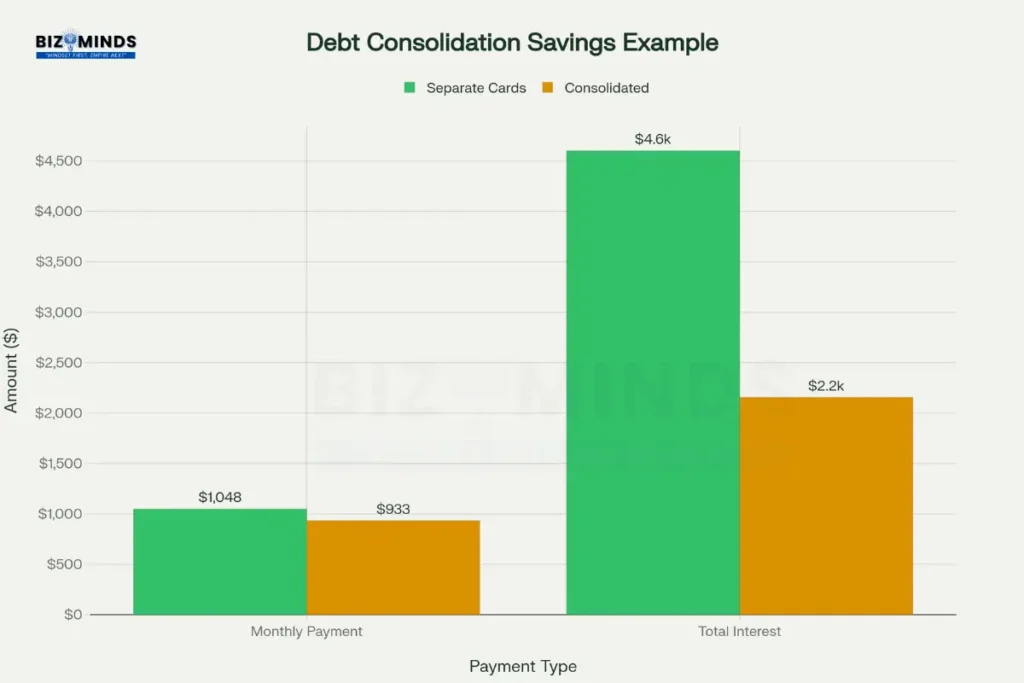
Real-world debt consolidation savings example: $20,000 debt over 24 months
Alternative Debt Management Strategies
Debt Settlement vs. Consolidation
Debt settlement involves negotiating with creditors to accept reduced payments, typically 30% to 60% of the original balance. While potentially offering greater debt reduction than consolidation, settlement carries significant risks including credit score damage and tax implications. Settlement typically requires borrowers to stop making payments, leading to delinquency and potential legal action.
The average debt settlement results in 60% to 70% debt reduction, but the process typically takes 2 to 4 years to complete. During this period, borrowers’ credit scores deteriorate significantly, limiting access to future financing. Additionally, forgiven debt amounts may be taxable as income, creating unexpected tax obligations.
Debt settlement companies typically charge fees ranging from 15% to 25% of enrolled debt amounts. These fees, combined with potential tax obligations and credit damage, often outweigh the benefits of debt reduction. Most financial experts recommend debt settlement only as a last resort before bankruptcy consideration.
Debt Management Plans
Credit counseling agencies offer debt management plans (DMPs) that consolidate payments without new borrowing. These programs involve negotiating reduced interest rates and payment plans with existing creditors. Borrowers make single monthly payments to the counseling agency, which distributes funds to creditors according to the negotiated plan.
DMPs typically reduce interest rates to 6% to 10% and eliminate late fees and over-limit charges. The programs usually require 3 to 5 years for completion and may require closing existing credit accounts. While DMP participation appears on credit reports, the impact is generally less severe than debt settlement or bankruptcy.
Nonprofit credit counseling agencies typically charge modest monthly fees ranging from $25 to $50. However, borrowers must qualify based on their ability to make the negotiated payments consistently. Creditor participation is voluntary, and some may not accept the proposed terms.
Bankruptcy Considerations
Bankruptcy represents the most severe debt relief option, available when other strategies prove insufficient. Chapter 7 bankruptcy eliminates most unsecured debts within 3 to 6 months but requires asset liquidation to pay creditors. Chapter 13 bankruptcy involves court-supervised repayment plans over 3 to 5 years while allowing borrowers to retain assets.
Bankruptcy provides immediate protection from creditor actions through automatic stays. This protection stops collection calls, wage garnishments, and foreclosure proceedings. However, bankruptcy severely damages credit scores, with effects lasting 7 to 10 years.
The decision between consolidation and bankruptcy depends on debt amounts relative to income and assets. Borrowers who can realistically repay their debts within 3 to 5 years through consolidation typically benefit more than those choosing bankruptcy. However, borrowers with overwhelming debt loads may find bankruptcy provides the only viable path to financial recovery.
Common Mistakes and How to Avoid Them
Failing to Address Root Causes
The most critical mistake in debt consolidation involves treating symptoms rather than underlying financial problems. Many borrowers consolidate debt without addressing the spending habits or financial management issues that created their debt burden. This approach often leads to reaccumulating debt while still servicing the consolidation loan, creating a worse financial situation.
Research indicates that 18% of borrowers anticipate falling back into debt within six months of completing their consolidation loans. This alarming statistic reflects the failure to implement sustainable financial management practices alongside consolidation strategies. Successful debt consolidation requires comprehensive budget analysis, expense tracking, and commitment to living within revised financial means.
To avoid this mistake, borrowers should conduct thorough financial assessments before consolidating debt. This analysis should identify specific factors contributing to debt accumulation, such as overspending on discretionary items, inadequate emergency savings, or income volatility. Addressing these root causes through budgeting, financial counseling, or income improvement strategies increases consolidation success probability.
Inadequate Research and Comparison Shopping
Many borrowers accept the first consolidation offer they receive without comparing alternatives. This mistake can cost thousands of dollars in unnecessary interest and fees over the loan’s lifetime. Interest rate differences of even 2% to 3% can result in substantial cost variations for larger loan amounts or longer terms.
Comprehensive comparison shopping should evaluate interest rates, fees, repayment terms, and lender policies across multiple providers. Online comparison tools and direct lender inquiries help identify the most favorable terms. Borrowers should also consider credit unions, which often offer competitive rates and more flexible qualification criteria for members.
The comparison process should extend beyond interest rates to include origination fees, prepayment penalties, payment flexibility options, and customer service quality. Some lenders offer rate discounts for automatic payments or direct creditor payments that can reduce overall borrowing costs. Taking time for thorough research typically results in significant savings and better loan terms.
Consolidating Low-Interest Debt
Borrowers sometimes consolidate all existing debts without considering the interest rates on individual obligations. Including low-interest debt such as federal student loans or low-rate auto loans in consolidation can increase overall borrowing costs. Federal student loans often carry rates below 5% and offer income-driven repayment options not available with private consolidation loans.
Strategic debt consolidation focuses on high-interest obligations while preserving favorable terms on existing low-rate debt. This approach maximizes interest savings while maintaining beneficial features such as tax deductibility or flexible payment options. Borrowers should calculate the total cost impact of including each debt in their consolidation analysis.
The decision to include specific debts should consider not only interest rates but also terms, benefits, and protections. For example, federal student loans offer forbearance, deferment, and forgiveness options not available with private consolidation loans. Auto loans secured by vehicles typically offer lower rates than unsecured consolidation loans, making their inclusion financially disadvantageous.
Premature Credit Card Usage
One of the most dangerous mistakes involves resuming credit card usage immediately after consolidation. The psychological relief from reduced monthly payments often creates false confidence about financial capacity. However, accumulating new debt while servicing a consolidation loan creates an unsustainable financial burden that may necessitate more drastic measures.
To prevent this mistake, many financial advisors recommend closing most credit cards after consolidation or making them physically inaccessible. Retaining one low-limit card for genuine emergencies can provide security while limiting temptation for discretionary spending. Some borrowers find success by freezing their credit cards or storing them in inconvenient locations.
Establishing clear spending guidelines and emergency fund priorities helps prevent credit card dependence. Borrowers should prioritize building emergency savings equal to 3 to 6 months of expenses before considering discretionary credit usage. This approach provides financial security without relying on credit for unexpected expenses.
Regulatory Framework and Consumer Protections
Federal Trade Commission Oversight
The Federal Trade Commission (FTC) regulates debt consolidation services to protect consumers from fraudulent and deceptive practices. These regulations require debt consolidation companies to provide complete fee disclosure, realistic timeline estimates, and accurate savings projections before collecting any payments. Companies cannot collect full fees upfront and must maintain client funds in FDIC-insured accounts with client ownership and control.
The Telemarketing Sales Rules specifically govern debt relief services, prohibiting upfront fee collection until services are completed. These rules apply to companies operating across state lines or using interstate communications for marketing. Violations can result in substantial penalties and forced restitution to affected consumers.
Consumer protection regulations require debt consolidation providers to base their savings claims on actual client experiences rather than theoretical projections. Companies must provide realistic timeframes based on previous settlement negotiations with creditors. These requirements help consumers make informed decisions based on accurate information rather than misleading marketing claims.
State-Level Regulations
Individual states maintain additional regulations governing debt consolidation services within their jurisdictions. Some states require registration or licensing for debt consolidation providers, while others impose specific disclosure requirements or fee limitations. Borrowers should verify that any debt consolidation company they consider is properly licensed in their state.
State usury laws establish maximum interest rates that lenders can charge on consolidation loans. These limits vary significantly among states, with some capping rates at 36% while others allow much higher rates. Understanding state rate limitations helps borrowers identify potentially predatory lending practices.
Consumer protection laws at the state level often provide additional remedies beyond federal regulations. Some states offer enhanced cooling-off periods, mandatory counseling requirements, or stricter disclosure standards. Borrowers facing financial difficulties should consult their state attorney general’s office for information about available protections and resources.
Truth in Lending Act Applications
The Truth in Lending Act (TILA) requires lenders to provide standardized disclosure of loan terms including APR calculations that incorporate interest rates and fees. This standardization enables accurate comparison shopping across different lenders and loan products. TILA disclosures must be provided before loan consummation, giving borrowers opportunity to review and understand their obligations.
APR calculations under TILA include not only interest rates but also origination fees, discount points, and certain other charges. This comprehensive approach provides borrowers with a more accurate assessment of total borrowing costs than interest rates alone. However, some fees such as late payment charges or prepayment penalties may not be included in APR calculations.
TILA also provides borrowers with rescission rights for certain types of secured loans. If a consolidation loan is secured by the borrower’s primary residence, they have three business days to cancel the transaction without penalty. This protection helps prevent hasty decisions that could jeopardize home ownership.
Making the Right Choice for Your Situation
Financial Assessment Framework
Determining the appropriate debt management strategy requires comprehensive evaluation of your current financial situation, future prospects, and specific goals. This assessment should begin with detailed analysis of all existing debts, including balances, interest rates, minimum payments, and terms. Creating a complete debt inventory helps identify which obligations would benefit most from consolidation.
Credit score evaluation represents another crucial component of the assessment process. Obtaining free credit reports from all three bureaus helps identify potential issues that might affect loan approval or interest rates. Borrowers with scores below 650 may benefit from credit improvement strategies before pursuing consolidation, potentially qualifying for better terms after score enhancement.
Income stability and growth prospects significantly influence consolidation strategy selection. Borrowers with steady employment and predictable income can typically handle fixed-payment consolidation loans effectively. However, those with variable income or uncertain employment situations might benefit from more flexible approaches such as debt management plans.
Monthly budget analysis helps determine affordable payment levels and identify opportunities for expense reduction. This analysis should include all income sources and expenses, revealing available capacity for debt service payments. Borrowers should ensure that proposed consolidation payments fit comfortably within their budgets with margin for unexpected expenses.
Decision Matrix Considerations
Creating a structured decision framework helps borrowers evaluate different consolidation options objectively. This matrix should compare total costs, monthly payments, repayment timeframes, and qualification requirements across available alternatives. Including risk factors such as collateral requirements and credit impact provides a comprehensive evaluation basis.
Interest rate comparisons should focus on APRs rather than promotional rates to ensure accurate cost assessment. Borrowers should obtain actual quotes from multiple lenders rather than relying on advertised ranges. Pre-qualification tools offered by many lenders provide personalized rate estimates without affecting credit scores.
The comparison should also consider non-financial factors such as customer service quality, payment flexibility, and lender reputation. Online reviews, Better Business Bureau ratings, and state regulatory records provide insights into lender practices and customer satisfaction. These factors become particularly important during financial difficulties when borrower-lender communication becomes critical.
Long-term implications require careful consideration beyond immediate payment relief. Some consolidation strategies may provide short-term benefits while creating greater long-term costs. Borrowers should model different scenarios including early payoff possibilities and potential income changes over the loan term.
Implementation Strategy
Successful debt consolidation requires careful implementation planning beyond simply obtaining financing. This planning should address credit account management, spending controls, and financial monitoring systems. Borrowers who approach consolidation strategically achieve better outcomes than those who view it as a simple financial transaction.
Credit account management becomes crucial immediately after consolidation. Borrowers must decide whether to close paid-off accounts, reduce credit limits, or maintain accounts for future use. The decision affects credit scores, available emergency capacity, and temptation for future spending. Most experts recommend closing most accounts while retaining one low-limit card for emergencies.
Spending control systems help prevent debt reaccumulation during the consolidation repayment period. These systems might include budget tracking apps, automatic savings transfers, or physical barriers to credit access. The specific approach matters less than consistency and effectiveness in maintaining spending discipline.
Financial monitoring throughout the consolidation period enables early identification of problems and opportunities. Regular credit score monitoring helps track improvement progress while expense tracking identifies areas for continued optimization. Borrowers who actively manage their finances during consolidation achieve better long-term outcomes than those who simply make payments passively.
Conclusion
The decision between consolidation loans and traditional debt consolidation strategies represents a critical juncture in your financial journey, with implications extending far beyond immediate payment relief. Our comprehensive analysis reveals that consolidation loans typically provide the most straightforward path to debt management for borrowers with good credit, offering fixed rates, predictable payments, and potential savings averaging $2,400 in total interest costs. However, success depends heavily on addressing underlying financial behaviors that created the debt burden initially.
The current debt consolidation market offers unprecedented opportunities for qualified borrowers, with interest rates for excellent
Frequently Asked Questions
Q1. What’s the difference between debt consolidation and consolidation loans?
Debt consolidation refers to the general strategy of combining multiple debts into a single obligation through various methods including personal loans, balance transfers, or home equity products. Consolidation loans represent a specific type of personal loan designed explicitly for debt consolidation purposes. While the terms are often used interchangeably, consolidation loans typically offer specialized features such as direct creditor payments and potentially lower rates for debt management purposes.
The key distinction lies in purpose and marketing rather than fundamental loan characteristics. Many lenders offer identical products under both categories, with similar rates, terms, and qualification requirements. However, dedicated consolidation loans may offer additional benefits such as financial counseling resources or payment flexibility options specifically designed for borrowers managing debt challenges.
Q2. How much can I save by consolidating my debt?
Savings from debt consolidation depend on several factors including current interest rates, credit score improvement, and loan terms selected. Based on real-world examples, borrowers can typically save $75 to $100 monthly on every $5,000 consolidated when reducing interest rates from 20-30% credit card rates to 10-15% consolidation loan rates. For larger debt amounts, savings can be substantial – consolidating $20,000 at 11% instead of 22.99% saves approximately $2,444 in total interest over 24 months.
The actual savings calculation requires comparing total costs including fees, not just interest rates. Some consolidation loans include origination fees of 1% to 8% that reduce net savings. Additionally, extending repayment terms beyond original debt schedules can increase total costs despite lower monthly payments. Borrowers should calculate both monthly and total cost impacts before proceeding with consolidation.
Q3. What credit score do I need to qualify for a consolidation loan?
Most consolidation loan lenders prefer credit scores of 650 or higher, with the best rates reserved for scores above 700. However, qualification requirements vary significantly among lenders, with some accepting scores as low as 550. Credit unions often provide more flexible requirements for members, sometimes accepting lower scores with compensating factors such as stable employment or existing banking relationships.
Credit scores directly impact interest rates and loan terms offered. Borrowers with excellent credit (800+) typically qualify for rates around 11-12%, while those with fair credit (580-669) face rates near 29%. Borrowers with lower credit scores should focus on improving their scores before applying, as even modest improvements can result in significant rate reductions and savings over the loan term.
Q4. Should I close my credit cards after consolidating the debt?
Most financial experts recommend closing most credit cards after consolidation while retaining one low-limit card for genuine emergencies. This strategy prevents the common mistake of reaccumulating debt while servicing the consolidation loan. However, closing accounts can temporarily impact credit scores by reducing available credit and shortening credit history.
The decision should balance credit score considerations with behavioral factors. Borrowers who demonstrate strong spending discipline might benefit from keeping accounts open to maintain credit utilization ratios. However, those who struggle with impulse spending typically achieve better outcomes by limiting credit access. Some borrowers find success by physically securing credit cards rather than closing accounts, maintaining credit availability while reducing temptation.
Q5. What happens if I miss payments on my consolidation loan?
Missing payments on consolidation loans can result in late fees, increased interest rates, and credit score damage. Most lenders charge late fees ranging from $25 to $50 per occurrence and may increase interest rates after repeated violations. These penalties can quickly accumulate, making the loan more expensive and difficult to repay.
Credit score impact from missed payments can be severe and long-lasting. Payment history represents 35% of credit score calculations, making consistent payments crucial for maintaining good credit. Multiple missed payments can trigger collections activity and potentially legal action depending on the loan amount and lender policies. Borrowers experiencing financial difficulties should contact their lenders immediately to discuss payment modification options rather than simply missing payments.
Q6. Are there alternatives to consolidation loans for managing debt?
Several alternatives exist for borrowers who don’t qualify for consolidation loans or prefer different approaches. Balance transfer credit cards offer 0% promotional rates for 12-21 months, potentially eliminating interest costs for borrowers who can pay off balances quickly. Home equity loans and HELOCs provide lower rates for homeowners but carry foreclosure risks.
Debt management plans through nonprofit credit counseling agencies negotiate reduced payments with existing creditors without new borrowing. These programs typically reduce interest rates to 6-10% and eliminate fees, though they require 3-5 years for completion. For borrowers with overwhelming debt loads, debt settlement or bankruptcy might provide more appropriate relief despite their severe credit consequences. The choice depends on debt amounts, income capacity, and long-term financial goals.