

These Affiliate Marketing Programs Pay $500+ Per Sale (Warning: They’re Not for Everyone)
The affiliate marketing programs has undergone a remarkable transformation in 2025, with the global industry reaching an unprecedented valuation of $18.5 billion and projecting explosive growth to $31.7 billion by 2031. This extraordinary expansion, fueled by an 8% compound annual growth rate, has created a specialized ecosystem where affiliate marketing programs offering $500, $1,000, or even $7,000 per single sale have emerged as the holy grail for serious marketers. However, beneath the enticing commission headlines lies a sobering reality: these high-paying opportunities represent less than 20% of available programs and demand expertise, resources, and commitment that eliminate 80% of aspiring affiliates before they begin.
Unlike traditional affiliate marketing programs that rely on volume-based strategies and modest per-sale commissions, high-ticket programs operate in an entirely different paradigm. These premium opportunities target enterprise software buyers, luxury consumers, and specialized business services where single transactions range from $2,000 to $50,000 or more. The mathematics are compelling: while promoting a $20 product with 10% commission requires 250 sales to generate $500 in revenue, a single high-ticket sale at $5,000 with 10% commission delivers the same result. This fundamental shift from quantity to quality has attracted sophisticated marketers willing to invest substantial time and resources in audience development, content creation, and relationship building.
The emergence of premium affiliate marketing programs reflects broader shifts in digital commerce and B2B purchasing patterns. With US affiliate marketing spending projected to reach $12 billion in 2025—an 11.9% increase from the previous year—businesses increasingly recognize performance-based marketing’s value proposition. Enterprise buyers now conduct extensive online research before making purchasing decisions, creating opportunities for knowledgeable affiliates to influence high-value transactions through educational content, detailed comparisons, and trusted recommendations. This trend has birthed a new class of affiliate marketers who function more as industry consultants than traditional promoters.
Yet the barriers to entry in high-ticket affiliate marketing programs are formidable and deliberately exclusive. Program managers impose strict application requirements including established audiences, demonstrated expertise, quality content portfolios, and proven conversion histories. The approval process can extend weeks or months, with rejection rates exceeding 70% for premium programs. Even approved affiliates face extended sales cycles, sophisticated competition, and market volatility that can dramatically impact earnings. Success requires treating affiliate marketing as a professional business venture rather than a passive income opportunity, demanding investments in technology, content creation, and marketing systems that often exceed $10,000 annually.
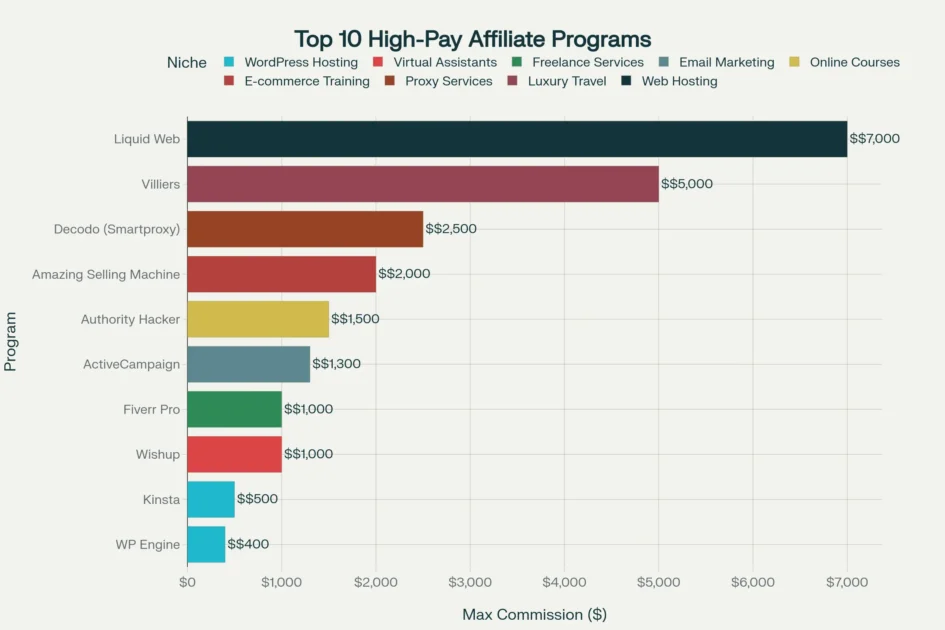
Top 10 Highest-Paying Affiliate Marketing Programs by Maximum Commission Per Sale
The High-Stakes World of Premium Affiliate Marketing Programs
Enterprise Software and SaaS Solutions Leading the Pack
The most lucrative affiliate marketing programs cluster around enterprise software and business services, where customer lifetime values justify substantial affiliate payouts. Liquid Web stands as the industry leader, offering commissions up to $7,000 per sale through their managed hosting services, with payouts reaching 300% of the customer’s first payment. This extraordinary commission structure reflects the high value of enterprise hosting clients, who typically maintain accounts worth thousands of dollars annually.
ActiveCampaign has established itself as a standout performer in the email marketing space, with successful affiliates earning an average of $1,300 per referral. Their tiered commission structure rewards top performers with 30% recurring commissions, creating substantial passive income streams. The platform’s sophisticated automation capabilities and enterprise-grade features command premium pricing, enabling these generous affiliate payouts.
WP Engine and Kinsta dominate the managed WordPress hosting sector, offering $200-500 initial commissions plus ongoing recurring payments. WP Engine provides minimum $200 payouts with bonuses for volume referrals, while Kinsta combines up to $500 initial commissions with 10% lifetime recurring commissions. These programs target developers, agencies, and high-traffic websites willing to pay premium prices for superior performance and support.
Luxury Affiliate Marketing Programs Command Premium Commissions
Villiers represents the pinnacle of luxury affiliate marketing, operating in the private jet charter space with commissions reaching $5,000+ per booking. Their 30% commission structure on flight bookings, combined with a 365-day cookie duration, creates exceptional earning potential for affiliates with access to high-net-worth audiences. The program exemplifies how luxury services can justify extraordinary affiliate payouts due to the high transaction values involved.
Wishup, operating in the virtual assistant marketplace, offers $1,000 flat commissions for each successful hire, reflecting the substantial value businesses place on quality remote talent. Their 90-day cookie window and dedicated affiliate support make this program particularly attractive for business-focused content creators.
Educational and Training Programs Capitalize on Transformation Value
Authority Hacker has built a reputation for paying up to $1,500 per sale on their SEO and digital marketing courses. Their 20-40% commission structure rewards affiliates who can effectively communicate the value of advanced marketing education to serious entrepreneurs and agencies. The program’s selectivity in choosing affiliates ensures quality partnerships while maintaining high conversion rates.
Amazing Selling Machine targets the e-commerce education space with commissions up to $2,000 per enrollment in their Amazon seller training programs. Their comprehensive approach to e-commerce education, combined with proven success stories, justifies premium pricing and substantial affiliate payouts.

Affiliate Marketing Programs Industry Growth Projections (2023-2028)
Affiliate Marketing Programs Industry Growth Trajectories and Market Dynamics
Explosive Market Expansion Driving Affiliate Marketing Programs Opportunity
The affiliate marketing industry’s remarkable growth trajectory provides the foundation for these high-paying programs. From a global market value of $17 billion in 2023, projections indicate expansion to $48 billion by 2027, representing a compound annual growth rate exceeding 18%. This growth is particularly pronounced in the United States, where spending is expected to increase from $9.56 billion in 2023 to $15.8 billion by 2028.
Several factors drive this explosive growth. The increasing adoption of performance-based marketing strategies allows businesses to pay only for results, making affiliate programs attractive alternatives to traditional advertising. Digital commerce expansion creates more opportunities for affiliate partnerships, while artificial intelligence and advanced tracking technologies improve program efficiency and attribution accuracy.
B2B Affiliate Marketing Programs Create Higher Value Transactions
The concentration of high-paying affiliate marketing programs in business-to-business sectors reflects fundamental economic realities. B2B customers typically have higher lifetime values, longer retention periods, and larger transaction sizes compared to consumer markets. Enterprise software subscriptions, professional services, and business education programs command premium pricing, enabling generous affiliate commissions while maintaining profitability.
SaaS affiliate programs particularly exemplify this dynamic, with commission rates ranging from 20% to 70% of subscription fees. The recurring revenue model of SaaS businesses allows for both initial commissions and ongoing revenue sharing, creating sustainable income streams for successful affiliates. Companies like HubSpot, Semrush, and ClickFunnels have built affiliate ecosystems that generate substantial revenue for both the companies and their affiliate partners.
Geographic Distribution of High-Paying Affiliate Marketing Programs
North America dominates the affiliate marketing programs, accounting for over 40% of global revenue and hosting the most mature affiliate networks. This concentration reflects several factors: established digital commerce infrastructure, widespread adoption of affiliate marketing among businesses, and sophisticated tracking and payment systems. The US market’s maturity creates both opportunities and challenges—while the infrastructure supports high-paying programs, competition among affiliates is correspondingly intense.
The demographic profile of successful high-ticket affiliate marketers differs significantly from traditional affiliate marketers. They typically possess deeper industry expertise, more established audiences, and greater resources for content creation and marketing. Nearly one-third (32%) of affiliate marketers are aged 35-44, suggesting that experience and professional networks play crucial roles in success.

Distribution of High-Paying Affiliate Marketing Programs by Commission Range
The Reality Behind High Commission Affiliate Marketing Programs
Commission Structure Variations in Premium Affiliate Marketing Programs
While headline commission figures attract attention, the reality of high-paying affiliate marketing programs involves complex structures that significantly impact actual earnings. Commission types vary dramatically: flat-rate payments, percentage-based commissions, recurring revenue shares, and hybrid models each present different risk-reward profiles.
Flat-rate commissions, like Wishup’s $1,000 per hire or WP Engine’s $200-400 per sale, provide predictable income but may not reflect the full value generated by affiliates. Percentage-based commissions, such as Villiers’ 30% of flight bookings or Amazing Selling Machine’s 50% of course sales, offer unlimited upside but require higher-value transactions to generate significant income.
Recurring commission models, exemplified by ActiveCampaign’s 20-30% monthly payments and Kinsta’s 10% lifetime commissions, create passive income streams but require longer-term customer retention. These models align affiliate interests with company success but may take months or years to generate substantial income.
Cookie Duration Challenges in High-Ticket Affiliate Marketing Programs
Cookie duration—the time window for commission attribution after a prospect clicks an affiliate link—varies dramatically among high-paying programs, ranging from 30 days (Fiverr) to 365 days (Villiers). Longer cookie periods favor affiliates by capturing delayed purchase decisions, particularly important for high-ticket items that involve extended evaluation periods.
However, attribution complexity increases with longer sales cycles. Business buyers often research extensively, consult with teams, and evaluate multiple options before purchasing expensive software or services. This reality means affiliates may influence purchases without receiving proper attribution, creating challenges in measuring true program effectiveness and affiliate contribution.
Geographic and Regulatory Restrictions
Many high-paying affiliate marketing programs impose geographic restrictions that limit global participation. Shopify, for example, varies commission rates by merchant location, while many SaaS companies focus primarily on English-speaking markets. These restrictions reflect regulatory complexities, payment processing limitations, and market focus decisions that can exclude potentially successful affiliates.
Compliance requirements add another layer of complexity. Affiliates must navigate disclosure regulations, tax obligations, and platform-specific rules while maintaining program terms compliance. The Federal Trade Commission’s endorsement guidelines require clear disclosure of affiliate relationships, while international affiliates face additional tax reporting and payment processing challenges.
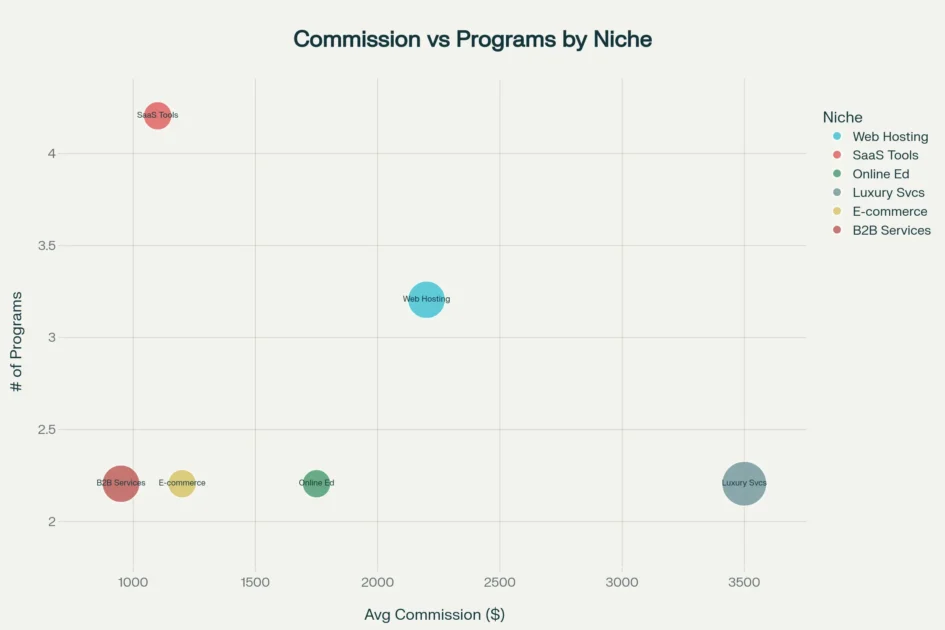
Affiliate Marketing Programs Niches: Commission vs Availability vs Difficulty
Affiliate Marketing Programs Niche Analysis and Market Segmentation
Web Hosting Affiliate Marketing Programs Dominate Premium Tiers
The web hosting and technical services sector represents the most lucrative affiliate marketing opportunities, with average commissions exceeding $2,200 per sale. Programs like Liquid Web, WP Engine, and Kinsta target businesses requiring premium hosting solutions, justifying substantial affiliate payouts through high customer lifetime values and technical expertise requirements.
Success in this niche demands deep technical knowledge. Affiliates must understand server configurations, performance optimization, security features, and scalability considerations to effectively communicate value propositions to potential customers. The technical complexity creates barriers to entry that limit competition while rewarding knowledgeable affiliates with exceptional commissions.
Luxury Affiliate Marketing Programs Create Exclusive Opportunities
Luxury and high-end services, exemplified by programs like Villiers private jet charters, represent the highest commission potential but the most restrictive market access. Average commissions in this sector exceed $3,500, reflecting the extraordinary transaction values involved. However, these programs typically require affiliates to have established relationships with high-net-worth individuals or luxury-focused audiences.
The luxury market’s exclusivity creates natural barriers that protect successful affiliates from competition while limiting overall participation. Content creators focusing on luxury travel, high-end lifestyle, or wealth management topics may find these programs exceptionally lucrative, but building the necessary audience requires significant time and resource investment.
SaaS Affiliate Marketing Programs Balance Accessibility and Profitability
Software-as-a-Service and marketing tool affiliate programs offer a middle ground between accessibility and high commissions, with average payouts around $1,100 per sale. Programs like Semrush, HubSpot, and ClickFunnels target digital marketers and businesses, creating opportunities for affiliates with marketing expertise and business-focused audiences.
This sector’s appeal lies in its growth trajectory and recurring revenue potential. As businesses increasingly adopt digital marketing tools and automation software, demand continues expanding. Affiliates can build expertise in specific tools while developing content that serves both educational and promotional purposes, creating authentic value for audiences while generating substantial commissions.
High-Paying Affiliate Marketing Programs Requirements and Entry Barriers
Audience Quality Over Quantity
High-paying affiliate marketing programs prioritize audience quality over size, seeking affiliates with engaged, relevant audiences rather than large but unfocused followings. Shopify requires applicants to demonstrate established audiences, original content creation, and relevant experience in commerce or entrepreneurship. Authority Hacker demands proven traffic sources and audience alignment with their SEO and marketing focus.
These requirements reflect program managers’ understanding that conversion rates matter more than traffic volume. A targeted audience of 1,000 engaged business owners may generate more sales than 100,000 general consumers. Programs invest in relationships with affiliates who can deliver quality referrals rather than managing large networks of low-performing partners.
Content Standards for High-Commission Affiliate Marketing Programs
Content quality requirements represent another significant barrier to entry. Programs like Authority Hacker and Amazing Selling Machine seek affiliates who can create comprehensive, educational content that builds trust and demonstrates expertise. This standard eliminates affiliates focused on quick promotional tactics while rewarding those who invest in long-term audience relationship building.
Technical expertise requirements vary by niche but consistently exclude casual affiliates. WordPress hosting programs expect affiliates to understand technical concepts like server optimization, security configurations, and performance metrics. Marketing tool programs require familiarity with digital marketing strategies, analytics, and campaign optimization techniques.
Application Processes for Elite Affiliate Marketing Programs
Unlike low-barrier affiliate programs that accept most applicants, high-paying programs employ rigorous screening processes. Villiers and luxury programs review applicant audiences, content quality, and brand alignment carefully. Technical programs assess affiliates’ understanding of their products and ability to communicate value effectively to business customers.
Approval processes can take weeks or months, requiring patience and persistence from potential affiliates. Programs may request audience demographics, content samples, marketing plans, and references from other affiliate partnerships. This screening ensures program quality while creating exclusivity that benefits approved affiliates.
Success Strategies for High-Ticket Affiliate Marketing Programs
Building Authority Through Affiliate Marketing Programs Specialization
Successful high-ticket affiliate marketers focus intensively on narrow niches, developing recognized expertise that audiences trust for expensive purchase decisions. Rather than promoting diverse products, top performers specialize in specific sectors like enterprise hosting, marketing automation, or business education, building reputations as knowledgeable authorities in their chosen areas.
This specialization strategy requires significant time investment—typically 12-18 months to establish credibility and 6-12 months to develop niche expertise. However, the payoff justifies the investment: audiences trust specialized experts for high-value recommendations more than generalist marketers promoting diverse products. Authority-building activities include creating comprehensive educational content, speaking at industry events, participating in professional communities, and developing relationships with industry leaders.
Content Marketing Excellence for Premium Affiliate Marketing Programs
High-converting affiliate content for expensive products differs fundamentally from traditional affiliate marketing approaches. Instead of simple product reviews or comparison posts, successful affiliates create comprehensive educational resources that guide prospects through complex decision-making processes.
Effective content strategies include in-depth case studies demonstrating real-world results, step-by-step implementation guides showing product usage, comparative analyses examining multiple solutions objectively, and thought leadership pieces addressing industry trends and challenges. This content approach requires substantially more time and expertise than traditional affiliate marketing but generates higher conversion rates and commands greater audience trust.
Relationship Building and Network Development
Personal relationships significantly impact success in high-ticket affiliate marketing. Many programs provide dedicated affiliate managers, co-marketing opportunities, and exclusive promotional materials to top performers. Building relationships with program managers, other successful affiliates, and industry influencers creates competitive advantages through insider information, collaboration opportunities, and referral partnerships.
Networking strategies include attending industry conferences, participating in affiliate program exclusive events, joining professional mastermind groups, and maintaining regular communication with program contacts. These relationships often lead to early access to new programs, exclusive promotional opportunities, and insider insights that improve conversion performance.
Advanced Marketing Techniques for Elite Affiliate Marketing Programs
Successful high-ticket affiliates employ sophisticated marketing techniques beyond basic link sharing. Email marketing sequences nurture prospects through extended sales cycles, webinar presentations demonstrate product value in depth, and retargeting campaigns re-engage interested prospects who didn’t convert initially.
Attribution optimization becomes crucial with longer sales cycles and higher-value transactions. Affiliates use multiple tracking methods to capture conversion data, implement first-touch and last-touch attribution models, and coordinate marketing efforts across multiple channels. Understanding customer journey complexity allows for better optimization of marketing funnels and improved conversion performance.
Case Studies: Successful High-Paying Affiliate Marketing Programs
Pat Flynn’s Multi-Million Dollar Success Story
Pat Flynn of Smart Passive Income represents the pinnacle of affiliate marketing success, generating over $3.5 million in affiliate revenue since 2010. His approach demonstrates key principles of high-ticket affiliate marketing: audience trust development through consistent value delivery, strategic product selection aligned with audience needs, and transparent promotion practices that maintain credibility.
Flynn’s success stems from his focus on audience education rather than direct promotion. His comprehensive course reviews, detailed implementation guides, and honest assessments of product limitations build trust that translates to exceptional conversion rates. His audience views his recommendations as expert advice rather than sales pitches, creating natural conversion opportunities for high-ticket products.
John Crestani’s Paid Advertising Mastery
John Crestani’s transformation from struggling entrepreneur to millionaire affiliate marketer illustrates the power of specialized expertise and systematic approach development. His focus on high-ticket “make money online” products, combined with mastery of paid advertising platforms, created a scalable business model generating substantial recurring income.
Crestani’s success factors include niche specialization in financial education and business opportunity products, paid advertising expertise enabling precise audience targeting, automation systems reducing manual intervention requirements, and systematic testing and optimization of marketing campaigns. His approach demonstrates how technical marketing skills can create competitive advantages in high-ticket affiliate marketing.
Sarah Chrisp’s E-commerce Authority Building
Sarah Chrisp of Wholesale Ted built a high-ticket affiliate empire by establishing authority in the e-commerce education space. Her YouTube channel and blog provide comprehensive dropshipping and e-commerce guidance, creating natural opportunities to promote high-ticket courses and tools aligned with her audience’s needs.
Chrisp’s strategy emphasizes transparency and honesty in product recommendations, comprehensive educational content that builds audience trust, strategic integration of affiliate promotions within valuable content, and long-term relationship building with both audiences and affiliate partners. Her success demonstrates how content authority can translate directly to affiliate marketing profitability.
Challenges with Premium Affiliate Marketing Programs
Competition Intensity in High-Paying Affiliate Marketing Programs
The attractiveness of high-paying affiliate marketing programs creates intense competition among marketers seeking these opportunities. Established affiliates with proven track records receive priority treatment from program managers, exclusive promotional opportunities, and higher commission rates, creating barriers for newcomers.
Market saturation affects different niches unevenly. Popular programs like those offered by major SaaS companies may have hundreds or thousands of affiliates competing for the same audience attention. Success requires differentiation through unique value propositions, specialized expertise, or access to underserved audience segments.
Extended Sales Cycles and Delayed Gratification
High-ticket products typically involve extended evaluation periods, with business customers often taking weeks or months to make purchase decisions. This reality creates cash flow challenges for affiliates accustomed to quick conversions and immediate commission payments.
Successful affiliates plan for these extended cycles by maintaining diverse income sources, building email lists for ongoing prospect nurturing, and creating content that remains valuable over time. The delayed gratification aspect eliminates many potential affiliates but rewards those with patience and long-term perspectives.
Resource Requirements and Investment Needs
Competing effectively in high-ticket affiliate marketing requires substantial resource investments. Quality content creation, professional website development, email marketing automation, and paid advertising campaigns all require significant financial commitments before generating returns.
Time investments are equally substantial. Building audience trust, developing niche expertise, and creating comprehensive content libraries require months or years of consistent effort. Many affiliates underestimate these requirements, leading to disappointment and abandonment of high-ticket strategies.
Market Volatility and Program Changes
High-ticket affiliate programs may modify terms, adjust commission rates, or terminate programs with limited notice, creating income volatility for dependent affiliates. Economic downturns particularly impact high-ticket purchases as businesses and individuals defer expensive acquisitions.
Successful affiliates diversify across multiple programs and income sources to mitigate these risks. Building direct relationships with audiences through email lists and social media followings provides protection against program changes and creates opportunities for direct product promotion or service delivery.
Final Assessment and Strategic Recommendations
The reality of affiliate marketing programs paying $500+ per sale is nuanced and demanding. While these opportunities exist and can generate extraordinary income for qualified affiliates, they require substantial investments in expertise development, audience building, and marketing sophistication that exclude most casual participants.
Success factors include deep niche specialization, established audience relationships, sophisticated content marketing capabilities, patience for extended sales cycles, and resources for competitive marketing campaigns. These requirements create natural barriers that protect successful affiliates while limiting program accessibility.
For marketers considering high-ticket affiliate marketing, realistic assessment of current capabilities and commitment levels is essential. Those with established audiences, niche expertise, and marketing resources may find exceptional opportunities. However, beginners should consider developing foundational skills through lower-barrier programs before attempting high-ticket strategies.
The affiliate marketing industry’s continued growth suggests expanding opportunities for qualified participants. However, increasing competition and evolving program requirements mean success will increasingly depend on professional approaches, specialized expertise, and sophisticated marketing capabilities rather than casual promotional efforts.
Conclusion
The outlook of affiliate marketing programs paying $500+ per sale represents both the pinnacle of opportunity and the reality of exclusivity in digital marketing. As our comprehensive analysis reveals, these high-ticket programs offer extraordinary earning potential—with commissions ranging from $500 to $7,000 per sale—but demand substantial investments in expertise, audience development, and marketing sophistication that naturally eliminate the majority of aspiring affiliates. The mathematics are compelling: while traditional programs might require hundreds of sales to generate meaningful income, a single high-ticket conversion can deliver months of earnings, fundamentally transforming the economics of affiliate marketing for those qualified to participate.
The barriers to entry in premium affiliate marketing programs are not accidental obstacles but deliberate filtering mechanisms designed to maintain program quality and protect existing successful affiliates. Application processes that can extend for months, expertise requirements spanning technical knowledge and industry credibility, and audience quality standards that prioritize engagement over size create a professional environment where success demands treating affiliate marketing as a legitimate business venture rather than a passive income opportunity. These requirements reflect the reality that high-value customers making expensive purchasing decisions require trusted, knowledgeable recommendations from recognized authorities rather than casual promotional content from inexperienced marketers.
Looking toward 2026 and beyond, the affiliate marketing programs industry faces both unprecedented opportunities and significant challenges that will reshape the competitive environment. With global market projections reaching $31.7 billion by 2031 and compound annual growth rates exceeding 8%, the financial opportunity continues expanding. However, increasing competition, evolving privacy regulations, rising advertising costs, and algorithm changes across major platforms create headwinds that favor sophisticated, well-resourced affiliates over newcomers. The integration of artificial intelligence, enhanced attribution modeling, and privacy-first tracking technologies will further separate professional affiliates from amateur participants, potentially widening the performance gap between top performers and casual marketers.
For marketers considering entry into high-ticket affiliate marketing programs, the decision ultimately hinges on realistic self-assessment and long-term commitment to professional development. Those with established audiences, demonstrated expertise, substantial marketing resources, and patience for extended sales cycles may find exceptional opportunities in programs offering $500+ commissions. However, the 57% of affiliate marketers earning less than $10,000 annually serves as a sobering reminder that success requires more than ambition. The most prudent approach involves developing foundational skills through traditional affiliate programs while building the expertise, audience, and resources necessary to compete effectively in premium markets where single sales can generate life-changing commissions but where failure to meet professional standards results in swift elimination from exclusive opportunities.
Citations
- https://backlinko.com/high-paying-affiliate-programs
- https://www.shopify.com/in/blog/high-ticket-affiliate-programs
- https://new.firstpromoter.com/blog/affiliate-marketing-stats-2025
- https://www.hostinger.com/tutorials/affiliate-marketing-statistics
- https://www.activecampaign.com/blog/saas-affiliate-programs
- https://streamseo.com/best-high-ticket-affiliate-programs/
- https://www.wishup.co/blog/best-affiliate-marketing-programs/
- https://www.statista.com/statistics/693438/affiliate-marketing-spending/
- https://www.emarketer.com/content/5-charts-affiliate-marketing
- https://www.hostinger.com/in/tutorials/affiliate-marketing-statistics
- https://www.lemlist.com/blog/saas-affiliate-programs
- https://snov.io/blog/best-affiliate-programs/
- https://tapfiliate.com/blog/software-affiliate-programs/
- https://www.wix.com/blog/affiliate-marketing-statistics
- https://www.beforesunset.ai/post/high-ticket-affiliate-marketing-for-beginners
- https://www.growann.com/post/high-ticket-affiliate-marketing
- https://algo-affiliates.com/affiliate-marketing-luxury-brands-a-complete-guide/
- https://www.taboola.com/marketing-hub/high-ticket-affiliate-programs/
- https://vellko.com/blog/luxury-affiliate-programs/
- https://www.adpushup.com/blog/high-ticket-affiliate-marketing/
- https://www.cashfree.com/blog/10-best-affiliate-programs-in-india/
- https://legiit.com/blog/luxury-affiliate-marketing
- https://moosend.com/blog/high-ticket-affiliate-marketing-programs/
- https://www.simplilearn.com/best-affiliate-programs-in-india-article
- https://www.publift.com/blog/high-ticket-affiliate-marketing-program
- https://www.shopify.com/in/blog/best-affiliate-programs
- https://www.clickbank.com
- https://www.flexoffers.com/blog/designer-picks-that-pay-profitable-affiliate-programs-from-luxury-brands/
- https://empireflippers.com/best-recurring-affiliate-programs/
- https://customgpt.ai/highest-paying-ai-affiliate-programs/
- https://www.authorityhacker.com/luxury-affiliate-programs/
- https://www.searchenginejournal.com/affiliate-marketing-programs/478114/
- https://www.publift.com/blog/highest-paying-affiliate-niches
- https://www.racknap.com/blog/top-7-affiliate-marketing-software-in-2024/
- https://www.salesforce.com/au/marketing/high-ticket-affiliate-marketing/
- https://customgpt.ai/top-10-ai-affiliate-programs/
- https://www.cherryservers.com/blog/b2b-affiliate-marketing
- https://www.engagebay.com/blog/saas-affiliate-programs/
- https://affiliatewp.com/best-affiliate-software-for-small-business/
- https://www.text.com/blog/best-saas-affiliate-program
- https://blog.hubspot.com/marketing/best-affiliate-programs
- https://www.youtube.com/watch?v=QbVHaavaN_A
- https://afflr.io/blog/affiliate-case-study/
- https://digitofy.com/blog/affiliate-marketing-statistics-of-2025/
- https://thunderbit.com/blog/affiliate-marketing-stats
- https://affiliatestatistics.marketing
- https://affiliatewp.com/affiliate-marketing-statistics/
- https://pollthepeople.app/ai-affiliate-marketing-case-studies/
- https://www.shopify.com/in/blog/affiliate-marketing-statistics
- https://www.publift.com/blog/affiliate-marketing-statistics
- https://phonexa.com/blog/high-ticket-affiliate-marketing-niches/
- https://www.youngurbanproject.com/affiliate-marketing-statistics/