


How to Track Cash Expenses on a Zero-Based Budget: Complete 2025 Guide
Successfully managing personal finances requires not just intention, but also precision. For many Americans, the challenge isn’t simply creating a budget, it’s how to rigorously track cash expenses and ensure that every dollar is optimally allocated. Zero-based budgeting has emerged as a proven strategy for those ready to take control of their money, demanding that each expense be justified and every bit of income given a specific job before the month begins. This personalized approach does more than outline spending: it forces individuals and families to closely track cash expenses, bringing awareness to daily financial decisions, illuminating spending patterns, and significantly reducing the chances of impulsive or wasteful purchases.
In a world where cash still plays a significant role, especially for households seeking strict discipline or aiming to overcome passive spending habits, zero-based budgeting paired with robust systems to track cash expenses provides a clear, actionable path to financial clarity and long-term security. By learning proven strategies to track cash expenses within a zero-based budget, readers can expect to build stronger financial disciplines, direct their dollars toward real priorities, and achieve sustainable results that align with their values and ambitions.
Recent Federal Reserve data reveals that 14% of all consumer payments still involve cash, with lower-income households relying on physical currency for 24% of their transactions, highlighting the continued relevance of cash-based budgeting systems. The combination of zero-based budgeting principles with intentional cash expense tracking creates a powerful framework for achieving financial stability and long-term wealth building.
Understanding Zero-Based Budgeting to Track Cash Expenses
Zero-based budgeting differs dramatically from traditional budgeting approaches by requiring complete justification of every expense category from scratch each month. Rather than adjusting previous spending patterns, this method demands that individuals examine their true financial priorities and allocate resources accordingly. The system gained renewed popularity following its corporate applications, with businesses reporting 10-25% cost savings within the first year of implementation. Personal finance applications of zero-based budgeting have demonstrated similar effectiveness, particularly when combined with cash-based spending controls that help individuals track cash expenses with unprecedented precision.
The psychological foundation of zero-based budgeting rests on the principle of intentional resource allocation. When individuals must justify every dollar before spending it, they naturally become more conscious of their financial choices. This heightened awareness prevents the gradual drift into overspending that often occurs with traditional budgeting methods. Research from behavioral finance experts indicates that the mental friction created by zero-based allocation leads to more thoughtful purchasing decisions and reduced impulse buying.
Implementation of zero-based budgeting requires establishing clear financial priorities before allocating funds. Unlike percentage-based systems such as the 50/30/20 rule, zero-based budgeting allows for complete customization based on individual circumstances. A family prioritizing debt reduction might allocate 40% of income to debt payments, while someone building an emergency fund could direct 25% toward savings. The flexibility inherent in this system makes it particularly effective for households with varying financial goals and income levels.
Common Mistakes When Learning to Track Cash Expenses
New zero-based budgeters frequently make predictable errors that can derail their success before habits form properly. The most critical mistake involves creating overly restrictive budgets that eliminate all discretionary spending, leading to system abandonment within weeks. Successful individuals who track cash expenses understand that realistic entertainment, dining, and personal purchase allocations maintain quality of life while achieving financial goals.
Another common error occurs when people attempt to track cash expenses without establishing clear category boundaries. Vague categories like “miscellaneous” or “stuff” provide insufficient guidance for spending decisions and make progress measurement impossible. Effective cash expense tracking requires specific categories such as “groceries,” “gas,” “dining out,” and “entertainment” that provide clear spending parameters.
Many beginners also underestimate the time investment required to successfully track cash expenses during the initial implementation period. The first 60-90 days require heightened attention to transaction recording, envelope management, and spending pattern analysis. Those who expect immediate automation often become frustrated and abandon their systems before realizing the long-term benefits.
Psychology Behind How Americans Track Cash Expenses
Cash-based spending creates fundamentally different psychological responses compared to digital payment methods. Neuroscience research demonstrates that parting with physical cash activates pain centers in the brain, creating what economists term “payment pain” that naturally reduces spending impulses. This biological response explains why individuals consistently spend 12-18% less when using cash compared to credit or debit cards for discretionary purchases.
The tangible nature of cash transactions forces immediate recognition of spending consequences. When someone reaches into their wallet and counts out $60 for groceries, they experience the transaction viscerally in ways that card swipes cannot replicate. This physical interaction with money creates lasting memories that influence future spending decisions. Studies tracking consumer behavior over six-month periods show that cash users develop better spending pattern recognition and make more accurate budget predictions than their digital-only counterparts.
Daily Habits to Track Cash Expenses
Successful process to track cash expenses requires developing consistent daily routines that maintain system integrity without overwhelming time demands. Morning budget checks involve reviewing envelope balances before leaving home, ensuring adequate funds for planned purchases and identifying potential shortfalls requiring adjustments. This five-minute routine prevents embarrassing checkout situations while reinforcing spending awareness.
Transaction recording immediately after purchases prevents memory lapses that create reconciliation problems later. Whether using smartphone apps, envelope-attached logs, or digital notes, capturing expense details within minutes of spending maintains accuracy and builds conscious spending habits. The act of recording itself serves as a final decision point that sometimes prevents unnecessary purchases.
Evening envelope reconciliation provides closure to each spending day while preparing for upcoming expenses. This routine involves counting remaining cash, recording the day’s transactions if not already completed, and planning tomorrow’s spending needs. Many successful users report that this evening ritual reinforces their financial goals and maintains motivation during challenging implementation periods.
Track Cash Expenses: Weekly vs Monthly Approaches
Different tracking frequencies suit various personality types and lifestyle demands, with weekly and monthly approaches each offering distinct advantages for those learning to track cash expenses effectively. Weekly systems provide more frequent feedback and course correction opportunities, making them ideal for beginners who need regular reinforcement and adjustment capabilities.
Weekly Approach to Track Cash Expenses
Weekly trackers typically fund envelopes every seven days, allowing for smaller cash withdrawals and reduced security concerns. This approach also enables more responsive adjustments when spending patterns don’t match allocations. Someone who exhausts their grocery envelope by Wednesday can analyze what went wrong and adjust the following week’s approach rather than waiting an entire month.
Monthly Approach to Track Cash Expenses
Monthly tracking systems align better with salary payment schedules and provide longer-term spending perspective. These systems require more discipline since course corrections only occur monthly, but they reduce administrative overhead and bank visit frequency. Monthly trackers often develop better long-term spending estimation skills since they must plan further ahead and live with their allocation decisions for extended periods.
Digital payment methods to Track Cash Expenses
Digital payment methods, while convenient, often disconnect users from spending realities. The abstract nature of electronic transactions allows money to feel less real, leading to what researchers call “spending numbing.” Credit cards particularly exacerbate this effect by introducing temporal distance between purchase and payment. Zero-based budgeting combined with cash tracking eliminates these psychological barriers by making every financial decision immediate and concrete.
Social expenditure to Track Cash Expenses
Social spending situations present unique challenges for cash-based systems. Restaurants, group outings, and online purchases require strategic planning to maintain budget adherence. Successful cash trackers develop protocols for these scenarios, such as carrying predetermined entertainment amounts or using debit cards only after confirming available funds in designated categories. The key lies in maintaining the psychological connection to spending decisions even when physical cash cannot be used.
Federal Reserve Data: How Americans Track Cash Expenses
The Federal Reserve’s 2024 Diary of Consumer Payment Choice reveals critical insights into American cash usage patterns that directly impact zero-based budgeting strategies. Despite increasing digitalization, cash remains the third-most-used payment instrument, with consumers making an average of seven cash payments monthly. This consistency over four years suggests Americans have established a “cash floor” below which they refuse to reduce usage.
Demographic analysis reveals significant variations to track cash expenses reliance across population segments. Lower-income households earning under $25,000 annually use cash for 24% of their transactions, more than double the rate of households earning over $100,000. Adults aged 55 and older conduct 19% of payments in cash, substantially higher than the 8% rate observed among 18-24 year olds. These patterns indicate that cash remains particularly relevant for budget-conscious demographics who could benefit most from zero-based budgeting systems.
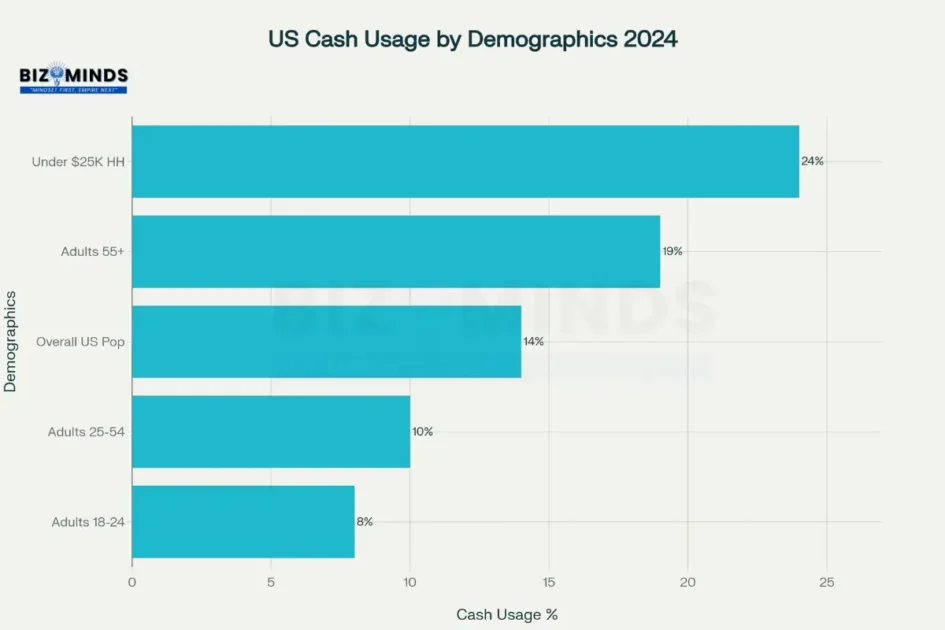
US Cash Usage by Demographics – Federal Reserve 2024 Study
Geographic and cultural factors also influence cash usage patterns within the United States. Rural communities often maintain higher cash usage rates due to limited digital payment infrastructure, while urban centers show increasing card and mobile payment adoption. Understanding these regional differences helps individuals tailor their track cash expenses strategies to local merchant acceptance and community norms.
The Federal Reserve data confirms that 80% of Americans carry cash regularly, with average holdings of $67 for daily expenses. Additionally, consumers maintain $306 in stored cash beyond their daily carrying amounts, representing funds held for emergencies or specific purposes. These patterns suggest that most Americans already have cash available for envelope-based budgeting systems without major lifestyle adjustments.
Step-by-Step System to Track Cash Expenses Effectively
Successfully implementing zero-based budgeting with track cash expenses requires systematic progression through specific phases. The initial assessment phase involves calculating total monthly income from all sources, including salary, benefits, gig work, and any other revenue streams. Variable income earners should use conservative estimates based on their lowest-earning months over the previous year to prevent overspending during lean periods.
Fixed expense identification forms the foundation of any zero-based budget. These non-negotiable payments including rent, mortgage, insurance premiums, minimum debt payments, and utilities must be deducted from total income first. The remaining amount becomes available for discretionary allocation to variable categories where cash tracking provides maximum benefit. Most households find that 40-60% of their income goes to fixed expenses, leaving substantial amounts for cash-based category management.
Variable expense categorization requires careful consideration of spending patterns and priorities. Common categories include groceries, transportation fuel, dining out, entertainment, personal care, clothing, and miscellaneous expenses. The key to effective categorization lies in creating enough specificity to track spending patterns without overwhelming complexity. Most successful zero-based budgeters use 8-12 variable categories, finding this range provides adequate detail without administrative burden.
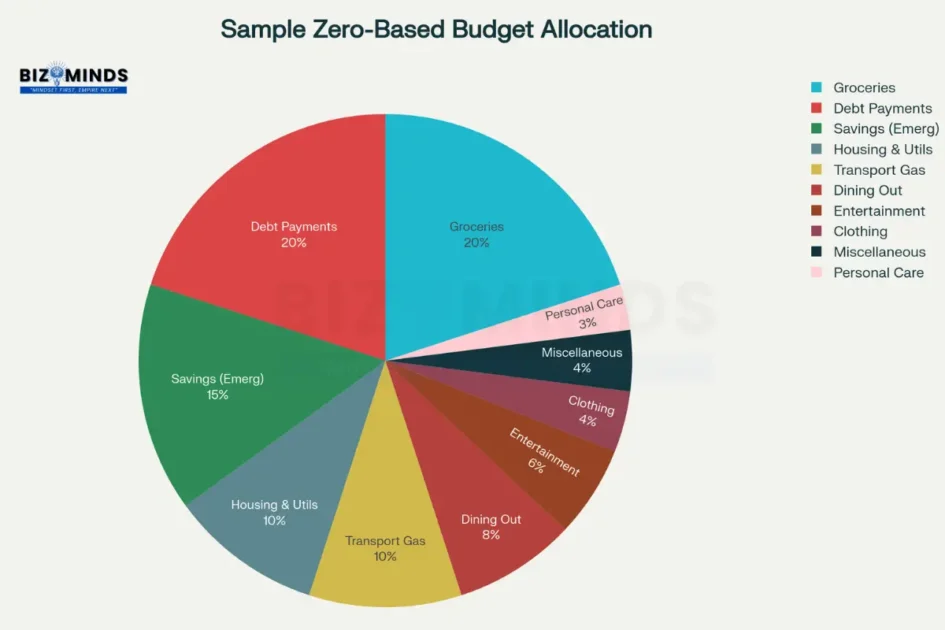
Track Cash Expenses: Sample Income Allocation by Category
Dollar allocation to each category should reflect both historical spending patterns and future goals. New zero-based budgeters often underestimate certain categories while overestimating others, requiring 2-3 months of refinement to achieve accuracy. The critical principle remains that total allocations must equal available income after fixed expenses, leaving zero unassigned dollars. Any surplus should be directed to specific goals such as emergency fund building, debt reduction, or savings objectives.
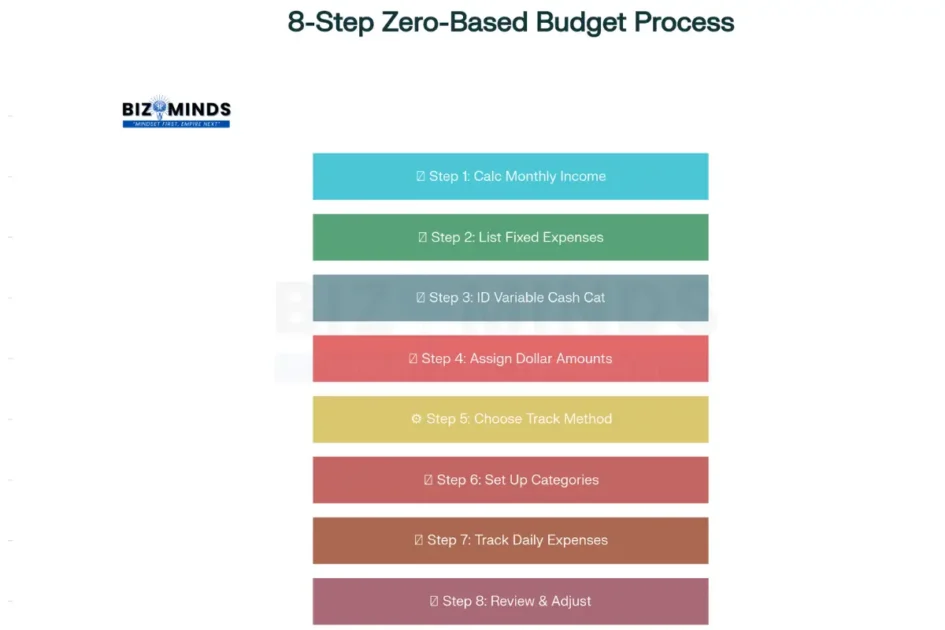
8-Step Zero-Based Budget Implementation Process to Track cash expenses
Track Cash Expenses: Envelope Setup Guide
Physical envelope preparation represents the tangible foundation for successful way to track cash expenses within zero-based budgeting systems. Standard business envelopes work adequately, though many users prefer larger manila envelopes that accommodate bills without folding. Each envelope should be clearly labeled with the category name and monthly allocation amount, using permanent markers that won’t fade with handling.
Envelope organization systems vary by user preference, but successful approaches typically involve designating a specific location for home storage and developing carrying protocols for daily activities. A small accordion file or expandable folder keeps envelopes organized while preventing loss or confusion. Some users employ color-coding systems where similar categories share envelope colors, such as green for necessity expenses and blue for discretionary spending.
The physical act of funding envelopes should coincide with paycheck deposits to maintain psychological connection between earning and spending. Bi-weekly earners might fund half the monthly allocation with each paycheck, while monthly salary recipients can fill all envelopes simultaneously. The critical requirement involves withdrawing exact allocated amounts during budget planning, resisting temptation to round up or provide “buffer” amounts that could lead to overspending.
Daily Habits to Track Cash Expenses
Morning envelope preparation involves reviewing the day’s planned activities and selecting appropriate envelopes to carry. Rather than carrying all envelopes daily, successful users bring only those relevant to anticipated purchases, reducing loss risk while maintaining spending discipline. A typical work day might require grocery and gas envelopes, while weekend shopping trips could necessitate clothing or entertainment envelopes.
Transaction documentation should occur immediately after each purchase to prevent memory lapses and maintain accurate balances. Many users attach small notebooks to frequently used envelopes, recording date, amount, remaining balance, and brief purchase descriptions. Digital alternatives include smartphone photography of receipts or quick expense app entries that maintain real-time envelope balances.
End-of-day reconciliation provides closure while preparing for upcoming expenses. This routine involves counting remaining cash in used envelopes, recording any transactions not previously documented, and planning the following day’s envelope needs. The few minutes required for this habit prevent accumulation of tracking errors while reinforcing spending awareness.
Weekend Reviews: Track Cash Expenses Progress
Saturday morning budget reviews provide weekly opportunities to assess progress and make necessary adjustments before the new week begins. These sessions involve totaling the week’s spending by category, comparing actual expenses to planned amounts, and identifying patterns that suggest needed changes. Consistent overspending in specific categories indicates unrealistic initial allocations requiring increase.
Weekly bank visits coincide with these review sessions, allowing users to withdraw cash for upcoming expenses while depositing any envelope surplus. This routine minimizes cash holdings at home while ensuring adequate funding for planned activities. Many users schedule these visits for the same time each week, creating consistent habits that support long-term success.
Progress celebration during weekly reviews maintains motivation during challenging implementation periods. Acknowledging successful category adherence, debt reduction progress, or emergency fund growth reinforces positive behaviors while identifying areas needing attention. These celebrations should align with budget values, emphasizing accomplishment rather than expensive rewards.
Physical Cash Envelopes: Best Way to Track Cash Expenses
The traditional envelope method pioneered by financial educator Dave Ramsey provides the most direct approach to track cash expenses within zero-based budgeting. This system requires withdrawing allocated amounts for each variable category and placing them in labeled envelopes. When making purchases, individuals use cash only from the appropriate envelope, creating immediate spending limits and transaction awareness.
Envelope setup should coincide with paycheck schedules to maintain consistent funding patterns. Bi-weekly earners might fund envelopes twice monthly, while monthly salary recipients can fill all envelopes at once. The critical requirement involves withdrawing the exact amount allocated during budget planning, resisting the temptation to round up or provide “buffer” amounts that could lead to overspending.
Physical envelope management requires developing practical carrying systems that balance convenience with security. Many successful users carry only 2-3 envelopes for daily activities, leaving others secured at home. Grocery and gas envelopes typically see the most frequent use, while categories like clothing or entertainment might be accessed weekly or less. The key lies in planning ahead for anticipated expenses and bringing appropriate envelopes along.
Security considerations cannot be ignored when carrying substantial cash amounts. Experts recommend limiting carried cash to $200 or less, using bank visits to withdraw additional funds as needed. Some users employ small lockboxes or safes for home storage of envelope funds, particularly for categories used infrequently. The inconvenience of managing physical cash often becomes the system’s greatest strength, as the effort required naturally reduces frivolous spending.
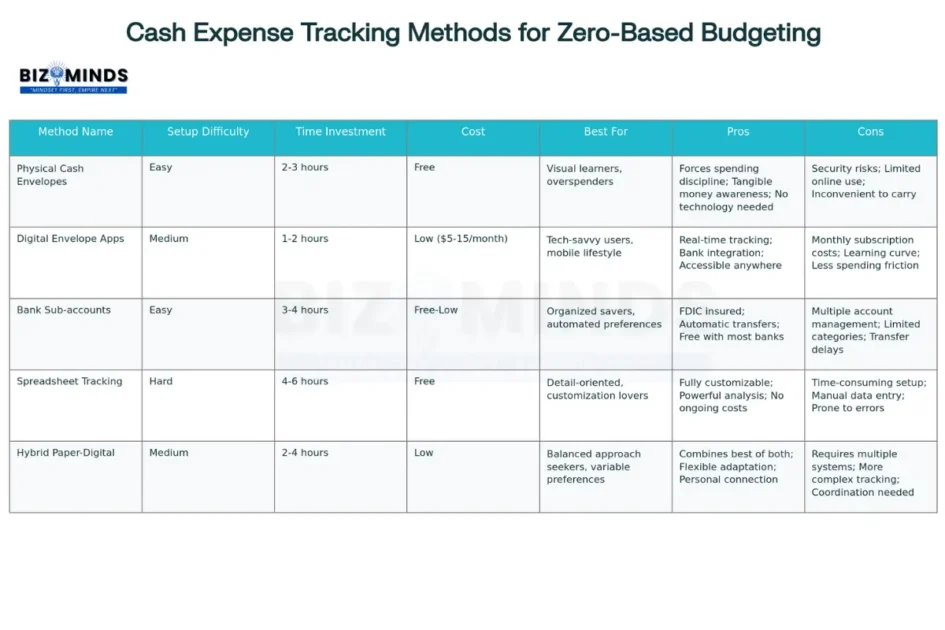
Comparison of Cash Expenses Tracking Methods for Zero-Based Budgeting
Emergency Protocols When You Track Cash Expenses
Envelope fund depletion before month-end represents the most common challenge faced by those learning to track cash expenses through zero-based budgeting. Rather than abandoning the system or resorting to credit cards, successful users implement structured borrowing protocols that maintain budget discipline while addressing immediate needs. The fundamental rule requires replacing borrowed amounts from other categories, preventing overall budget violation.
Inter-envelope borrowing should follow predetermined priority hierarchies established during initial budget creation. Essential categories like groceries and transportation fuel receive borrowing priority over discretionary spending such as entertainment or clothing. When borrowing occurs, users must immediately reduce the lending category’s allocation for the following month, ensuring long-term budget balance.
Emergency fund access procedures distinguish between genuine emergencies requiring system suspension and convenient excuses for budget violations. True emergencies—medical bills, car repairs, job loss—justify temporary departure from normal protocols, but users commit to resuming to track cash expenses as quickly as possible. Minor inconveniences or desires don’t qualify for emergency protocols.
System recovery after emergency situations requires gentle re-implementation rather than immediate return to full restriction. Users might start with one or two envelopes while rebuilding confidence and habits, gradually expanding to full system implementation. This approach prevents the all-or-nothing mentality that often leads to permanent system abandonment after temporary setbacks.
Digital Tools and Apps to Track Cash Expenses Efficiently
State-of-the-art technology
The modern technology offers sophisticated alternatives to physical envelopes while maintaining zero-based budgeting principles. Popular applications like YNAB (You Need A Budget), Goodbudget, and Mvelopes create virtual envelopes that mirror traditional cash systems. These platforms automatically categorize transactions, provide real-time balance updates, and offer comprehensive spending reports that enhance financial awareness.
Digital envelope systems
Digital envelope systems excel in convenience and integration capabilities. Bank connections allow automatic transaction imports, reducing manual entry requirements while maintaining category-specific spending limits. Mobile accessibility enables real-time balance checking before purchases, providing the spending awareness benefits of cash systems without physical currency requirements. Most platforms charge $5-15 monthly, representing reasonable costs for enhanced functionality.
Hybrid approaches
Hybrid approaches combine digital tracking with selective cash usage for maximum effectiveness. Many users employ cash envelopes for high-temptation categories like dining out or entertainment while using digital tracking for necessities like groceries and gas. This strategy provides psychological spending barriers where needed while maintaining payment flexibility for routine expenses.
Bank account subdivision
Bank account subdivision represents another digital alternative gaining popularity among zero-based budgeters. Many financial institutions allow customers to create multiple checking or savings accounts for different budget categories. Automatic transfers can fund each account monthly, creating digital envelopes backed by FDIC insurance. While account management becomes more complex, this approach eliminates monthly subscription fees while providing secure digital cash tracking.
Tools and Apps That Help Track Cash Expenses
Smartphone applications specifically designed for expense tracking provide powerful capabilities for those seeking to track cash expenses without physical envelope management. Mint, Personal Capital, and Expensify offer free basic services with premium features available through monthly subscriptions. These platforms excel at transaction categorization, spending analysis, and goal tracking that support zero-based budgeting principles.
Specialized envelope apps like Goodbudget and Mvelopes directly replicate physical envelope systems in digital format. Users allocate virtual amounts to named categories, “spending” from appropriate envelopes during purchases. These apps provide the psychological benefits of envelope budgeting while eliminating physical cash management concerns. Most charge $3-8 monthly for full functionality.
Banking apps increasingly incorporate budgeting features that help customers track cash expenses alongside other transactions. Chase, Bank of America, and Wells Fargo offer spending categorization, monthly limits, and alert systems that support zero-based budgeting approaches. While lacking the sophistication of dedicated budgeting platforms, these integrated tools provide convenient starting points for digital expense tracking.
Mobile Apps to Track Cash Expenses on-the-go
Real-time expense recording through smartphone apps eliminates the memory lapses that plague manual tracking systems. Apps like Expensify and Shoeboxed allow users to photograph receipts immediately after purchases, automatically extracting transaction details and categorizing expenses. This instant capture maintains accuracy while building conscious spending habits.
GPS-enabled expense apps provide location-based spending insights that reveal patterns invisible through traditional tracking methods. Users can identify high-spending locations, frequent unnecessary stops, and geographic trends that inform better budget allocation decisions. Some apps send location-based alerts when approaching predetermined spending limits.
Offline functionality becomes crucial for users in areas with limited cellular coverage or those seeking to reduce phone dependency. Apps like Monefy and Wallet allow transaction entry without internet connectivity, synchronizing data once connection resumes. This capability ensures consistent expense tracking regardless of technological limitations.
Advanced Strategies to Track Cash Expenses like Experts
Successful long-term implementation of zero-based method to track cash expenses requires sophisticated techniques that address common challenges and maximize system effectiveness. Transaction timing strategies help users avoid month-end cash shortfalls by spreading purchases throughout the budget period. Rather than completing all grocery shopping in the first week, successful users make smaller, more frequent trips to maintain consistent envelope balances.
Receipt management systems provide crucial documentation for tracking accuracy and tax preparation. Digital photography of receipts using smartphone apps like Expensify or Shoeboxed creates permanent records while reducing physical clutter. Some users employ simple paper logs attached to each envelope, recording transaction dates, amounts, and remaining balances for enhanced awareness.
Emergency protocols address situations where envelope funds run out before month-end. Rather than abandoning the system, experienced users implement envelope borrowing with mandatory replacement from other categories. For example, if the grocery envelope empties early, users might borrow from entertainment with a commitment to reduce next month’s entertainment allocation accordingly. This maintains budget discipline while providing necessary flexibility.
Seasonal adjustments account for predictable spending variations throughout the year. December typically requires increased gift category funding, while summer months might need higher utility allocations for air conditioning costs. Annual budget reviews help identify these patterns and adjust monthly allocations accordingly. Some users create separate sinking funds for known annual expenses, contributing monthly amounts to avoid budget disruptions.
Track Cash Expenses during Holidays
Holiday spending presents unique challenges for zero-based budgeters seeking to maintain discipline while participating in seasonal celebrations. Successful strategies involve creating separate gift categories months before December, contributing small amounts throughout the year to avoid budget shock during peak spending periods. A family planning $600 in holiday gifts would allocate $50 monthly starting in January.
Travel expenses during holidays require separate budget consideration beyond normal transportation allocations. Flight costs, hotel stays, and vacation dining differ significantly from routine travel expenses and deserve dedicated envelope funding. Many users create “vacation funds” that accumulate throughout the year, preventing holiday travel from disrupting normal budget categories.
Social pressure intensifies during holiday gatherings when others may not understand cash-based spending limitations. Successful holiday situation to track cash expenses requires communication strategies that explain preferences without detailed financial disclosure. Statements like “We’re being more intentional with our spending this year” often redirect conversations while maintaining privacy.
Gift-giving strategies within cash systems might involve handmade presents, experience gifts, or service offerings that provide value without significant cash outlays. These alternatives often create stronger emotional connections than expensive purchased items while supporting long-term financial goals. The key lies in advance planning that allows creative gift development rather than last-minute cash expenditures.
Real Success Stories: Families Who Track Cash Expenses
The Thompson family of Denver, Colorado, implemented zero-based budgeting with cash envelopes in January 2024 after accumulating $23,000 in credit card debt on a combined income of $75,000. By allocating every dollar to specific categories and using cash for all discretionary spending, they reduced monthly expenses by $800 while maintaining their quality of life. Sarah Thompson reports, “The physical act of counting out cash made us realize how many small purchases were draining our budget. We saved $60 per week just by avoiding impulse buys at the grocery store”.
Within six months, the Thompsons had established a $5,000 emergency fund and began aggressive debt paydown. Their success stemmed from treating savings like a fixed expense, allocating $400 monthly before funding variable categories. The family now tracks cash expenses for seven categories: groceries ($600), gas ($300), dining out ($200), entertainment ($150), clothing ($100), personal care ($75), and miscellaneous ($75). This systematic approach eliminated their debt in 18 months while building wealth previously thought impossible.
Marcus Williams, a freelance graphic designer from Austin, Texas, adopted zero-based budgeting to manage irregular income fluctuations. With monthly earnings ranging from $2,800 to $6,500, traditional percentage-based budgets proved inadequate for his situation. By implementing zero-based allocation using his lowest monthly earnings as baseline income, Williams gained financial stability despite income variability.
Williams’s strategy involves treating high-income months as windfalls rather than increasing lifestyle expenses. Extra earnings beyond his baseline budget get directed to a buffer account that funds future month’s budgets during lower-earning periods. This approach eliminated the feast-or-famine cycle common among freelancers, providing consistent monthly funding regardless of project variations. “Zero-based budgeting gave me permission to live on less than I earn, which was counterintuitive but incredibly powerful,” Williams explains.
Corporate consultant Jennifer Chen of San Francisco implemented zero-based cash tracking specifically to address her dining out habits, which consumed $1,400 monthly. By allocating exactly $400 to restaurant expenses and using cash exclusively for meals, she reduced spending by 71% within three months. The physical limitation of cash prevented the gradual meal upgrade that occurred when using credit cards for dining.
Chen’s success required developing new social strategies for business meals and client entertainment. She began suggesting coffee meetings instead of expensive lunches and chose restaurants with reasonable pricing when meals were necessary. The cash constraint forced creativity that improved both her budget and professional relationships. “Clients actually appreciated the more casual settings, and I built stronger connections over coffee than I ever did at fancy restaurants,” Chen notes.
Family Strategies to Track Cash Expenses Together
Successful household implementation of zero-based technique to track cash expenses requires all spending participants to understand and commit to the system principles. This doesn’t mean everyone must enthusiastically embrace every detail, but basic agreement on categories, amounts, and spending protocols becomes essential for long-term success. Families often start with individual discretionary categories before expanding to shared expenses, allowing everyone to experience benefits before requiring full participation.
Children’s involvement in family to track cash expenses provides valuable financial education while building household commitment to budget success. Age-appropriate participation might involve helping parents count envelope money, accompanying shopping trips to observe spending decisions, or managing small personal envelopes for allowance money. These experiences create early financial awareness that supports lifelong money management skills.
Spouse coordination becomes crucial when both partners access shared budget categories like groceries or household expenses. Successful couples develop communication protocols that prevent duplicate purchases, category confusion, or envelope depletion conflicts. Some families use shared shopping lists attached to relevant envelopes, while others designate primary responsibility for specific categories to one spouse.
Weekly family budget meetings provide opportunities to discuss progress, address challenges, and celebrate successes together. These brief sessions might involve reviewing the week’s spending, planning upcoming expenses, and adjusting strategies based on actual results. Children’s participation in these meetings builds financial literacy while reinforcing family commitment to shared goals.
Common Challenges When You Track Cash Expenses including its Solutions
Cash-based zero-based budgeting presents unique challenges that can derail implementation if not addressed proactively. The most common obstacle involves social pressure during group activities where others expect card-based payment splitting. Successful users develop communication strategies that explain their cash preference without detailed personal financial disclosure. Simple statements like “I’m working on spending awareness, so I prefer cash” often suffice to redirect conversations.
Technology integration challenges arise when users attempt to combine cash tracking with digital financial management tools. Bank statements show cash withdrawals but lack category-specific detail, creating reconciliation difficulties. The solution involves maintaining parallel tracking systems: digital tools for overall financial monitoring and manual logs for cash category management. Monthly reconciliation sessions ensure both systems remain synchronized and accurate.
Seasonal spending variations can disrupt established envelope systems when holiday expenses, vacation costs, or annual insurance premiums require larger allocations. Experienced users create sinking funds for predictable annual expenses, contributing monthly amounts that prevent budget shock. For example, someone expecting $1,200 in holiday gifts would allocate $100 monthly to a gift envelope throughout the year.
Income irregularity poses significant challenges for gig workers, commission earners, and seasonal employees attempting zero-based budgeting. The solution involves establishing baseline budgets using conservative income estimates while treating additional earnings as surplus funds. High-income months fund future budget periods rather than increasing current spending levels. This approach smooths income variations while maintaining zero-based allocation principles.
Common Mistakes When Learning to Track Cash Expenses
Overly restrictive initial budgets represent the most frequent implementation error among new zero-based budgeters. Eliminating all discretionary spending creates unsustainable systems that typically collapse within 30 days due to unrealistic lifestyle restrictions. Successful approach to track cash expenses includes reasonable allocations for entertainment, dining, and personal purchases that maintain quality of life while achieving financial goals.
Category confusion occurs when users create poorly defined spending boundaries that lead to envelope borrowing disputes and tracking accuracy problems. Vague categories like “miscellaneous” or “stuff” provide insufficient spending guidance and make progress measurement impossible. Effective systems require specific categories with clear boundaries: “groceries” includes food and household supplies, “dining out” covers restaurant meals, “entertainment” encompasses movies, concerts, and recreational activities.
Abandonment after early difficulties represents another common mistake that prevents users from experiencing zero-based budgeting benefits. The first 60-90 days require heightened attention and frequent system adjustments as users calibrate category amounts and also develop to track cash expenses habits. Those expecting immediate perfection often become frustrated and quit before realizing the method’s effectiveness. Persistence through initial challenges determines long-term success rates.
Inadequate emergency protocols leave users unprepared for envelope fund depletion, leading to system abandonment when categories run empty before month-end. Successful technique to track cash expenses requires predetermined borrowing procedures, category priority hierarchies, and recovery strategies that maintain budget discipline during challenging periods. Without these protocols, minor setbacks become major implementation failures.
Building Habits to Consistently Track Cash Expenses
Sustainable zero-based track cash expenses requires transitioning from active system management to ingrained habit formation. Research indicates that consistent behavior implementation takes 66-90 days on average, during which users must maintain vigilant attention to new practices. The first month typically involves frequent system adjustments as users calibrate category amounts and refine processes. Persistence during this calibration period determines long-term success rates.
Habit reinforcement strategies help maintain motivation during difficult implementation periods. Visual progress tracking through debt reduction charts, savings goal thermometers, or expense reduction graphs provides psychological encouragement when cash constraints feel restrictive. Many successful users photograph their diminishing debt balances or growing emergency funds to maintain focus on long-term benefits rather than short-term restrictions.
Family and household member alignment becomes crucial for system sustainability when multiple people access shared budget categories. Spouses must agree on category amounts and spending protocols to prevent system circumvention. Children old enough to understand money concepts can learn valuable lessons through age-appropriate involvement in family budgeting discussions. The key lies in creating shared commitment rather than imposing unilateral restrictions.
System evolution allows for refinement and adaptation as users gain experience and circumstances change. Initial category structures might prove inadequate, requiring subdivision or consolidation based on actual spending patterns. Income changes, life stage transitions, or goal modifications necessitate budget realignment while maintaining zero-based principles. Successful long-term users view their systems as living documents requiring periodic review and adjustment.
Monthly Steps to Track Cash Expenses Successfully
Beginning each month with comprehensive budget preparation sets the foundation for successful track cash expenses throughout the period. This process involves reviewing the previous month’s spending patterns, adjusting category allocations based on actual results, and planning upcoming expenses that might require temporary budget modifications. Users typically spend 60-90 minutes on monthly budget preparation, finding this investment prevents numerous problems throughout the month.
Mid-month progress reviews provide opportunities to assess spending patterns and make necessary adjustments before month-end difficulties arise. These reviews involve calculating remaining balances in each envelope, comparing spending pace to historical patterns, and identifying categories likely to face shortfalls. Early identification enables proactive solutions rather than reactive crisis management.
Month-end reconciliation sessions close the budget period while preparing for upcoming allocation decisions. These reviews compare planned versus actual spending in each category, calculate total budget variance, and identify patterns suggesting needed changes. Successful month-end sessions focus on learning rather than judgment, treating overspending as data for future improvement rather than personal failure.
Goal progress assessment during monthly reviews connects to track cash expenses to broader financial objectives. Whether paying down debt, building emergency funds, or saving for major purchases, monthly goal reviews maintain motivation while informing allocation decisions. Users might celebrate reaching savings milestones or achieving debt reduction targets as rewards for consistent budget adherence.
Technology Solutions to Help Track Cash Expenses
Modern zero-based track cash expenses benefits significantly from strategic technology integration that enhances rather than replaces fundamental budgeting principles. Smartphone applications provide real-time balance monitoring, receipt photography, and spending alerts that support cash-based systems without eliminating their psychological benefits. The key lies in selecting tools that reinforce spending awareness rather than automate decisions.
Banking integration through applications like Mint, YNAB, or proprietary bank platforms enables automatic transaction categorization and balance monitoring for non-cash expenses. These tools excel at tracking fixed expenses paid through automatic debits while providing oversight of digital transactions that supplement cash categories. Users can monitor overall financial health while maintaining cash discipline in targeted spending areas.
Receipt management technology eliminates the administrative burden of physical documentation while preserving spending records necessary for budget analysis. Applications like Expensify, Shoeboxed, or simple smartphone photography create digital filing systems that support tax preparation and spending pattern analysis. Automated receipt capture reduces the friction often associated with manual tracking systems.
Security considerations require careful balance between convenience and protection when integrating technology with cash management systems. Users should employ strong passwords, two-factor authentication, and regular account monitoring to protect sensitive financial information. Public Wi-Fi networks pose particular risks for financial applications, requiring cellular data usage or secure VPN connections when accessing budget tools outside trusted networks.
Measuring Progress When You Track Cash Expenses
Effective zero-based budgeting system track cash expenses requires systematic measurement of progress toward financial goals and regular system refinement based on actual results. Monthly budget reviews should compare planned versus actual spending in each category, identifying patterns that indicate needed adjustments. Consistent overspending in specific categories suggests unrealistic initial allocations, while consistent underspending might indicate overly conservative estimates that could be redirected to higher-priority goals.
Key performance indicators for zero-based budgeters include monthly budget variance percentages, debt reduction progress, emergency fund growth, and overall spending trend analysis. Successful systems typically achieve 90% or better adherence to planned allocations within three months of implementation. Users experiencing lower adherence rates should examine their category structure, allocation amounts, and track cash expenses methods for potential improvements rather than abandoning the system entirely.
Quarterly comprehensive reviews enable broader strategic adjustments that account for seasonal spending patterns, goal achievement progress, and life circumstance changes. These reviews should examine whether current budget allocations still align with stated financial priorities and make necessary modifications. For example, someone who has built an adequate emergency fund might redirect those contributions to debt paydown or investment goals.
Annual budget overhauls provide opportunities for major system improvements based on full-year spending data and life changes. Income increases, debt elimination, family additions, or goal achievement might necessitate complete budget restructuring while maintaining zero-based principles. These annual sessions should celebrate progress achieved while establishing new targets for the upcoming year.
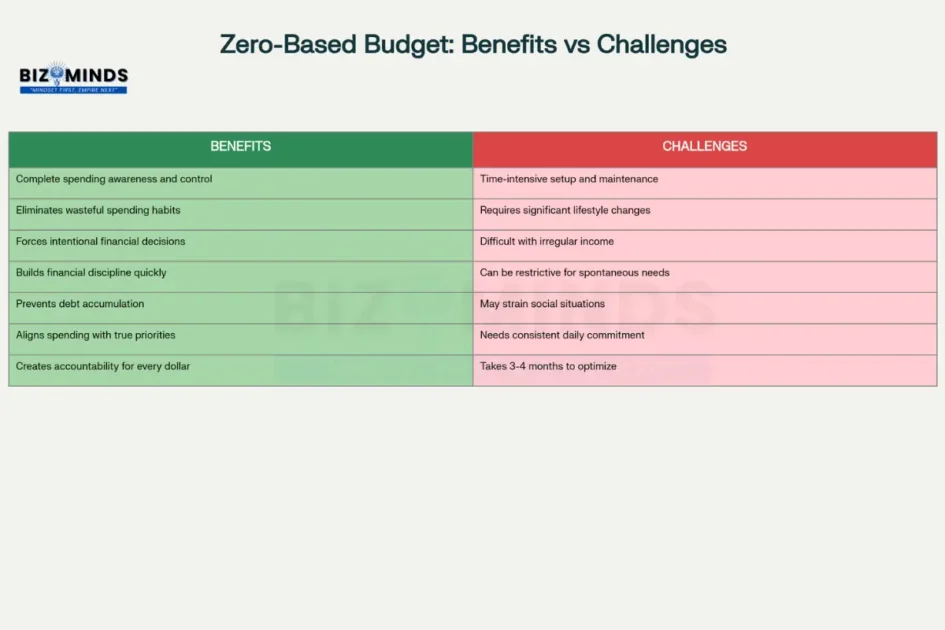
Zero-Based Budgeting to Track Cash Expenses: Benefits vs. Challenges
Data analysis tools help identify spending trends that might not be apparent during monthly reviews. Spreadsheet applications like Excel or Google Sheets enable category spending comparisons across multiple months, revealing patterns that inform better allocation decisions. Users comfortable with data analysis can calculate average monthly spending by category, seasonal variations, and correlation between life events and spending changes.
Conclusion
Learning to effectively track cash expenses through zero-based budgeting represents more than just a financial technique—it’s a fundamental shift toward intentional living that transforms how Americans approach money management. The comprehensive strategies outlined in this guide provide a proven roadmap for achieving complete spending control while building sustainable wealth. From the psychological advantages of physical cash handling to the convenience of modern digital applications, the methods presented here accommodate diverse lifestyles and preferences. The Federal Reserve data confirms that millions of Americans already carry cash regularly, providing the foundation needed to implement these powerful budgeting principles immediately.
The real-world success stories of families like the Thompsons, Williams, and Chen demonstrate that ordinary people can achieve extraordinary financial results when they commit to systematically track cash expenses within a zero-based framework. These case studies reveal that the initial effort required to establish envelope systems, develop daily tracking habits, and overcome implementation challenges pays dividends that extend far beyond immediate budget adherence. Whether eliminating debt, building emergency funds, or simply gaining peace of mind about monthly expenses, the benefits compound over time as users develop stronger financial discipline and clearer spending priorities.
Success in zero-based budgeting ultimately depends on consistent implementation and willingness to refine the system based on actual results rather than perfect execution from day one. The tools, techniques, and strategies presented provide everything needed to begin this financial transformation, but lasting change requires personal commitment to the process. Americans ready to take control of their financial future should start by choosing one method to track cash expenses, implementing it consistently for 90 days, and adjusting based on real-world experience. The path to financial freedom begins with the first envelope funded and the first dollar consciously allocated—your journey toward complete spending awareness and lasting wealth building starts today.
Frequently Asked Questions/ People Also Ask
What happens if I run out of cash in a category before month-end?
When envelope funds are depleted, you have three options: eliminate spending in that category until next month, transfer money from another envelope with explicit commitment to reduce that category’s next allocation, or use this as a learning opportunity to increase the following month’s allocation for that category. The worst option is abandoning the system by using credit cards or unallocated funds, which undermines the discipline zero-based budgeting creates.
How do I handle online purchases with a cash-based system?
Online purchases require strategic planning within your zero-based framework. Many successful users maintain a small checking account funded monthly with predetermined amounts for online purchases, treating it like a digital envelope. Others use debit cards but only after confirming adequate funds exist in the relevant budget category. The key is maintaining the same spending discipline whether transactions occur in-person or online.
Can zero-based budgeting work with irregular income?
Zero-based budgeting actually works exceptionally well with irregular income when implemented properly. Use your lowest monthly income from the previous year as your baseline budget, treating any additional earnings as surplus to be directed toward debt paydown, savings, or next month’s budget funding. This approach eliminates the feast-or-famine cycle common among variable income earners while maintaining consistent spending discipline.
How long does it take to see results from zero-based cash tracking?
Most users notice immediate changes in spending awareness, but significant financial results typically appear within 60-90 days of consistent implementation. The first month involves system calibration and habit formation, the second month shows initial spending reductions, and the third month demonstrates sustainable behavior changes. Full optimization usually occurs within 6 months as users refine their categories and amounts based on actual experience.
Should I include my spouse/partner in the zero-based budgeting process?
Successful household implementation requires all spending participants to understand and commit to the system. This doesn’t mean everyone must enthusiastically embrace every detail, but basic agreement on categories, amounts, and spending protocols is essential. Consider starting with individual discretionary categories before expanding to shared expenses, allowing everyone to experience the benefits before requiring full participation.
What’s the biggest mistake people make when starting zero-based budgeting?
The most common error involves creating overly restrictive budgets that eliminate all discretionary spending, leading to system abandonment within weeks. Successful zero-based budgets include realistic amounts for entertainment, dining out, and personal purchases that maintain quality of life while achieving financial goals. The second biggest mistake is abandoning the system after first-month difficulties instead of treating early challenges as normal calibration requirements.
Citations
- https://www.frbservices.org/binaries/content/assets/crsocms/news/research/2025-diary-of-consumer-payment-choice.pdf
- https://www.frbservices.org/news/research/2025-findings-from-the-diary-of-consumer-payment-choice
- https://www.zycus.com/blog/budget-management/zero-based-budgeting-procurement-transform-your-spend
- https://www.investopedia.com/terms/z/zbb.asp
- https://www.netsuite.co.uk/portal/uk/resource/articles/financial-management/zero-based-budgeting.shtml
- https://www.thehackettgroup.com/zero-based-budgeting-hackett/
- https://www.apa.org/gradpsych/2013/09/spending
- https://taggd.in/hr-glossary/zero-based-budgeting/
- https://monefy.com/article/implementing-zero-based-budgeting-approach
- https://us.norton.com/blog/financial-wellness/track-expenses
- https://www.getpennies.com/budgeting-with-cash-vs-card/
- https://actualbudget.org/docs/getting-started/envelope-budgeting/
- https://www.fidelity.com/learning-center/smart-money/zero-based-budgeting
- https://www.debt.org/advice/dave-ramseys-envelope-system-explained/
- https://seedtime.com/envelope-system/
- https://www.managementstudyguide.com/zero-based-budgeting-system-using-envelopes.htm
- https://www.uschamber.com/co/start/strategy/employee-expense-apps
- https://ramp.com/blog/expense-tracker-for-business
- https://www.prudential.com/financial-education/budgeting-envelope-method
- https://monefy.com/article/7-simple-ways-to-track-daily-expenses
- https://www.apps365.com/small-business-expense-tracking/
- https://www.euromatech.com/articles/the-drawbacks-of-zero-based-budgeting-what-you-need-to-know/
- https://www.nerdwallet.com/article/finance/zero-based-budgeting-explained
- https://www.federalreserve.gov/publications/2025-economic-well-being-of-us-households-in-2024-savings-and-investments.htm
- https://finance.uonbi.ac.ke/sites/finance.uonbi.ac.ke/files/The%20Total%20Money%20Makeover%20-%20Dave%20Ramsey.pdf
- https://superagi.com/battle-of-the-budget-apps-a-comprehensive-comparison-of-ai-powered-personal-finance-tools/
- https://www.oneazcu.com/about/financial-resources/saving-budgeting/the-pros-and-cons-of-budgeting-apps/
- https://www.spglobal.com/market-intelligence/en/news-insights/research/one-third-of-americans-use-three-or-more-financial-apps
- https://nomoredebts.org/financial-education/monthly-expense-tracker
- https://www.meegle.com/en_us/topics/budgeting/zero-based-budgeting
- https://en.wikipedia.org/wiki/Zero-based_budgeting
- https://www.datainsightsmarket.com/reports/zero-based-budgeting-506346
- https://www.drivetrain.ai/post/drive-strategic-growth-with-zero-based-budgeting
- https://www.bcg.com/capabilities/cost-management/zero-based-budgeting
- https://www.cnbc.com/select/best-budgeting-apps/
- https://cleartax.in/s/zero-based-budgeting
- https://planacy.com/en/blog/the-ultimate-guide-to-zero-based-budgeting-zbb/
- https://mint.intuit.com
- https://www.pocketsmith.com/methodologies/zero-based-budgeting/
- https://fpa-trends.com/article/navigating-turbulent-times-zero-based-budgeting
- https://www.americanexpress.com/en-us/banking/wealth/spendsmart
- https://www.oracle.com/in/performance-management/planning/zero-based-budgeting/
- https://lumel.com/blog/budgeting/zero-based-budgeting-fpa-transformation/
- https://channelvmedia.com/blog/budgeting-becoming-popular-thanks-to-apps/
- https://tradingeconomics.com/united-states/interest-rate
- https://www.fidelity.ca/en/investor-education/budgeting-in-the-digital-age/
- https://www.nerdwallet.com/article/finance/tracking-monthly-expenses
- https://bettermoneyhabits.bankofamerica.com/en/saving-budgeting/creating-a-budget
- https://www.federalreserve.gov/publications/2025-economic-well-being-of-us-households-in-2024-banking-and-credit.htm
- https://www.cnbc.com/select/how-to-track-expenses/
- https://www.bostonfed.org/publications/current-policy-perspectives/2025/why-has-consumer-spending-remained-resilient.aspx
- https://www.investopedia.com/how-many-people-actually-stick-to-a-budget-the-answer-might-surprise-you-11799284
- https://srfs.upenn.edu/financial-wellness/browse-topics/budgeting/popular-budgeting-strategies
- https://www.newyorkfed.org/microeconomics/sce/household-spending
- https://www.deloitte.com/an/en/services/consulting/perspectives/gx-zero-based-budgeting.html
- https://www.prophix.com/blog/advantages-and-disadvantages-of-zero-based-budgeting/
- https://www.bajajfinserv.in/investments/zero-based-budgeting-zbb
- https://milestone.inc/blog/what-are-the-4-types-of-budgeting-methods
- https://www.linkedin.com/advice/0/what-some-tips-tricks-make-envelope-budgeting-more-convenient
- https://plainscapital.com/blog/zero-based-budgeting-examples-to-improve-your-financial-situation/
- https://www.anaplan.com/blog/zbb-zero-based-budgeting-guide/
- https://www.airtel.in/blog/personal-loan/choose-the-right-budget-system/
- https://www.sstechsystem.com/blog/wallet-income-expense-tracker-are-the-future/
- https://www.thinkingcloset.com/2015/05/22/our-cash-budget-envelope-system-3-month-update/
- https://www.bain.com/insights/betting-on-zero-based-budgetings-trifecta/
- https://mrsneat.net/blogs/plan-your-money/digital-vs-paper-which-budget-planner-is-right-for-you
- https://www.bankmainstreet.com/understanding-banking/envelope-budgeting-cash-vs-digital/
- https://www.youtube.com/watch?v=gJrzPxiauzA
- https://www.forbes.com/sites/truetamplin/2025/01/15/the-benefits-of-expense-tracking-and-how-you-can-do-it-effectively/
- https://www.youtube.com/playlist?list=PLpeLSyDj7WZluj5tMu9XWpUdVTHqZDP-r
- https://onlinelibrary.wiley.com/doi/10.1111/acfi.12884
- https://www.academybank.com/assets/files/PGxTMoi1/Role_of_Budgeting_Apps_in_Personal_Finance.pdf