

12 Best Brand Identity Design Tips for Stunning Results
Standing out in a crowded marketplace requires more than a memorable logo or catchy tagline. Today’s most successful brands understand that exceptional brand identity design tips form the backbone of lasting customer relationships and sustainable business growth. From startups seeking their first brand foothold to established enterprises refreshing their market position, the strategic application of proven design principles separates industry leaders from forgotten competitors. This comprehensive guide examines twelve essential brand identity design tips that combine research-backed strategies, real-world case studies from American companies, and practical implementation frameworks to help you build a brand identity that resonates, endures, and drives measurable business results.
Research demonstrates that strong visual identities can increase revenue by up to 23 percent, while consistent branding contributes between 10 and 20 percent to overall revenue growth. These statistics underscore a fundamental truth: brand identity design is not merely aesthetic decoration but a strategic business investment. When consumers are 81 percent more likely to recall a brand’s color than its name, and 55 percent of first impressions stem from visual elements, the importance of systematic brand identity design tips becomes undeniable. The following twelve strategies provide a roadmap for creating brand identities that capture attention, build trust, and inspire loyalty in the competitive American marketplace.
Understanding the Foundation of Brand Identity Design
Brand identity encompasses far more than visual aesthetics. It represents the comprehensive system of elements that communicate a company’s personality, values, and promise to its audience. The most successful brand identity design tips recognize this holistic nature, addressing visual systems, verbal identity, and experiential consistency as interconnected pillars.
The visual system includes responsive logos, harmonized color palettes, purposeful typography, and authentic imagery that works across formats from billboards to mobile screens. Modern brands utilize kinetic identities with subtle motion and dynamic adaptations to meet digital-first world demands. Meanwhile, the verbal identity encompasses voice, tone, and messaging frameworks that define brand purpose, position, promises, and proof. According to the Revenue Marketing Alliance, 76.7 percent of marketers believe branding exists primarily to differentiate brands from competitors, making voice and messaging strategic levers for positioning and persuasion.
Brand Identity Elements Table
| Visual Element | Primary Function | Impact on Recognition | Best Practice | Common Mistakes to Avoid |
| Logo Design | Visual anchor and recognition | 75% of consumers recognize brands | Scalable, simple, memorable design | Overcomplicated, not scalable |
| Color Palette | Emotional connection and memory | 80% increase in brand recognition | Limit to 3 colors maximum | Too many colors, inconsistent use |
| Typography | Personality and readability | 73% Fortune 500 use sans serif | Use 2-3 complementary typefaces | Too many fonts, poor pairing |
| Imagery Style | Visual storytelling support | 55% of first impressions are visual | Authentic, brand-owned imagery | Generic stock photos overuse |
| Brand Voice | Communication personality | 81% of consumers need trust | Define 3 core voice values | Inconsistent tone across platforms |
| Messaging Framework | Strategic messaging structure | 76% prefer connected brands | Clear purpose and positioning | Vague or generic messaging |
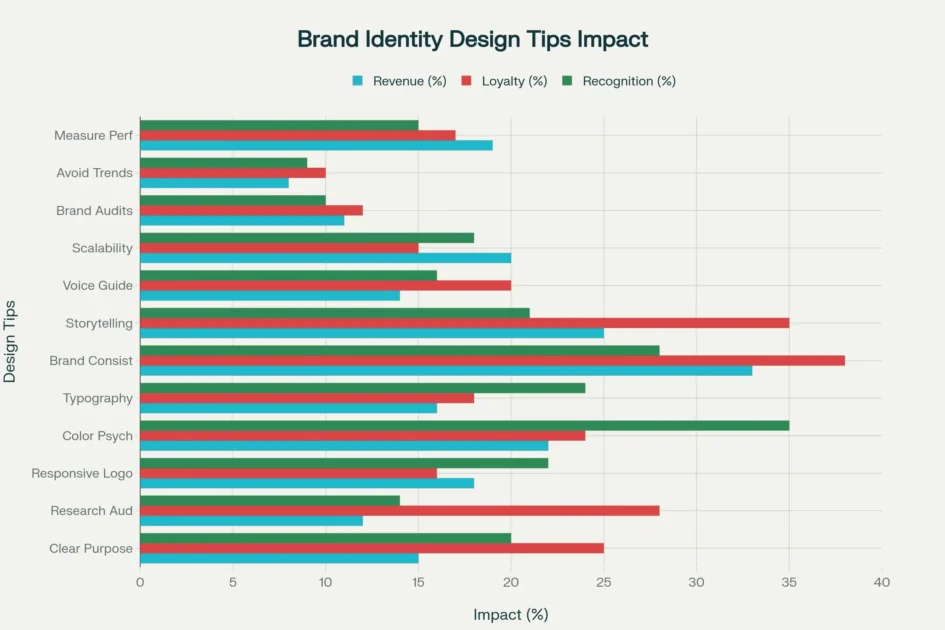
Comparative Impact of 12 Brand Identity Design Tips on Revenue, Loyalty, and Recognition
Experiential consistency ensures that every touchpoint from contact forms to customer service interactions builds rather than breaks trust. This requires user experience consistency across platforms, team enablement through internal playbooks, and sales collateral that mirrors the brand system. Great brands align identity with operations to create experiences that resonate from internal teams to customers.
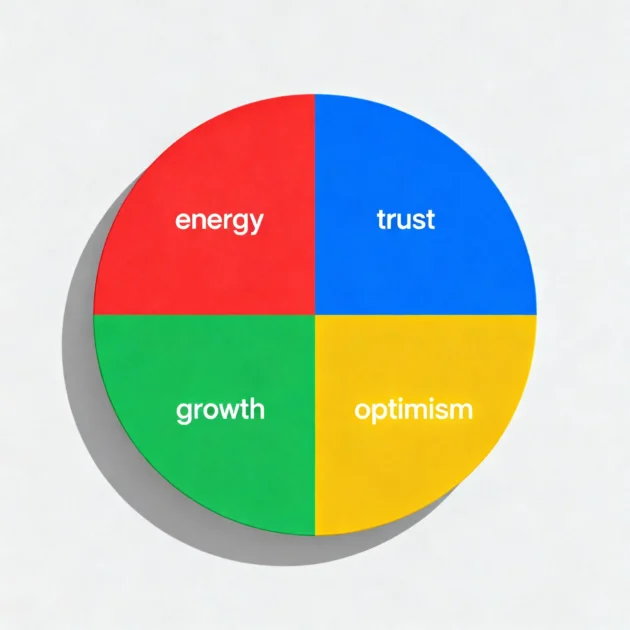
Color psychology wheel for brand identity design showing emotional associations
Brand Identity Design Tips: Define Your Clear Brand Purpose and Position
The first and most critical of all brand identity design tips involves establishing a clear purpose and position that guides every subsequent design decision. Brand purpose answers the fundamental question of why your brand exists beyond profit generation, while brand positioning articulates the unique value your brand delivers to customers.
According to Arielle Jackson, startup founder and Google veteran, your purpose represents how you want to change the world for the better. Jackson recommends identifying the intersection between cultural tension and your brand’s best self to discover your big ideal or purpose. Apple exemplifies this principle with their concise corporate purpose statement: “Apple’s 100,000 employees are dedicated to making the best products on earth, and to leaving the world better than we found it”.
Brand positioning makes your purpose actionable by naming your target customer and differentiating yourself from competition. This groundwork informs strategy as you create logos, select color palettes, and develop all subsequent brand elements. Without this foundation, even the most beautiful visual identity lacks strategic direction and fails to resonate with intended audiences.
Successful American brands demonstrate this principle consistently. Nike’s purpose extends beyond athletic footwear to embody a spirit of resilience, self-belief, and striving for greatness. This purpose manifests through their “Just Do It” campaign, which narrates journeys of athletes who confront and conquer substantial obstacles. The campaign’s thirty-five-year longevity proves that clear purpose transcends simple marketing tactics to become the driving motivation behind entire brand identities.
Brand Identity Design Tips: Research Your Target Audience Thoroughly
Among the most impactful brand identity design tips is conducting rigorous market research and deeply understanding your audience before making any design decisions. This research phase combines competitive benchmarking with audience analysis to create brand experiences that improve each customer interaction and secure long-term engagement.
Market research involves assessing competitors’ pricing models, product niches, and feature differences using analytics tools and competitor reviews to reveal market gaps and inform strategic decisions. Adding a SWOT exercise spotlights strengths you can leverage and threats you must mitigate. This competitive analysis helps identify differentiation opportunities that prevent your brand from getting mixed up with rivals.
Understanding your audience requires gathering insights through surveys, customer calls, social media sentiment analysis, and usage data to comprehend their pain points and aspirations. Create detailed customer personas that outline demographics, behaviors, preferences, and values. This information tightens messaging, steers development, and creates brand experience design that resonates authentically.
Research shows that 62 percent of consumers feel emotionally connected to brands they buy from, while 76 percent prefer buying from brands they feel connected to over competitors. These statistics highlight why audience research forms the foundation of effective brand identity design tips. When you understand who you’re speaking to, you can tailor your visual and verbal identity to create personalized experiences that drive loyalty and increase customer lifetime value.
Brand Identity Design Tips: Create Responsive and Adaptive Logo Systems
Modern brand identity design tips emphasize that static logos no longer suffice in our multi-platform digital environment. Responsive logo design refers to the ability of logos to adapt in size and complexity across various devices and screen resolutions, ensuring clear brand recognition wherever they appear.
Creating responsive logo systems involves designing multiple versions for different contexts as a core brand identity design tip. Desktop versions feature the full logo with brand mark and text on larger screens, while brand identity design tips recommend maintaining complete visual information. Tablet versions may compress or modify the logo, potentially removing taglines or creating logo abstractions that balance brand identity design tips with space limitations. Mobile versions use greatly simplified brand marks or logo abbreviations for smaller screens, following essential brand identity design tips for digital optimization. These adjustments ensure logos retain integrity and aesthetics regardless of device used, which is why responsive brand identity design tips have become industry standard practice.
Effective responsive logo design follows several best practices rooted in proven brand identity design tips for modern digital environments. Prioritize legibility by ensuring logos remain readable at smaller sizes and avoiding intricate details that become difficult to parse when scaled down—a fundamental principle within brand identity design tips for scalability. Consider both horizontal and vertical variants to accommodate different layouts, as horizontal logos work better in website headers while vertical versions suit mobile app icons and social media profiles, demonstrating how brand identity design tips adapt to platform requirements. Focus on core symbols or icons that can stand alone without text for favicons and app icons, ensuring brand identity design tips create lasting recognition even without accompanying text elements.
Fortune 500 companies demonstrate these principles. Research shows 73 percent of the best brands use sans serif fonts for optimal legibility, while 43 percent use two colors in their primary logos. These choices reflect strategic decisions about scalability and adaptability. The prevalence of simple, clean design elements ensures logos remain recognizable across the expanding range of digital and physical touchpoints where modern brands appear.
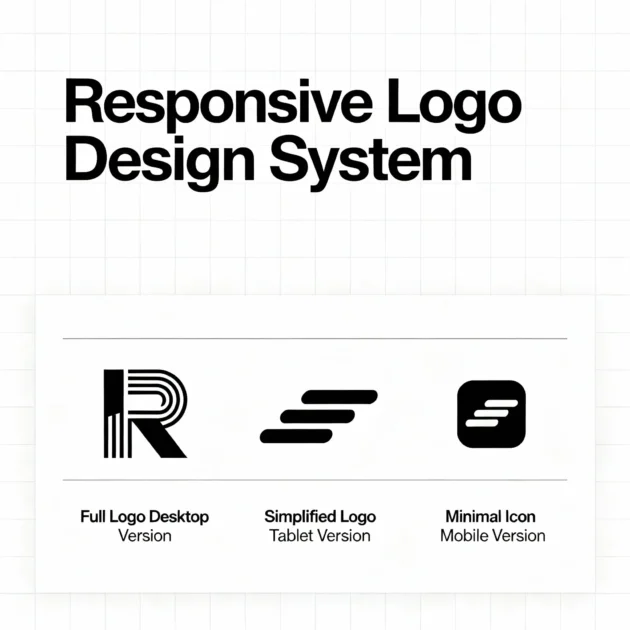
Responsive logo design system demonstrating adaptability across multiple devices
Brand Identity Design Tips: Leverage Color Psychology Strategically
Color psychology represents one of the most powerful brand identity design tips for creating immediate emotional connections and boosting brand recognition. Research demonstrates that color alone can account for up to 90 percent of a product’s first impression, while signature colors can increase brand recognition by up to 80 percent.
Different colors trigger distinct emotional responses and associations, which is why color psychology branding has become essential for effective brand identity design tips. Blue invokes feelings of calmness, trust, professionalism, and stability, explaining why 40 percent of Fortune 500 companies use blue in their logos—a proven application of color psychology branding within brand identity design tips.
Red creates excitement, urgency, and passion, making it effective for sale signage and call-to-action elements, demonstrating how color psychology branding principles enhance brand identity design tips for consumer engagement. Green stimulates tranquility, growth, freshness, and environmental consciousness, as demonstrated by Starbucks’ calming green reflecting its commitment to sustainability and showcasing advanced color psychology branding integrated with strategic brand identity design tips.
Yellow conveys optimism, warmth, and positive energy, completing the spectrum of color psychology branding applications that strengthen brand identity design tips across diverse industries and brand personalities.
Strategic color implementation follows established best practices among successful American brands. Limit your primary color palette to three colors maximum, as this rule applies even when designing for vibrant industries. This limitation provides financial benefits because additional colors command premium prices when printing office and promotional materials. More importantly, restrained color palettes create cleaner, more memorable visual identities that consumers can recognize instantly.
Coca-Cola’s century-old commitment to red and white exemplifies the power of consistent color usage. The brand’s red signifies energy and enthusiasm, aligning perfectly with its positioning as a fun and refreshing beverage. This consistency has created such strong brand recognition that 91 percent of consumers correctly identified Google from its iconic blue, green, yellow, and red color palette alone. These case studies demonstrate how strategic color psychology application transforms abstract brand values into tangible visual signals that shape consumer perceptions and purchasing decisions.
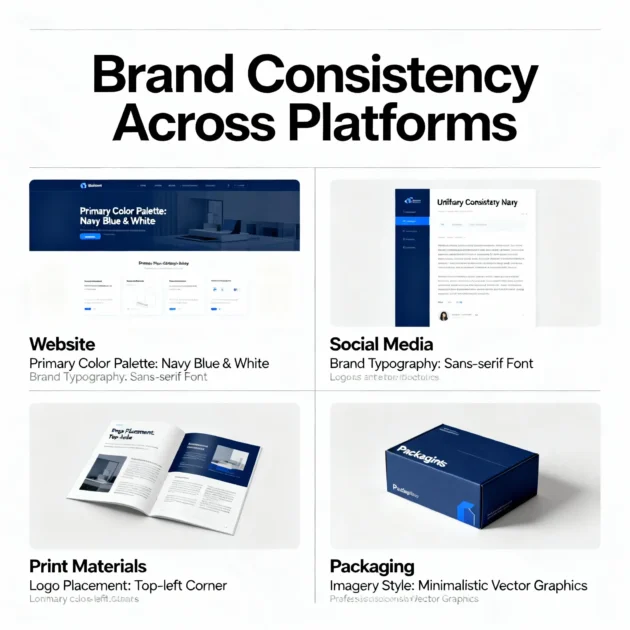
Brand consistency framework showing unified identity across multiple platforms
Brand Identity Design Tips: Master Typography Selection and Hierarchy
Typography serves as the visual voice of your brand, making font selection one of the most consequential brand identity design tips. Well-chosen typography evokes emotions, conveys messages, and influences decisions while reflecting brand personality through every letterform.
Understanding font psychology forms the foundation of strategic typography selection. Serif fonts evoke tradition, reliability, and respect, making them appropriate for established institutions seeking to convey authority. Sans serif fonts offer clean, modern, and approachable aesthetics preferred by contemporary brands prioritizing accessibility and simplicity. Script fonts convey elegance, creativity, and affection but require careful application to maintain legibility.
Research reveals that 73 percent of Fortune 500 companies use sans serif fonts, reflecting modern design preferences for clean, approachable aesthetics. Popular typefaces like Helvetica, renowned for its intrinsic legibility and clarity since its 1957 debut, appear in brands from BMW to Lufthansa to Nestlé. Futura, designed in 1927 and celebrated for geometric simplicity and modernist design, serves brands from Louis Vuitton to Red Bull to FedEx.
Effective typography implementation follows specific guidelines that define successful brand identity design tips for visual communication excellence. Limit font choices to two or three complementary typefaces used consistently across all brand touchpoints, a fundamental principle of brand identity design tips that ensures typography consistency. When combining typefaces, ensure sufficient contrast between selections, such as pairing serif with sans serif fonts—a proven typography technique that enhances visual distinction and readability.
Establish clear visual hierarchy through different sizes, weights, and styles to guide readers’ eyes and create order of importance within text, demonstrating advanced brand identity design tips through strategic typography implementation. Maintain consistency across brand materials from websites to packaging to reinforce recognition and professionalism, reinforcing how typography strengthen overall brand perception and customer trust across all touchpoints.
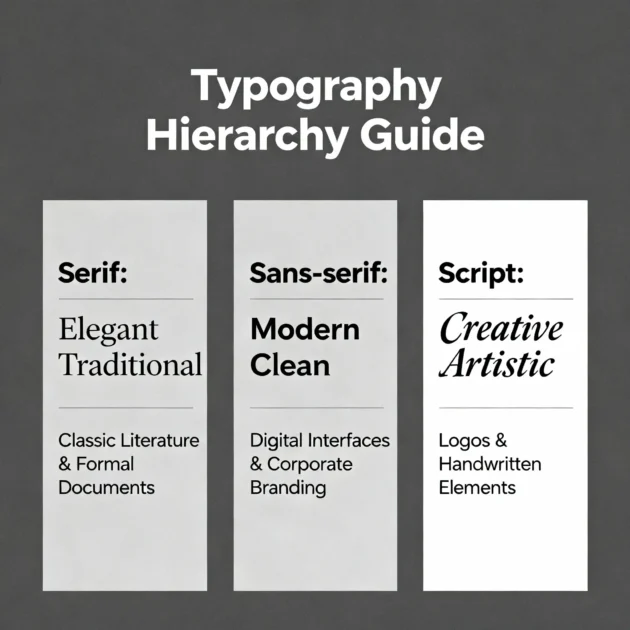
Typography selection guide showing different font personalities for brand identity
Brand Identity Design Tips: Ensure Unwavering Brand Consistency
Brand consistency stands as perhaps the most critical of all brand identity design tips, with research showing consistent branding can increase revenue by 33 percent and contribute 10 to 20 percent to overall revenue growth. Consistency means presenting a unified brand identity across all platforms and touchpoints, delivering predictable and reliable experiences wherever customers interact with your brand.
The core elements of brand consistency include visual identity with logos and color schemes, tone of voice across communications, brand messaging reflecting core values, and cohesive social media presence. McDonald’s golden arches, the Starbucks Siren, and Google’s four fundamental colors demonstrate how consistent visual elements become instantly recognizable worldwide. These brands ensure every marketing strand weaves with their distinct personality across all channels from websites and social media to packaging and physical locations.
Consistency builds trust because unified, harmonious brand voices demonstrate stability and reliability to consumers. Studies show 66 percent of consumers will only purchase from brands they trust, and consistent brand identity assures customers about product and service quality. According to Inc., 71 percent of study participants said inconsistent branding causes market confusion, making customers less likely to recognize, trust, and connect with brands.
American companies like Nike, Amazon, and Pepsi exemplify brand consistency excellence. Nike maintains its swoosh logo, “Just Do It” tagline, and bold visuals across all platforms, creating global recognition linked to quality and athletic performance. This consistency extends beyond visual elements to experiential uniformity, ensuring every customer touchpoint reinforces the same brand promise. When brands achieve this level of consistency, they experience not just revenue increases but also improved employee morale, driving up productivity and reducing turnover.
Brand Identity Design Tips: Build Authentic Brand Storytelling
Authentic brand storytelling ranks among the most powerful brand identity design tips for creating emotional connections that transcend transactional relationships. Brand storytelling connects with customers, building lasting relationships, trust, and loyalty that extend beyond product or service preferences. When executed correctly, compelling stories achieve engaged customers, increased leads, improved conversions, and positive bottom-line impact.
Effective brand stories show true values, demonstrate what brands stand for, and explain why customers should choose them. Stories showcase personality and make brands relatable by sharing authentic narratives that audiences can connect with emotionally. Nike exemplifies this principle through campaigns that make customers the main characters of every story. Their “Dream Crazier” advertisement featuring powerful women athletes told customers, especially females, that “it’s only crazy until you do it,” boosting Nike’s revenue by 31 percent and adding six billion dollars in brand value.
American brands demonstrate diverse storytelling approaches. Apple’s storytelling revolves around innovation and thinking big about the future from day one, with their logo and claims showing they are rebels in the industry. Airbnb’s “Belong Anywhere” campaign highlights stories from across the globe, underlining the concept that customers can discover spaces feeling like home regardless of location. LEGO inspires creativity through stories of building and imagination, with their “Rebuild the World” campaign encouraging individuals to use LEGO bricks envisioning more imaginative futures.
The key to successful brand storytelling involves authenticity rather than perfection. Brands like Backlinko share failures alongside successes because people relate to those who have tried, failed, and learned from mistakes. This authentic approach builds trust because it acknowledges shared human experiences rather than presenting unrealistic perfection. When brands make people believe in themselves through inspirational storytelling, customers reciprocate by believing in and supporting those brands.
Brand Identity Design Tips: Develop Comprehensive Brand Voice Guidelines
Creating comprehensive brand voice guidelines represents an essential brand identity design tip for ensuring consistent communication across all channels and touchpoints. Brand voice is the unique personality brands convey through content, reflecting values, connecting with audiences, and differentiating companies in the market. Well-defined brand voice ensures messaging resonates with target audiences, builds trust, and fosters recognition.
Developing brand voice requires a strategic approach combining customer feedback, engagement metrics, and market research. Start by defining brand identity through mission and vision statements articulating purpose and long-term aspirations. Establish core brand values representing principles that drive behavior and decision-making, ensuring these values match target audience interests and needs. Identify brand archetypes representing universal character or persona embodying brand personality, ranging from hero to caregiver to rebel to sage.
Creating a brand voice chart helps focus on true essence and goals. Voice charts include voice characteristics or values in the left column, voice descriptions in the next column, words describing intended communication style, and a final column noting “but not” examples to clarify boundaries. For instance, a brand might define itself as rigorous (meaning thorough and reliable but not rigid), idealistic (meaning principled and caring but not impractical), and curious (meaning innovative and forward-thinking but not frivolous).
Leading American brands demonstrate voice consistency across all communications. Successful voice guidelines should use unexpected words reflecting unique brand personalities rather than non-differentiating factors like friendly, honest, or reliable. Avoid buzzwords like dynamic or proactive, which are vague clichés. Instead, search for sharper, richer words that authentically capture who your brand truly is. Testing brand voice with real users through interviews, surveys, and web analytics ensures copy resonates emotionally and impacts the bottom line measurably.
Brand Identity Design Tips: Design for Long-Term Scalability
Designing for scalability stands as one of the crucial brand identity design tips that ensures identities remain effective as brands grow and evolve. Scalable brand identities can grow with brands, adapting to new products, markets, and platforms while maintaining core recognition and consistency. This forward-thinking approach saves significant time and resources by avoiding frequent redesigns as businesses expand.
Scalable design requires several key considerations. Brand identities must work across many different applications including web, print, packaging, signage, merchandise, and emerging technologies. Visual elements should maintain clarity and impact whether displayed on massive billboards or tiny mobile screens. Color palettes need to work well in both color and monochrome formats, ensuring logos remain visually appealing and recognizable in various color schemes.
Flexibility represents another critical aspect of scalability. Brand identities should incorporate fluid design principles allowing logos and elements to adjust, resize, or rearrange based on context and screen size. This flexibility ensures brands look great on any platform without compromising integrity. Successful scalable identities often feature simplified core symbols that can stand alone without text for applications like favicons and app icons.
American technology companies excel at scalable design. Apple’s minimalist approach creates instantly recognizable products and marketing materials that work across every platform from packaging to retail stores to digital interfaces. This investment in premium, scalable design helped Apple become the second most valuable brand globally according to Brandirectory’s 2023 ranking. The lesson for all brands is clear: investing in scalable design upfront creates identities that remain effective and recognizable as businesses grow, change, and adapt to new market opportunities.
Brand Identity Design Tips: Conduct Regular Comprehensive Brand Audits
Regular brand audits represent one of the essential brand identity design tips for assessing brand health and identifying opportunities for improvement. Brand audits examine multiple facets of brand visibility, effectiveness, and perception to ensure branding efforts align with business goals and resonate with target audiences.
Comprehensive brand audits cover three main areas. Internal branding encompasses core values, mission and vision statements, company culture, and other internal brand assets. External branding includes logos, brand colors and typography suites, design assets, social media presence, and other external messages. User experience involves customer service processes, user support, and physical and digital user experiences.
The brand audit process follows five systematic steps. First, identify needs by examining what you want to achieve, whether changing brand strategy, expanding marketing, or merging with new business. Second, define objectives by outlining audit-related goals that must be achievable through audit steps or findings. Third, collect all brand collateral from various departments and channels. Fourth, analyze brand consistency by assessing visual coherence in logo usage, color palettes, asset usage, and messaging consistency. Fifth, evaluate brand visibility and reputation through metrics like brand awareness, share of search, share of voice, brand mentions, brand preference, brand loyalty, and sentiment analysis.
Brand audits provide actionable insights for optimization. They measure effectiveness of brand positioning and its impact on business. Understanding how customers perceive and engage with brands enables optimizing positioning to better align with business objectives, stay ahead of potential threats, and capitalize on emerging opportunities. American companies conducting regular brand audits maintain stronger market positions and can quickly adapt to changing consumer preferences and competitive landscapes.
Brand Identity Design Tips: Avoid Following Design Trends Blindly
Among the most valuable brand identity design tips is avoiding the temptation to blindly follow design trends that may quickly date your brand identity. While staying aware of current trends provides useful context, prioritizing timelessness over trendiness ensures brand identities remain relevant for years or decades rather than months.
Trends change rapidly, which is why great brands choose more classic solutions for logos, brand colors, inscriptions, and typography. Classic does not mean boring but rather that designers should use more traditional fonts, shapes, colors, and imagery that will stay popular for longer periods. Stella Artois demonstrates this principle by using the same logo since 1366, while Levi Strauss and Coca-Cola have both maintained their logos since 1886.
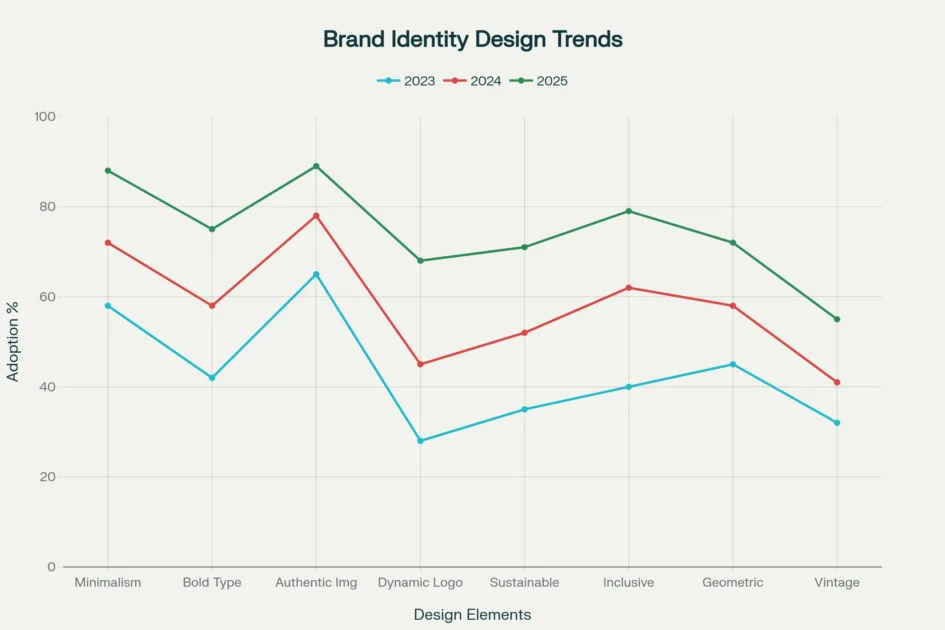
Evolution of Brand Identity Design Trends: 2023-2025 Adoption Rates
The challenge lies in distinguishing between popular and trendy typefaces. Popular typefaces like Helvetica and Futura have been tried and tested over decades, maintaining relevance across changing design fashions. Trendy design elements, by contrast, may provide short-term appeal but risk making brands appear dated as fashions shift. Following trends too closely can date logos quickly, while timeless designs ensure logos stay relevant regardless of shifting design fads.
Smart brand identity design tips suggest selective trend adoption rather than wholesale embrace. Consider whether trends genuinely align with your brand and have lasting potential before incorporating them. For instance, simplicity and minimalism persist because they offer versatility, scalability, and memorability rather than fleeting aesthetic appeal. Similarly, animated and dynamic logos for digital spaces represent functional adaptations to platform evolution rather than pure trend-following. The most successful American brands balance contemporary design sensibilities with timeless principles, creating identities that feel current without risking rapid obsolescence.
Brand Identity Design Tips: Measure and Optimize Brand Performance
The final critical brand identity design tip involves systematically measuring brand performance and using data to optimize branding efforts. Measuring brand success goes beyond tracking sales to understanding how brands are perceived, recognized, and valued in the market. Strong branding drives customer loyalty, boosts recall, and ultimately impacts bottom lines, but quantifying these intangible elements requires tracking specific metrics.
Brand performance measurement encompasses multiple metric categories essential to implementing proven brand identity design tips and measuring brand success metrics effectively. . Brand awareness and recognition metrics track how well people know your brand and how easily they recognize it. Brand health and equity metrics assess overall brand strength and value in the marketplace.
Brand sentiment metrics evaluate emotional responses and perceptions. Brand lift studies measure campaign effectiveness. Finally, branding return on investment calculations demonstrate the financial impact of brand investments, quantifying how strategic brand identity design tips drive measurable brand success metrics that justify continued investment in comprehensive brand development and refinement..
Key performance indicators provide actionable insights. Customer loyalty measured through retention rates shows how branding impacts repeat business, with research finding that when customers feel connected to brands, 57 percent increase spending and 76 percent choose that brand over competitors. Market share indicates brand competitiveness and effectiveness of branding efforts in attracting and retaining customers.
Customer acquisition cost measures efficiency of branding in attracting new customers cost-effectively. Brand preference and loyalty metrics reveal whether customers would choose your brand over competitors and continue returning.
American companies leveraging brand metrics optimize positioning and marketing effectiveness. Brand metrics enable understanding brand positioning effectiveness and its impact on business. This visibility shows which marketing efforts pay off and which should be shelved or retooled for better impact. By continuously measuring and optimizing based on data, brands ensure their identity investments generate measurable returns and support long-term business growth objectives.
Conclusion: Implementing Brand Identity Design Tips for Long-Term Success
Exceptional brand identity design represents far more than aesthetic decisions about logos, colors, and typography. It encompasses a comprehensive strategic framework that defines how brands communicate, connect, and create value in increasingly competitive markets. The twelve brand identity design tips explored in this guide provide a roadmap for building identities that resonate authentically with target audiences, differentiate effectively from competitors, and drive measurable business results.
Research consistently demonstrates the tangible business impact of strong brand identities. Companies with effective branding experience revenue increases of 23 to 33 percent, while consistent branding contributes 10 to 20 percent to overall revenue growth. These statistics reflect the reality that consumers form emotional connections with brands, with 76 percent preferring to buy from brands they feel connected to and 81 percent requiring trust before making purchases. When 90 percent of snap judgments about products stem from color alone and 55 percent of first impressions are visual, strategic application of brand identity design tips becomes essential for market success.
The most successful American brands demonstrate these principles consistently. Apple’s focus on exceptional customer experience, continuous innovation, and distinct design has made it the second most valuable global brand. Nike’s unwavering brand identity built around resilience, self-belief, and athletic greatness generates customer loyalty spanning generations. Coca-Cola’s century-long commitment to consistent visual identity and brand messaging has created one of the world’s most recognizable brands. These companies succeed not through accident but through systematic application of proven brand identity design tips.
Implementation requires commitment to both strategic thinking and tactical excellence. Begin by defining clear brand purpose and position that guides all subsequent decisions. Invest time researching target audiences to ensure every design choice resonates with intended customers. Create responsive logo systems that maintain recognition across expanding arrays of digital and physical touchpoints. Leverage color psychology strategically to boost recognition by up to 80 percent. Master typography selection to establish visual voice and personality.
Maintain unwavering consistency across all platforms and touchpoints to build trust and boost revenue. Build authentic brand storytelling that creates emotional connections transcending transactional relationships. Develop comprehensive brand voice guidelines ensuring consistent communication. Design for long-term scalability allowing identities to evolve as brands grow. Conduct regular brand audits to assess health and identify optimization opportunities. Avoid blindly following trends that may quickly date identities. Measure and optimize brand performance continuously to ensure investments generate returns.
The competitive landscape continues evolving, with artificial intelligence, sustainability consciousness, personalization expectations, and platform proliferation reshaping how brands design and deploy identities. Brands embracing these changes while maintaining focus on timeless design principles will thrive in coming years. Those clinging to outdated approaches or failing to invest strategically in brand identity risk fading into irrelevance.
Your brand identity represents one of your most valuable business assets. It shapes how customers perceive your company, influences purchasing decisions, builds loyalty, and drives long-term growth. By systematically applying these twelve brand identity design tips grounded in research, informed by successful American brand case studies, and focused on measurable outcomes, you can create a brand identity that not only looks stunning but delivers lasting business value. The question is not whether to invest in brand identity design but whether you will apply proven principles strategically to maximize return on that essential investment.
Citations
- https://shapo.io/blog/branding-statistics/
- https://explodingtopics.com/blog/branding-stats
- https://www.digitalsilk.com/digital-trends/top-branding-statistics/
- https://avintivmedia.com/blog/brand-identity-guide-2025/
- https://certifiedprofessional.adobe.com/blog/the-complete-guide-to-brand-identity-design
- https://www.marq.com/blog/the-7-key-elements-of-brand-identity-design
- https://www.reddit.com/r/copywriting/comments/1elh738/brands_that_use_storytelling_as_a_marketing_tool/
- https://thebrandhopper.com/2024/01/06/the-success-story-and-driving-forces-of-nike/
- https://blog.smile.io/the-10-best-storytelling-brands/
- https://duck.design/brand-identity-design/
- https://www.ofspace.co/blog/branding-principles
- https://brand24.com/blog/10-principles-awesome-brand-design/
- https://designshack.net/articles/graphics/responsive-logo-design/
- https://clay.global/blog/responsive-logo-design
- https://inkbotdesign.com/responsive-logo-design/
- https://deksia.com/blog/the-power-of-color-color-psychology-branding-consumer-action
- https://www.designrush.com/agency/logo-branding/trends/color-psychology-in-branding
- https://mailchimp.com/resources/color-psychology/
- https://www.litmusbranding.com/blog/importance-of-consistent-branding-across-all-platforms/
- https://desygner.com/blog/mastering-typography-elevate-your-brand-identity/
- https://www.brandsthatpunch.com/blogs/brand-typography
- https://www.smashingmagazine.com/2024/08/mastering-typography-in-logo-design/
- https://www.searchmyexpert.com/resources/graphic-design/typography-brand-identity
- https://brandmarketingblog.com/articles/branding-how-to/brand-guide-type/
- https://capitaloneshopping.com/research/branding-statistics/
- https://www.marq.com/blog/brand-consistency
- https://www.frontify.com/en/guide/brand-consistency
- https://www.papirfly.com/blog/brand-consistency/brand-consistency-ultimate-guide/
- https://marketingcommunications.wvu.edu/professional-development/marketing-communications-today/marketing-communications-today-blog/2025/02/12/building-brand-consistency-across-channels
- https://www.growave.io/blog/brands-that-use-storytelling
- https://www.linkedin.com/pulse/4-examples-successful-brand-storytelling-brandee-johnson-vfybc
- https://prowly.com/magazine/brand-story-examples/
- https://www.prezly.com/academy/brand-story-examples
- https://www.smashbrand.com/articles/brand-voice-development/
- https://www.toptal.com/marketing/brand-managers/define-brand-voice
- https://sproutsocial.com/insights/brand-voice/
- https://www.acrolinx.com/blog/how-to-define-tone-of-voice-the-ultimate-quick-start-guide-for-brands/
- https://www.acrolinx.com/blog/how-to-identify-brand-values-and-tone-of-voice-in-five-steps/
- https://www.brandedagency.com/blog/brand-voice-guidelines
- https://www.adobe.com/express/learn/blog/what-is-branding-design
- https://www.columnfivemedia.com/how-to-create-a-brand-identity/
- https://thecxlead.com/cx-strategy/5-brand-identity-examples-that-inspire-customer-affinity/
- https://oneandonlydesign.in/five-checklists-to-conduct-a-comprehensive-brand-audit-for-your-company/
- https://www.aprimo.com/resource-library/article/brand-audit-101
- https://brandfolder.com/resources/brand-audit-templates/
- https://www.frontify.com/en/guide/brand-audit
- https://www.ignytebrands.com/brand-metrics/
- https://www.sologo.ai/blog/top-logo-design-mistakes-and-how-to-avoid-them-like-a-pro/
- https://www.noboringdesign.com/blog/logo-design-best-practices-trends-challenges
- https://elementor.com/blog/how-to-make-a-business-logo-in-2025-logo-design-tips/
- https://www.huddlecreative.com/blog/how-to-measure-brand-success
- https://www.huddlecreative.com/blog/7-branding-rebranding-kpis-to-measure-your-success
- https://brandmasteracademy.com/branding-roi/
- https://www.spinutech.com/digital-marketing/content/creative/measuring-the-roi-of-branding/
- https://www.thoughtlab.com/blog/measuring-brand-success-key-metrics-for-evaluating/
- https://wisernotify.com/blog/branding-stats/
- https://papers.ssrn.com/sol3/Delivery.cfm/4927999.pdf?abstractid=4927999&mirid=1
- https://www.crowdspring.com/blog/brand-identity/
- https://www.smashbrand.com/articles/rebranding-trends/
- https://bookdown.org/mike/marketing_research/case-studies-in-branding.html
- https://logowhistle.com/logo-design-case-studies/
- https://inkbotdesign.com/brand-design-case-studies/
- https://www.creativefrontiers.co/blog/new-approach-to-brand-identity-design-a-2025-guide
- https://www.logobean.com/blog/best-brand-identity-examples-and-case-studies.html
- https://www.behance.net/search/projects/brand%20case%20study
- https://www.frontify.com/en/guide/brand-guidelines-examples
- https://www.wellscollins.com/work
- https://www.beetlebeetle.com/post/elements-principles-brand-design
- https://www.underconsideration.com/brandnew/
- https://www.c2award.com/45-award-winning-branding-projects/
- https://www.joshmeah.com/blog/the-power-of-color-psychology-in-branding-strategy
- https://blog.hubspot.com/the-hustle/psychology-of-color
- https://www.huddlecreative.com/blog/statistics-on-the-importance-of-branding
- https://www.helpscout.com/blog/psychology-of-color/
- https://designforce.co/blog/fonts-in-design-typography-for-brand-identity/
- https://www.hubspot.com/marketing-statistics
- https://www.adobe.com/uk/express/learn/blog/colour-psychology-in-marketing
- https://www.linkedin.com/pulse/10-things-avoid-when-creating-brand-identity-lucas-flach-yvare
- https://www.redbaton.digital/blog/brand-design-fails-what-to-avoid-for-a-stronger-identity/
- https://www.mastroke.com/blog/digital-marketing/9-common-branding-mistakes-that-can-cost-you-big/
- https://passionates.com/common-brand-design-mistakes/
- https://www.linkedin.com/pulse/measuring-roi-your-branding-efforts-guide-brand-kpis-nnani
- https://www.logomaker.com/blog/top-mistakes-to-avoid-when-designing-a-logo/
- https://marcom.com/build-trust-brand-consistency/
- https://www.ofspace.co/blog/common-logo-design-mistakes
- https://www.columnfivemedia.com/wp-content/uploads/2020/02/Brand-Audit-Template.pdf
- https://zanejames.com/brand-strategy/brand-strategy-101-how-apple-nike-revolutionized-the-world/
- https://pipeline.zoominfo.com/marketing/b2b-brand-storytelling
- https://inkbotdesign.com/powerful-branding-tactics/
- https://www.nopio.com/blog/brand-audit-checklist/
- https://www.slideshare.net/slideshow/successes-factors-of-nikes-growth/51341466
- https://www.biggerpicture.agency/insights/top-rebrands-of-2025
- https://www.brandsthatpunch.com/blogs/brand-design-in-2025
- https://gict.co.in/logo-design-best-practices-for-2025/
- https://www.mastroke.com/blog/digital-marketing/brand-voice-7-top-things-to-consider-in-brand-building/
- https://www.rebrandingexperts.com/news/the-new-rules-for-rebranding-in-2025-lessons-from-a-masterclass-in-reinvention
- https://www.printmag.com/branding-identity-design/brand-design-predictions-for-2025/
- https://www.uxpin.com/studio/blog/best-practices-examples-of-excellent-responsive-design/
- https://www.bynder.com/en/blog/rebranding-statistics/